IN Brief:
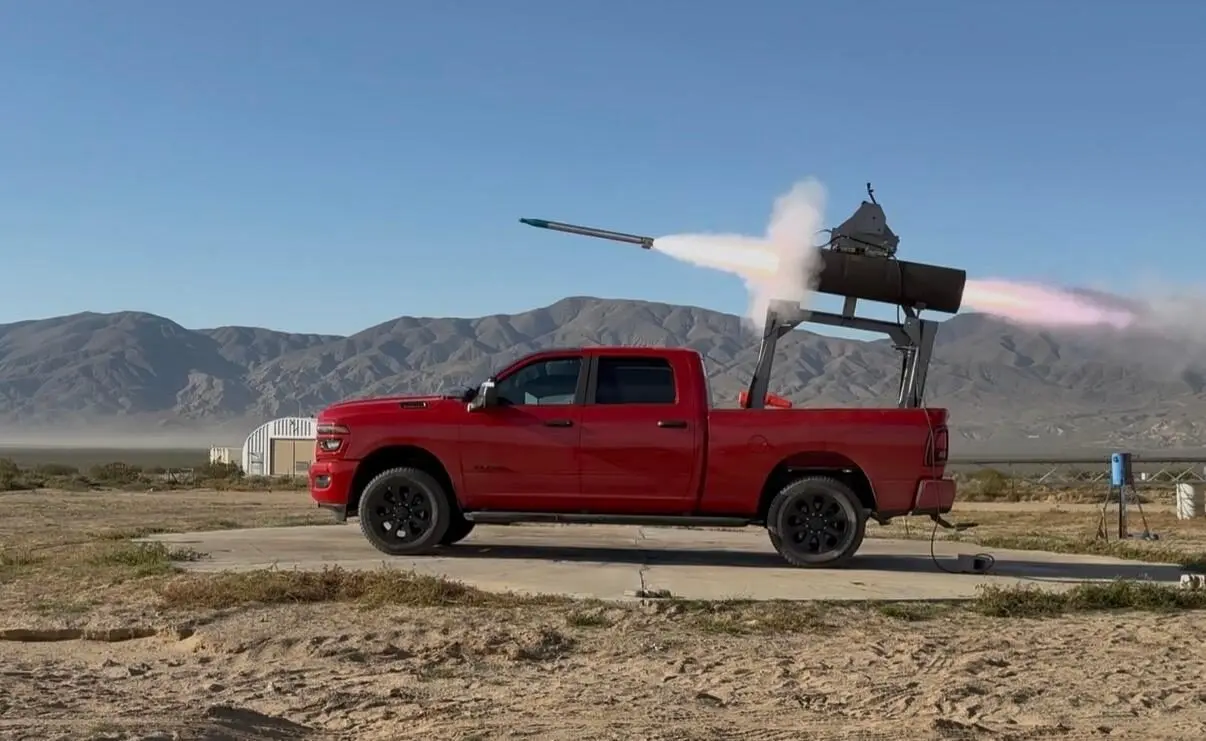
- iRocket says its iRX-100 reached Mach 2 and flew roughly 6km in a launcher-integrated test, adding momentum to the crowded market for lower-cost short-range intercept effects.
- The industrial significance sits in compatibility with Arnold Defense’s 70mm launcher ecosystem, which cuts integration burden and supports faster fielding.
- The next question is no longer basic flight performance alone, but whether the missile can be built repeatably, inspected quickly, and surged in volume.
iRocket says it has completed a successful iRX-100 missile demonstration using a launcher supplied by Arnold Defense, with the round reaching Mach 2, travelling around 6km, and qualifying for use with Arnold Defense’s launcher system. For a company that has spent much of the past year talking about rapid manufacturing, industrial scale, and propulsion, that matters because launcher compatibility is where a promising effect starts to resemble a fieldable product.
The 70mm class remains one of the more pragmatic parts of the Western munitions market. It already sits inside a broad support ecosystem, it can be launched from familiar architectures, and it offers a lower-cost route into air defence and counter-UAS work than larger missile families. That does not make qualification easy, but it does make it commercially meaningful. If the launcher interface is proven, the burden shifts toward rate, quality assurance, and supply-chain discipline.
Asad Malik, CEO of iRocket, said: “Today’s successful iRX-100 demonstration with Arnold Defense’s launcher proves we can deliver a modern, scalable counter-UAS effect with speed and repeatability. We’re rebuilding the arsenal of freedom by combining high-rate manufacturing, robotics-driven quality, and a partner ecosystem that can surge production when the mission demands it.”
That language is ambitious, but the industrial logic is sound enough. The more a new munition can borrow from an installed launcher base, the less work is pushed into platform redesign, retraining, and bespoke support equipment. Arnold Defense has spent decades building 2.75-inch launcher systems, and the value of that installed base is obvious. In a procurement climate shaped by drone attrition, stockpile anxiety, and the cost of wasting large interceptors on small targets, interoperability is doing some of the commercial heavy lifting.
iRocket has already been pointing in this direction. Its public material has tied the company’s defence work to additive manufacturing, automation, and propulsion development, while the company has also used the past year to sharpen its manufacturing message around advanced production methods and shorter cycle times. The iRX-100 test now gives that message a more tangible defence product around which to organise.
The production challenge now moves to the line
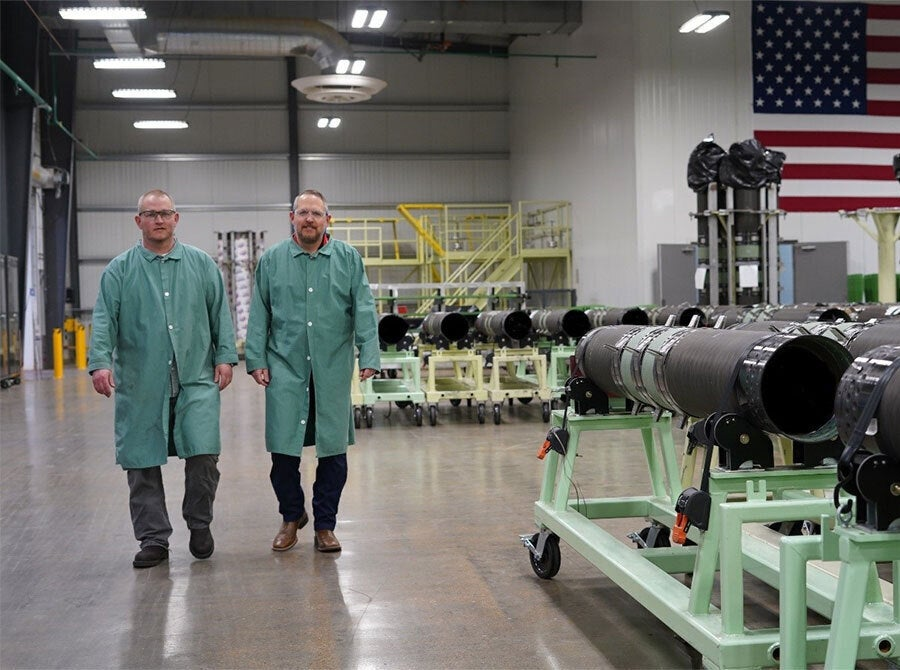
The next stage is less glamorous than a flight test, and far more important. A 70mm-class effect that is meant to be built at pace has to pass through repeatable motor casting or loading, consistent airframe fabrication, fin deployment reliability, electronics integration, environmental testing, and final acceptance without building cost back into the round. High-rate missile production is rarely constrained by one dramatic bottleneck. It is usually constrained by dozens of smaller ones, from sub-tier machining capacity to inspection throughput.
That is why iRocket’s emphasis on repeatability and traceability is notable. In this category, quality escapes are not just a field reliability problem. They are a production problem. If one batch throws up variation in motor performance, actuator behaviour, or launcher interface tolerances, throughput suffers immediately. A company can talk about surge all it likes, but surge without process control is just a loud way of producing scrap.
Chris Mignano, VP of Business Development and Manufacturing at iRocket, said: “Advancing extended-range capability for the 70mm system is about delivering greater reach and effectiveness to the warfighter. By working closely with our partners and focusing on compatibility with launchers already used by the services, we’ve been able to move quickly and accelerate meaningful capability to the field. This kind of collaboration across the defense industrial base is what will ultimately make the difference for the future of our nation’s security.”
Arnold Defense describes itself as the world’s leading designer and manufacturer of 2.75-inch, or 70mm, rocket launcher systems, and that matters because launcher makers do more than provide hardware. They shape qualification pathways, safety cases, and customer confidence. If a new effect can slot into a launcher family already known to operators, the sales argument becomes more industrial than rhetorical.
Frank Ferrante, Vice President of Programs and Business Development at Arnold Defense and Electronics, said: “As the preeminent 2.75” rocket launcher manufacturer in the world, we are excited to be working with iRocket as they bring needed improved capability to the 2.75”/70mm rocket. The speed at which they moved to get to this round of testing has been impressive to watch first hand and participate in, and we look forward to continued collaboration efforts between our companies.”
For iRocket, the test is a useful milestone. For the wider market, it is another reminder that the munitions story is increasingly being written around producibility, not novelty. Flight data gets attention. Qualified, buildable hardware gets orders.