IN Brief:
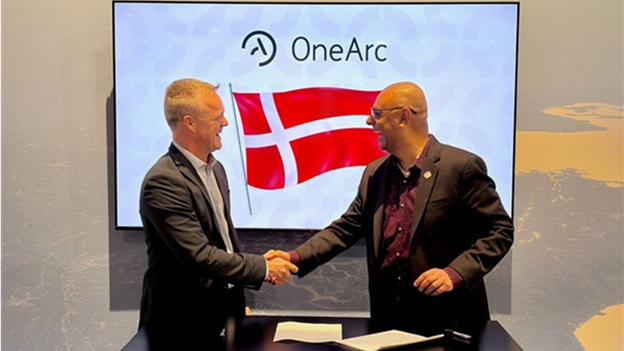
- The Danish Army has selected BAE Systems OneArc under a seven-year agreement to modernise enterprise virtual training.
- The package includes VBS4, VBS Builder Edition, Blue IG, TerraTools Platinum, on-site training, and software support.
- The deal reinforces a wider allied trend toward shared simulation architectures, common digital assets, and scalable synthetic readiness.
The Danish Army has selected BAE Systems OneArc to underpin its next-generation enterprise virtual training environment, committing to a seven-year modernisation effort built around VBS4, VBS Builder Edition, Blue IG, TerraTools Platinum, software maintenance, and on-site training services. On the surface, it is a simulation contract. In practice, it is a broader decision about how digital training infrastructure should be standardised, maintained, and scaled.
Denmark has been using VBS3 for years, so this is not a leap into an unfamiliar ecosystem. The shift to VBS4 formalises an enterprise architecture that can support course-of-action development, mission rehearsal, and force design with greater realism and wider interoperability. That matters in a Nordic and NATO context where common digital environments can make multinational exercises and coordinated force development easier to manage.
This kind of procurement also reflects a harder view inside European land forces that synthetic training is no longer an optional supplement to live activity. Ammunition costs, range access, equipment wear, and the need to rehearse increasingly complex multi-domain operations all favour a much deeper digital layer in training pipelines. The more ambitious the readiness requirement, the more attractive scalable simulation becomes.
For BAE Systems, the Danish award strengthens its position in a market where simulation is moving steadily toward enterprise software and data services rather than isolated training devices. It also fits into a wider regional pattern as Nordic defence cooperation places more emphasis on interoperability and shared operating concepts.
Synthetic training is now an industrial stack
The most interesting part of the deal sits beneath the user interface. A modern simulation environment is not just a piece of software. It is a stack that includes terrain generation, 3D model libraries, image generation, scenario-building tools, maintenance support, workstation infrastructure, and trained personnel capable of keeping the whole system relevant as doctrine and equipment evolve.
OneArc’s structure makes that clear. VBS4 provides the training host environment, VBS Builder Edition is designed for rapid development of custom simulation applications, Blue IG handles visual output, and TerraTools supports high-fidelity terrain generation and export. Taken together, those layers create a recurring industrial base around software development, geospatial content, digital asset production, support services, and systems integration.
Standardisation changes the supplier picture
That industrial logic matters because standardised architectures alter who can participate in the defence training market. Once an army adopts a widely used simulation baseline, it becomes easier to share assets, develop national content on common foundations, and connect into multinational exercises without paying for custom bridging work every time. The barrier to entry for specialist suppliers can fall as a result.
Smaller firms can contribute terrain data, vehicle models, specialist effects, interfaces, or scenario content without having to build a complete environment from scratch. In that sense, simulation modernisation can support a broader supplier ecosystem than its relatively modest public profile suggests. It also embeds software refresh and support work more deeply into long-term defence spending.
The Danish Army’s OneArc selection is therefore a reminder that readiness is increasingly shaped by digital infrastructure as much as by physical platforms. The headline is about simulation, but the underlying industrial story is about who owns the tools, architectures, and update cycles that modern armies depend on to train at scale.