IN Brief:
- Leonardo says Michelangelo could open up €21 billion in business opportunities over the next decade, with more than 20 countries already in discussion.
- The system is built around MC5, a modular node intended to link sensors, effectors, platforms, and legacy assets across air, land, sea, space, and cyber domains.
- A Ukraine deployment before NATO trials would test not only operational performance, but Europe’s ability to industrialise open-architecture air and missile defence at pace.
Leonardo’s plan to test its Michelangelo air defence dome in Ukraine before the end of 2026 would move one of Europe’s more ambitious integrated defence concepts out of the presentation deck and into a genuinely demanding operational setting. That is the notable part of the announcement. Ukraine is not a ceremonial test environment. It is the place where mixed missile and drone threats, rapid adaptation, and saturation attack conditions punish weak integration faster than most procurement schedules can react.
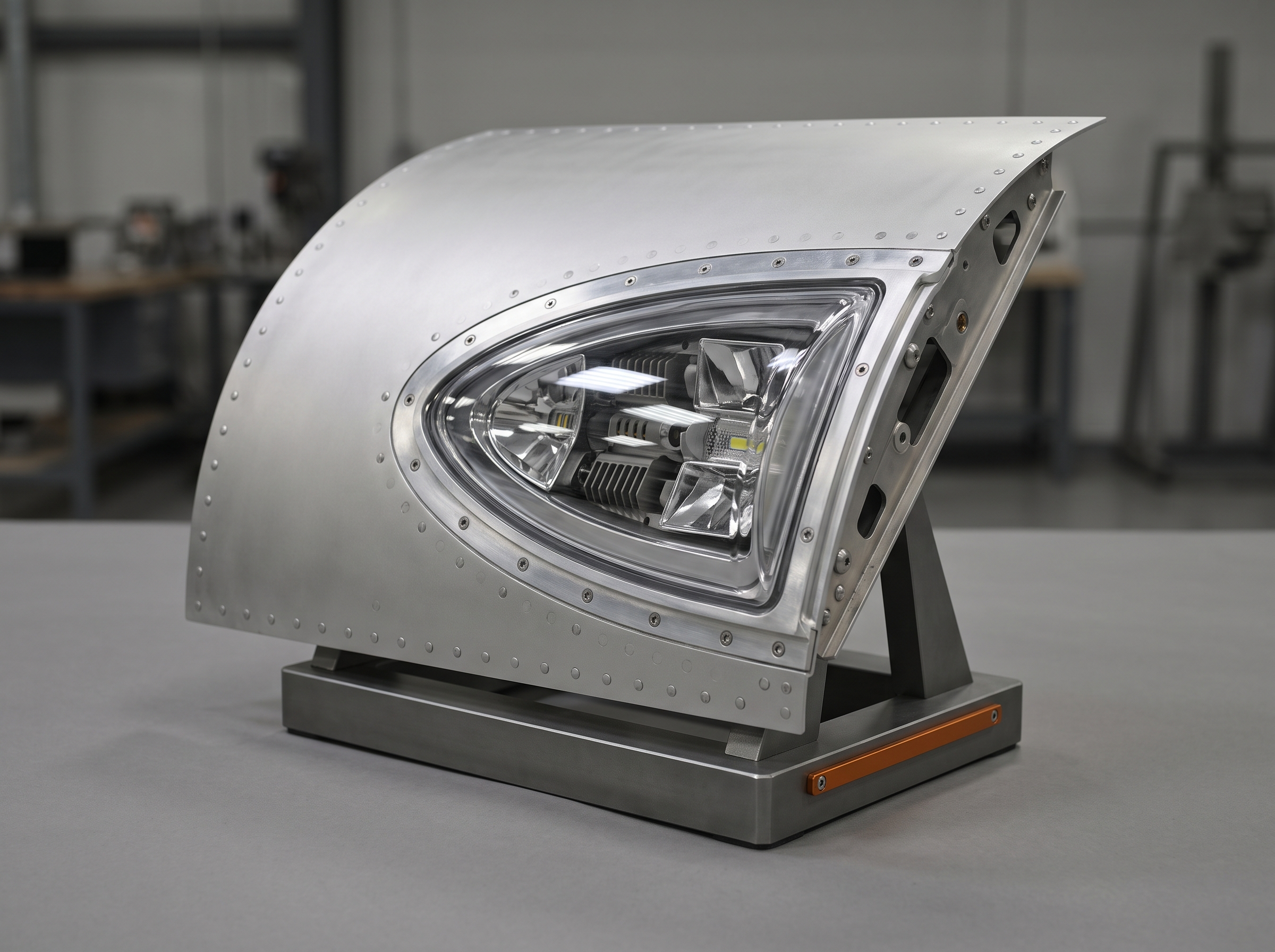
Michelangelo is not being positioned as a single launcher, radar, or interceptor family. Leonardo is presenting it as a modular, open architecture able to connect assets across multiple domains, with its MC5 plug-in module acting as the core for interoperability and low-latency decision-making. The company says the architecture is intended to detect, track, and neutralise threats ranging from ballistic and hypersonic weapons to drone swarms and other low-altitude targets.
That framing tells you a great deal about where the industrial value sits. The European air defence debate often gravitates toward interceptors and missile stockpiles, which remain critical, but the economic centre of gravity in a system like Michelangelo lies just as much in the electronics, software, battle management, communications, sensor fusion, and platform integration layers that decide whether a defended area functions as a coherent kill chain or a loose collection of expensive assets.
Leonardo has already put a large number on that industrial opportunity, estimating €21 billion in business potential over the coming decade. More tellingly, the company says discussions are under way with more than 20 countries. That does not amount to orders, but it does indicate that a market exists for architectures that promise to connect national sensors and effectors without forcing customers to throw out legacy systems.
What the build-up actually involves
The manufacturing burden behind that proposition is broader than the phrase “air defence system” suggests. To industrialise a dome model, the prime needs far more than missile interfaces. It needs ruggedised computing hardware, secure communications links, radar and optronics integration, cyber-hardened networking, qualified software baselines, and a production cadence that can support field deployment, updates, and future insertions of new sensors and effectors.
Leonardo’s own roadmap makes that plain. The programme is tied not only to command-and-control trials and ballistic missile defence exercises, but also to a wider build-out that includes future sensor and effector integration, federation with partner nations, and a space layer linked to the company’s Guardian constellation. In other words, Michelangelo is being sold as an industrial ecosystem, not a discrete product.
That is attractive to customers, but it is demanding for factories and engineering teams. Open architecture sounds simple until the job reaches interface control, software assurance, latency management, export permissions, cyber resilience, and field maintenance. Every additional national radar, launcher, missile family, or command post introduced into the architecture creates more qualification work, more verification burden, and more pressure on the integration chain.
Integration is the real bottleneck
If the Ukraine trial goes ahead, the real test will not be confined to whether Michelangelo can connect a set of nodes in combat conditions. It will also show whether Leonardo can sustain the industrial rhythm required to support such a system once it leaves the demonstration phase. A modular defence architecture lives or dies by update cycles, user trust, maintainability, and the speed at which new effectors can be brought into the network without breaking what is already in service.
That is where Europe’s defence industrial base is under the most pressure. Missile production remains a strategic concern, but so is the less visible capacity to build mission computers, secure data pathways, integration labs, digital test environments, and the engineering workforce needed to keep a multi-domain air defence stack current. Leonardo’s own industrial plan points to hiring, digital capability growth, and expanded production capacity across the group, which fits the scale of that challenge.
The Michelangelo story therefore sits well beyond a single Ukrainian test. If the programme reaches NATO trials in 2027 and stays on track toward broader integration milestones later in the decade, it will become a measure of whether European industry can manufacture interoperability rather than merely advocate it. That is a harder task, and a more valuable one.