IN Brief:
- Leonardo has completed its acquisition of Iveco Group’s defence business, including the IDV and ASTRA brands, for €1.6 billion.
- The deal adds vehicle platform manufacturing to Leonardo’s electronics, turret, command, and mission systems portfolio.
- Consolidation is accelerating in European land defence, where buyers increasingly want integrated platforms backed by dependable production capacity.
Leonardo’s takeover of Iveco Group’s defence business is the kind of deal European land defence has been edging toward for years. The logic is hard to miss: mobility platforms on one side, electronics, mission systems, and turret integration on the other, all under a single industrial roof. With the purchase complete, Leonardo gains direct control over IDV and ASTRA at a moment when demand for armoured vehicles, logistics trucks, and protected mobility remains elevated across Europe.
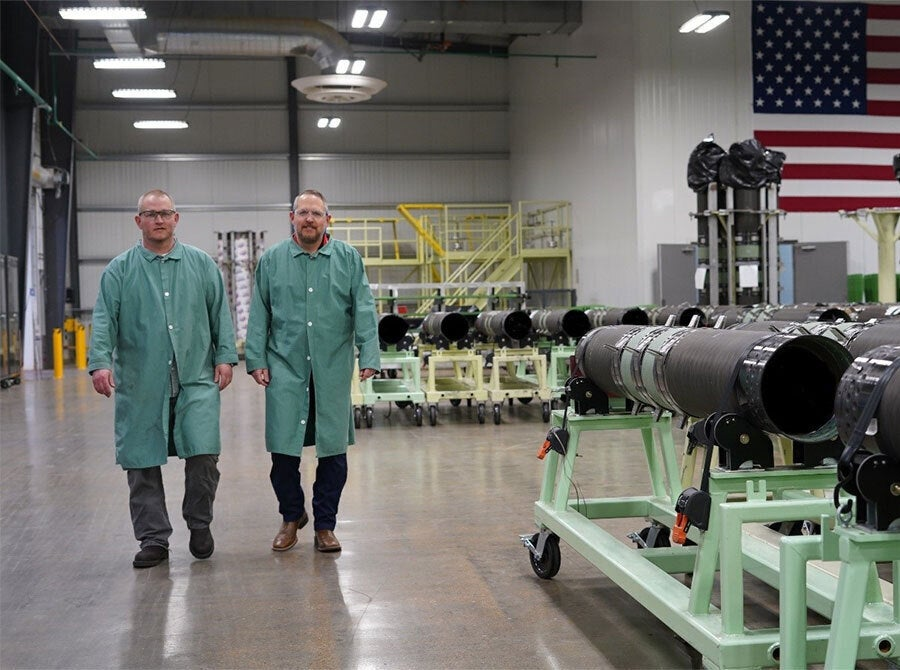
The acquired business brought in €1.368 billion of revenue in 2025 and operates six manufacturing sites across Italy, Germany, Romania, and Brazil, with roughly 2,000 employees. That footprint matters almost as much as the product portfolio. Defence ministries do not just buy vehicles now; they buy upgrade pathways, production resilience, and the promise that industrial support will still be there when fleets expand in a more hostile market.
The timing is also significant. Leonardo has already been tightening its position in land systems through its Rheinmetall joint venture, and the Iveco defence acquisition gives it a broader manufacturing base from which to pursue turreted combat vehicles, logistics fleets, support platforms, and long-term sustainment packages.
The manufacturing case for consolidation
A land platform is an assembly of industrial disciplines: hull fabrication, driveline integration, armour solutions, power management, vetronics, communications, weapon stations, and qualification testing. The more those elements are split across competing organisations, the harder it becomes to compress delivery schedules or manage cost. Bringing vehicle production and mission-system integration closer together should make it easier for Leonardo to standardise interfaces and control industrial pacing.
That is especially important in Europe’s current procurement climate, where buyers want faster output without sacrificing localisation or customisation. The pressure is not only on primes to design platforms; it is on them to prove that factories, supplier networks, and upgrade ecosystems can sustain a long run of orders.
Europe’s vehicle market is getting less fragmented
There will still be national politics, protected champions, and plenty of programme complexity. Even so, the direction of travel is obvious. European defence buyers are pushing toward larger industrial groupings able to combine sensors, weapons, digital architecture, and heavy manufacturing inside fewer structures.
Leonardo has now moved decisively into that lane. The remaining question is how efficiently it can turn a portfolio deal into a production machine.