IN Brief:
- Airbus has flown Bird of Prey in its first demonstration engagement against a one-way attack drone.
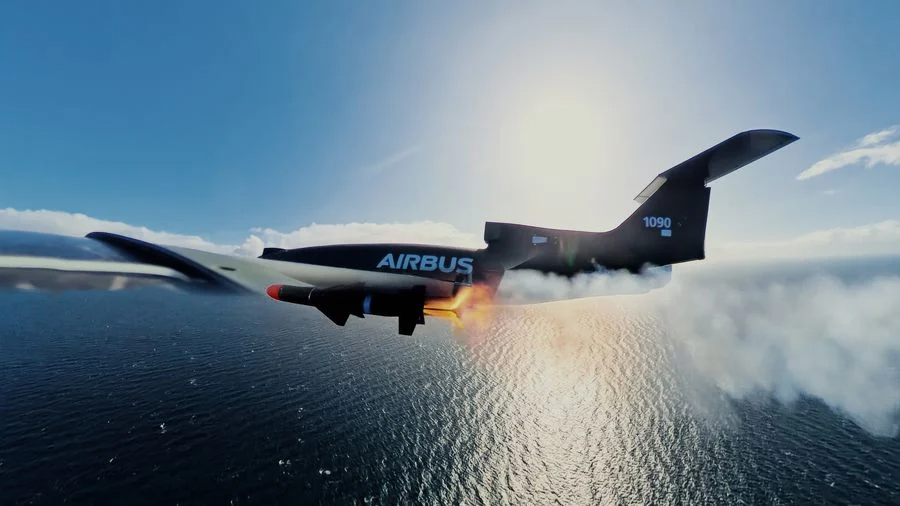
- The interceptor used a Frankenburg Technologies Mark I missile designed for low-cost, short-range engagements.
- The programme is aimed at a reusable, scalable air-defence layer that can slot into wider command-and-control architecture.
Airbus has taken a notable step in counter-UAS development after its Bird of Prey interceptor completed a demonstration flight in northern Germany and autonomously engaged a one-way attack drone. The test used a modified Do-DT25-based platform and a lightweight Mark I missile from Frankenburg Technologies, giving the programme a first real demonstration of the concept in a representative mission sequence.
The technical proposition is straightforward enough: a reusable unmanned interceptor carries multiple very small guided effectors and is pushed forward into the threat envelope against low-cost attack drones. In the current market, that equation matters. A growing share of air defence demand is being driven by the mismatch between mass-produced one-way attack systems and the much higher cost of conventional interceptors.
Airbus is clearly positioning Bird of Prey as part of a layered architecture rather than as a stand-alone answer. Integration into the company’s battle-management environment is central to the offer, because low-cost interceptors only become useful at scale when they can be fed by networked sensors and assigned targets efficiently.
Production and cost-curve implications
The strongest industrial signal in the test is the emphasis on mass manufacturability. Airbus and Frankenburg are not presenting a prestige interceptor for niche use. They are pushing a small missile and a reusable carrier architecture that can be built in volume, at lower unit cost, and with enough payload capacity to engage multiple targets per sortie.
That shifts attention to the production base. If counter-drone demand continues to accelerate, suppliers will need to sustain output in seekers, lightweight propulsion, guidance electronics, fragmentation warheads, datalinks, and airframe structures without drifting into the price territory that undermines the whole concept. In that sense, the manufacturing strategy is inseparable from the tactical one.
Integration and qualification pressures
Live capability still depends on more testing. Additional firing work, warhead validation, safety certification, software assurance, and command-network integration remain on the critical path. Short-range interceptors also have to prove reliability in dense electronic environments and in mixed air-defence architectures where deconfliction becomes a genuine systems challenge.
Even so, Bird of Prey now looks more like a production prospect than a concept slide. The important question from here is whether Airbus and its partners can move from a fast demonstrator cycle into a repeatable manufacturing model without losing the affordability that gives the system its edge.