IN Brief:
- The US Navy has launched its MUSV Family of Systems approach after dropping the earlier MASC path.
- Testing is due to run through 2026, with production deliveries targeted in FY2027.
- The service is asking industry for mature vessels, business models, sustainment plans, and manufacturing readiness, not just concept proposals.
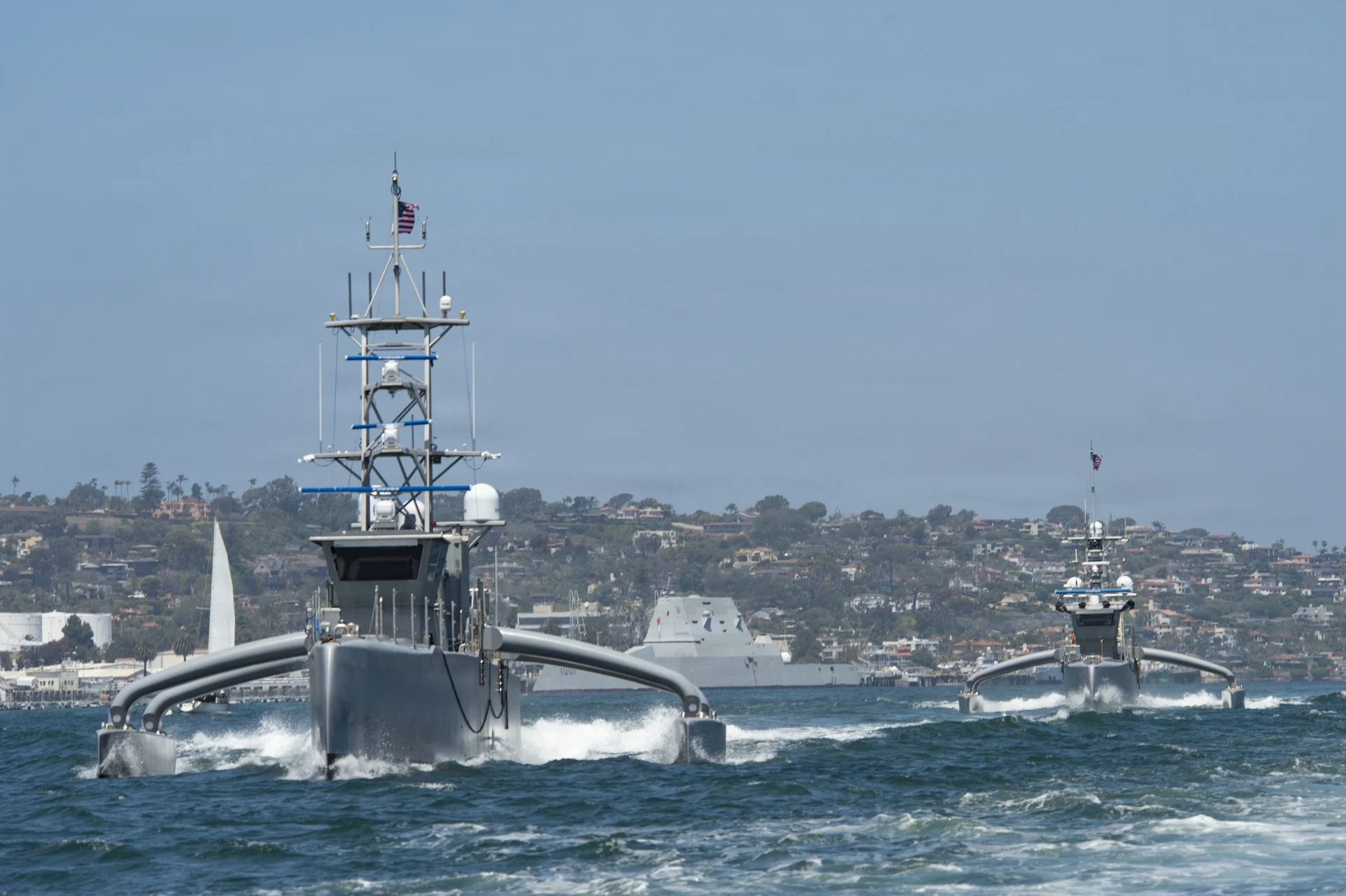
The US Navy has moved its Medium Unmanned Surface Vessel programme into a more urgent acquisition phase, with industry proposals now being sought under the new MUSV Family of Systems construct and on-water testing due to conclude by the end of fiscal 2026. The approach replaces the narrower MASC effort and is being framed around multi-mission, production-ready vessels aligned with the service’s wider Golden Fleet concept.
The change in tone is significant. Navy officials are signalling that they do not want extended science projects dressed up as acquisition. They want mature platforms that can carry containerised payloads, meet autonomy and seakeeping thresholds, and move into fleet use on a compressed schedule. The solicitation structure still uses a prototype pathway, but the commercial expectation is closer to fast transition than to open-ended experimentation.
Technical requirements underline that point. Candidate vessels are being asked to combine substantial range, speed, payload capacity, autonomous navigation compliant with COLREGS, and enough integration maturity to support a live on-water test campaign within months.
Manufacturing and supply-chain implications
This is as much an industrial screen as a technical one. The Navy is explicitly asking offerors to show how they would build, sustain, and scale the vessels, including different ownership and operating models. That puts manufacturing readiness, supplier resilience, and support architecture on roughly the same footing as hull design or autonomy performance.
For builders and autonomy providers, the opportunity is large. The Navy has already pointed to significant unmanned funding in its broader accounts, and the MUSV route could give shipyards, systems houses, and commercial maritime suppliers a clearer way into serial autonomous production than the stop-start prototype culture that has dominated much of the sector.
Integration and certification pressures
The timetable is unforgiving. Autonomy, cybersecurity, vessel classification, command-network integration, and payload modularity all have to hold together quickly enough to survive testing and transition. Open-ocean autonomy is difficult enough on its own; doing it while carrying mission payloads and meeting naval expectations on reliability is a very different challenge.
The US Navy is effectively asking industry to prove that autonomy can now be manufactured as fleet architecture, not just demonstrated as technology. Whether suppliers can match that ambition at pace will shape the next stage of the US unmanned surface market.