IN Brief:
- Orqa plans to raise annual output at its Osijek headquarters to 500,000 products by the end of 2026.
- The figure covers a wider portfolio and should not be interpreted solely as complete aircraft.
- Vertical integration gives the company greater control over electronics, software, airframes, testing, and configuration.
Croatian drone-technology company Orqa is increasing annual manufacturing capacity at its Osijek headquarters from approximately 290,000 to 500,000 products by the end of 2026.
The expansion follows growing defence demand and new partnerships involving customers and organisations in the US, Canada, Norway, and Sweden. It gives Croatia a larger role within Europe’s developing unmanned-systems production base.
The capacity figure covers Orqa’s wider product portfolio rather than automatically representing 500,000 complete aircraft. Its output includes drone systems and associated components across electronics, control equipment, airframes, software-linked hardware, and first-person-view technology.
Production totals in the drone market often combine complete aircraft, component sets, and smaller products. A nominal capacity figure only becomes useful when assessed alongside product mix, shifts, yield, supplier readiness, testing time, and delivered configuration.
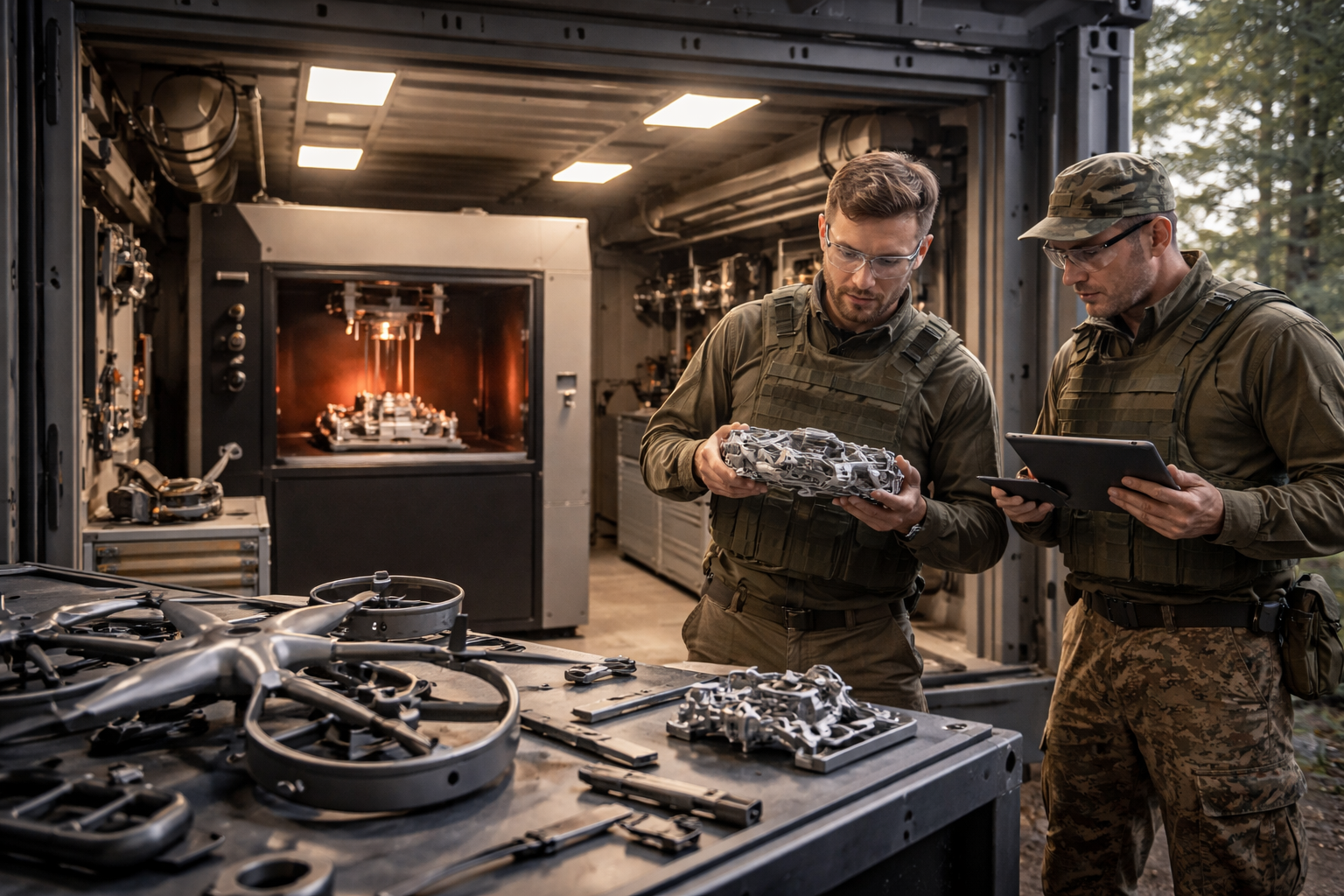
Orqa has pursued a vertically integrated model, developing and manufacturing more of its own technology than businesses that assemble imported motors, cameras, radios, flight controllers, and airframes into finished drones.
Greater control can shorten engineering loops. Changes to flight-control software can be coordinated with electronics and airframe design, while manufacturing faults can reach designers without passing through several unrelated suppliers.
Vertical integration can also reduce dependence on exposed supply chains. The global FPV market has relied heavily on Chinese motors, batteries, cameras, electronic speed controllers, radios, processors, and other components.
European defence customers increasingly want equipment whose architecture, software, and supply can be controlled without depending entirely on a potentially restricted source.
Moving final assembly does not remove those dependencies. Motors require magnets, copper windings, bearings, housings, and balancing, while electronic boards depend on semiconductors, passive components, connectors, firmware, and specialist test equipment.
Battery production remains tied to cell chemistry and globally concentrated materials. Even a nationally designed drone may still rely on imported sensors, memory, processors, or cells.
Control over architecture, software, manufacturing data, and final qualification nevertheless provides substantial value. It allows a company to redesign around unavailable parts, provided interfaces and verification processes support substitution.
The increase from 290,000 to 500,000 products will place pressure on process consistency. Drone assembly can appear straightforward in a small workshop, but higher volume exposes variation in soldering, bonding, fasteners, motor balance, radio performance, camera alignment, and software loading.
End-of-line testing must confirm electrical safety, communications, sensors, control response, firmware version, and physical integrity without creating a test cycle longer than assembly itself.
Yield will determine actual output. A factory designed to process 500,000 products may deliver far fewer when defective components, rework, software faults, or inspection queues accumulate.
Supplier-quality data and diagnostic capability are therefore essential. Engineers need to separate component defects from assembly error and design weakness quickly enough to prevent faults spreading across a batch.
Defence customers also require greater traceability than much of the commercial drone market. Serial numbers, component batches, firmware versions, calibration records, and configuration histories allow affected units to be identified when faults emerge.
Poland’s expansion of unmanned-strike production with WB Group reflects the broader European shift from small purchases towards sustained output, spares, training, repair, and software support.
International partnerships could give the Osijek factory a broader demand base, reducing dependence on one procurement cycle. Different customers, however, may require separate radios, encryption, frequency bands, payloads, software, markings, and support packages.
Excessive variation can consume the advantages of scale. A stable common architecture with controlled modular options is easier to produce than several customer-specific designs moving through the same line.
The speed of drone development adds another tension. Radios, cameras, processors, electronic countermeasures, and tactical requirements change more quickly than conventional defence procurement cycles.
A line optimised around one component set may become outdated within months, so fixtures, work instructions, and test stations need enough flexibility to support controlled redesign.
Software-defined test equipment can help by adapting to new hardware or firmware without replacing every station. Each configuration change must still pass through engineering verification before production resumes.
Workforce expansion at Osijek will involve more than assembly personnel. Orqa needs production engineers, electronics technicians, quality specialists, procurement teams, software-configuration managers, test personnel, and supplier-development staff.
Training must keep pace with output, particularly where soldering, bonding, calibration, or software loading requires certified processes. Rapid recruitment without standardised work can raise rework and failure rates.
Repairability will influence military value. High-volume drones may be treated as expendable in some missions, but controllers, payloads, antennas, batteries, and ground equipment still require maintenance and replacement.
A production system that can manufacture new equipment but cannot process damaged or outdated systems may create unnecessary cost and inventory.
The move towards 500,000 products demonstrates substantial industrial ambition, although installed capacity alone does not guarantee delivery. Customers will judge reliability, configuration control, software access, support, and the speed with which operational feedback reaches production.
Europe’s drone sector is moving from demonstrations and small batches towards replenishment at scale. Orqa’s vertically integrated approach provides greater control over that transition, while placing more responsibility for components, quality, software, and throughput inside the company.
Osijek’s performance will be measured through qualified deliveries rather than theoretical capacity. Sustained output requires parts to arrive, tests to pass, variants to remain controlled, and the workforce to absorb product changes without destabilising the line.