IN Brief:
- Nammo has started prototype development of a new dual-pulse rocket motor at Raufoss.
- IRIS-T SLX is designed for engagements at ranges of up to 80 km.
- Static motor trials precede a wider interceptor development programme targeting flight activity from 2027.
Nammo has begun prototype work on a new dual-pulse rocket motor for Diehl Defence’s IRIS-T SLX interceptor, extending the Norwegian manufacturer’s propulsion role within the IRIS-T family as the longer-range surface-to-air missile moves through development.
The work is being carried out at Raufoss, Nammo’s largest development and manufacturing hub and the location of its principal rocket-motor test centre. Prototype hardware will be used in static firings to compare physical performance with engineering models before the design progresses into later integration and flight-test activity.
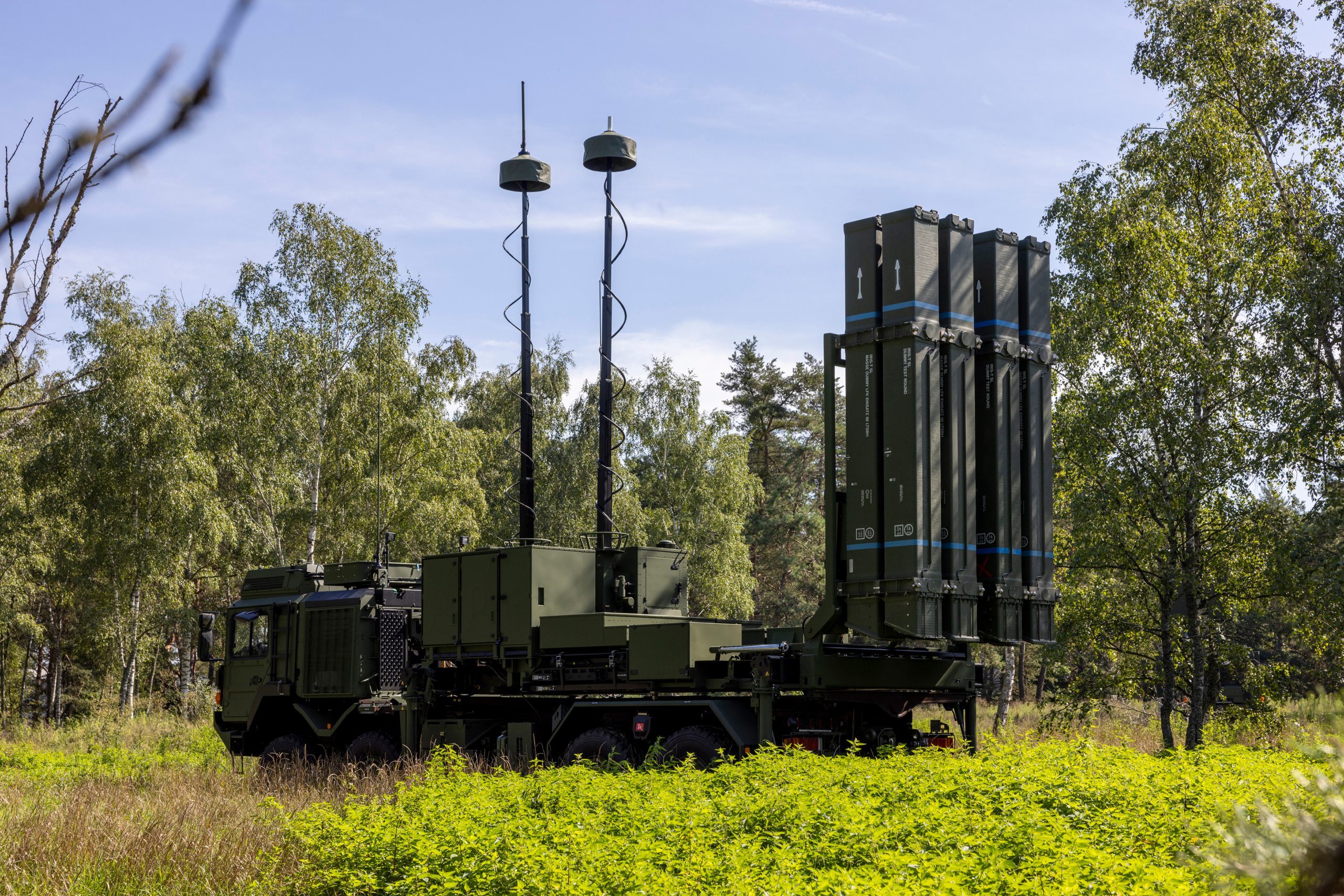
IRIS-T SLX is being developed as the long-range layer of Diehl’s ground-based air-defence family. Diehl states an effective intercept range of up to 80 km and altitude coverage above 25 km, with an imaging infrared seeker and an in-flight uplink that can update or abort a mission after launch.
The system has been designed to integrate with existing IRIS-T SLM architecture. A fire unit comprises launchers, radar, and the Common Tactical Operations Center, while compatibility with SLM is intended to permit mixed SLM and SLX missile loads. Extending range without replacing the wider command-and-control structure concentrates much of the development burden inside the interceptor.
A dual-pulse motor divides usable propellant energy into separate phases rather than relying on a single continuous burn, giving designers more control over the missile’s energy state at different points in an engagement. Retaining useful energy later in flight can support manoeuvre against distant or changing targets, although the approach introduces additional demands around ignition sequencing, grain design, thermal behaviour, and reliability.
Nammo already supplies rocket motors for IRIS-T and IRIS-T SLM, alongside propulsion for other missile programmes. The SLX work moves the company into a new motor design rather than a straightforward continuation of an existing production item. Prototype testing at Raufoss will have to demonstrate thrust performance, repeatability, storage characteristics, and a manufacturing route suitable for later series production.
Raufoss provides a concentrated development environment for that work. The site manufactures medium- and large-calibre ammunition and rocket motors for military and space applications and includes more than 20 test ranges. Keeping motor manufacture, instrumentation, and static firing relatively close together shortens the feedback loop between test data and the next design iteration.
The broader interceptor still has to balance propulsion with seeker performance, guidance, structural limits, and thermal management. Higher range is of little value if terminal manoeuvrability deteriorates, while a larger propulsion section can alter mass distribution and impose new loads on the airframe. The missile must also remain compatible with the handling, storage, and launcher constraints of the wider IRIS-T system.
Diehl’s decision to preserve compatibility with the existing SLM architecture offers an industrial advantage if development targets are met. Operators already fielding IRIS-T SLM could add a longer-range interceptor without duplicating the complete radar, command, and launcher chain. Much of the additional procurement requirement could consequently sit in missiles, software, and associated support rather than an entirely separate battery architecture.
European air-defence procurement is increasingly exposing the production limits behind missile inventories. Radar and command systems can remain in service for years, but interceptor stocks are consumed in training, testing, and operations and require replenishment. Rocket-motor capacity, energetic materials, specialist chemicals, and qualified production staff therefore sit in the same availability chain as final missile assembly.
Nammo has been expanding propulsion and ammunition capacity across its European operations against that background. IRIS-T SLX remains a development programme rather than a volume-production contract, but moving prototype motors into static firing creates engineering evidence that will influence later qualification and production planning.
Diehl continues to present IRIS-T SLX as the next range layer above IRIS-T SLM, with the interceptor itself still under development. A first development firing has been targeted for 2027, giving the propulsion work a defined route from component-level trials into an integrated missile event.
The next milestones are successful static firings, confirmation that the dual-pulse thrust profile matches its design model, and integration into a flightworthy interceptor. If those stages remain on schedule, Raufoss will become one of the industrial centres determining whether IRIS-T SLX can progress from an extended-range design into a repeatable European missile-production programme.