IN Brief:
- Latvia has selected Excalibur Army's 155 mm/52-calibre Morana wheeled artillery system.
- The government cited price, delivery terms, capability, and Latvian industrial participation.
- Morana carries 45 rounds and uses an automated turret on an 8×8 Tatra chassis.
Excalibur Army has been selected to supply Latvia with the Morana 155 mm wheeled self-propelled howitzer after the government concluded that the Czech system offered more favourable pricing and delivery terms than the Archer solution previously pursued with Sweden.
Latvia’s Cabinet approved the Morana procurement following an assessment of cost, delivery schedules, operational capability, and participation by the domestic defence industry. The Ministry of Defence has not disclosed the quantity, contract value, or delivery timetable, but says Latvian industrial involvement is intended to form part of the contract.
The decision follows market research launched in May 2024. Latvia continued negotiations with BAE Systems Bofors over Archer and with Excalibur Army over Morana, after signing a June 2025 letter of intent with Sweden that anticipated a future agreement for the Swedish artillery system.
Further assessment changed that route. Latvia’s defence ministry concluded that the resources and delivery times associated with Archer did not fit its current defence plans, while the Excalibur Army offer provided what the ministry described as an operationally equivalent system with more favourable pricing and delivery conditions.
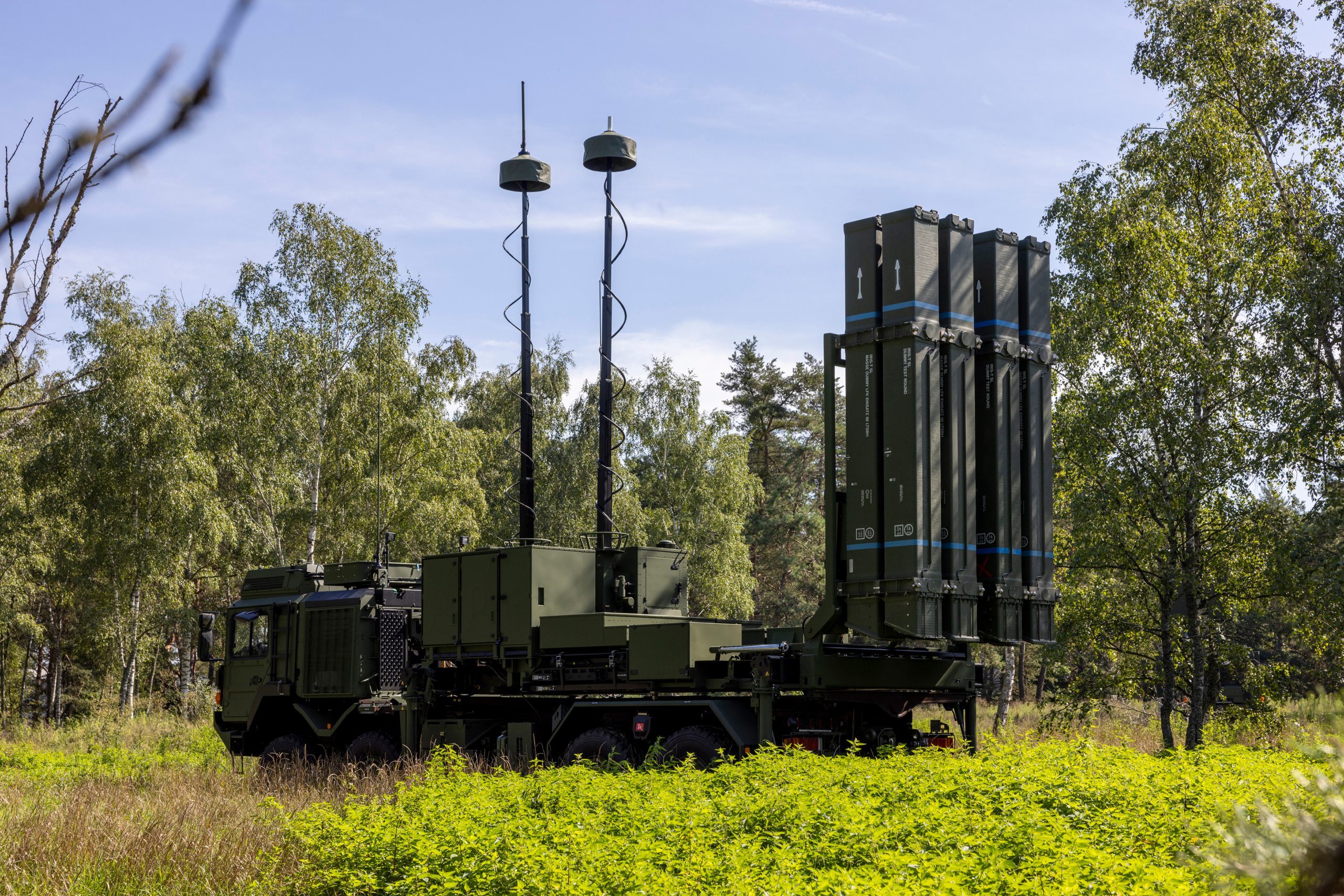
Morana is built around a 155 mm/52-calibre weapon installed in an armoured turret on a four-axle Tatra chassis. Excalibur Army combines a truck-based automotive platform with an independently operated turret, retaining the road mobility associated with wheeled artillery while placing the crew inside a protected cabin.
The manufacturer gives Morana a firing range of 41.5 km, with 45 rounds carried aboard the vehicle. Its automatic loading system can fire up to six rounds during the first minute after entering a firing position, and the system supports multiple-round simultaneous-impact firing.
Automation reduces the crew requirement to three people. Excalibur Army says the vehicle can prepare for firing within 40 seconds of stopping, with gun laying, ammunition loading, and firing controlled from workstations inside the cab.
The onboard architecture combines navigation, ballistic calculation, automatic weapon guidance, diagnostics, and ammunition management. Excalibur Army also provides for integration of a customer-specified fire-control solution, giving prospective users a route to connect the vehicle with national command and artillery-management systems.
Mobility is provided by a Tatra four-axle chassis with a 600 hp engine, automatic transmission, central tyre-inflation system, and all-wheel steering. The manufacturer lists a road speed of 90 km/h and positions the vehicle as capable of operating both on roads and over demanding terrain.
A wheeled artillery system can reduce some of the transport burden associated with tracked platforms by moving between firing positions over road networks without a dedicated heavy-equipment transporter. The trade-off remains dependent on terrain, protection requirements, vehicle mass, and the way the artillery unit is expected to operate.
Latvia’s decision places those operating considerations alongside acquisition speed and cost. The ministry wants to develop indirect-fire capacity more quickly than it believed possible under the Archer route, while retaining a 155 mm NATO-calibre system with automated ammunition handling and protected crew positions.
The change also alters the industrial arrangement attached to the programme. The earlier approach was tied to Swedish cooperation, whereas the Morana offer includes planned Latvian industrial participation. The ministry has not yet defined that workshare publicly.
Local participation could ultimately cover maintenance, spares, training, selected component work, or other through-life activities, but no specific manufacturing package has been announced. The final contract will determine whether Latvian industry receives a substantial technical role or a narrower support function.
The artillery decision does not represent a wider retreat from Swedish defence cooperation. Latvia continues to procure Swedish systems, including RBS 70 NG short-range air defence equipment, and received Saab Giraffe 1X surveillance radars at the end of 2025.
For Excalibur Army, selection by Latvia would move Morana further from demonstration and marketing activity towards an operational procurement programme. The company will have to convert the vehicle’s published specifications into serial equipment, training, documentation, spares, maintenance support, and whatever local industrial arrangements are agreed with the customer.
Several commercial details remain outstanding, including vehicle quantity, contract value, delivery sequencing, and the precise Latvian workshare. Those figures will determine the scale of the production programme, but the equipment choice is now defined: Latvia has selected Morana after judging its combination of capability, price, delivery, and domestic-industry participation to be better aligned with current defence plans.