IN Brief:
- Arctic RAVN received €2.5m in convertible loan commitments within five days, above a €2m target.
- The Finnish manufacturer plans tens of thousands of electronic speed controllers by year-end 2026.
- Flight controllers are the next production focus; a two-million-board annual capacity remains a longer-term ambition.
Arctic RAVN has secured €2.5 million in convertible loan commitments to expand its Finnish drone-electronics operation. Investors committed more than the initial €2 million target within five days, according to the company. The commitments provide a financing route for manufacturing expansion and product development, although the company has not identified the lenders or reported conversion into equity. Its proposed production volumes are targets rather than units already delivered.
Electronic speed controllers (ESCs) are the first manufacturing priority, followed by flight controllers for uncrewed aircraft. Arctic RAVN reports investing more than €1 million in additional ESC capacity and aims to make tens of thousands of controllers before the end of 2026. It says a significant proportion of the intended output has been reserved by customers, without specifying the number of firm purchase orders or deliveries. The company has not identified its manufacturing throughput, current yield or the customers involved.
An ESC takes commands from a flight controller and regulates the electrical power delivered to a drone motor. On a multirotor aircraft, each propulsion motor needs sufficiently responsive control to adjust thrust as the aircraft stabilises, manoeuvres or compensates for changing loads. Switching devices, control firmware, current sensing, thermal design and the quality of board assembly all affect how consistently a controller performs. Reliability can suffer when an installation encounters repeated high-current operation, vibration or high ambient temperatures.
Its listed AR41ESC is a four-in-one controller for 6S to 12S lithium-polymer battery systems, combining four motor-drive channels on one circuit board. Arctic RAVN advertises continuous current of at least 60 amperes per channel, a ten-second burst rating of at least 90 amperes, and operation between minus 30 and 85 degrees Celsius. Bidirectional DShot 300/600 and servo PWM provide control interfaces, while the published design uses a ten-layer printed circuit board. Those are manufacturer-stated specifications; the product page says test results are still to come. They do not establish qualification of any complete military aircraft installation.
The next product family is a flight controller, which performs a different function. Whereas an ESC handles motor drive power, the flight controller processes sensor inputs, applies the vehicle’s control algorithms and generates commands to the propulsion system. Its design therefore brings additional requirements for computing, inertial sensing, power distribution, communications and software integrity. The company also identifies motors and modular airframe components in its wider product roadmap, but the funding announcement does not establish commercial production volumes for those products.
Supply-chain provenance is part of Arctic RAVN’s commercial proposition. It says the products are designed and manufactured in Finland using components sourced from Europe and NATO-allied countries, rather than China-origin parts. Such claims become material to defence customers only when they can be substantiated at part and supplier level. Controlled bills of materials, origin declarations and procedures for approving substitute components are necessary to maintain a documented supply configuration as manufacturing volumes rise.
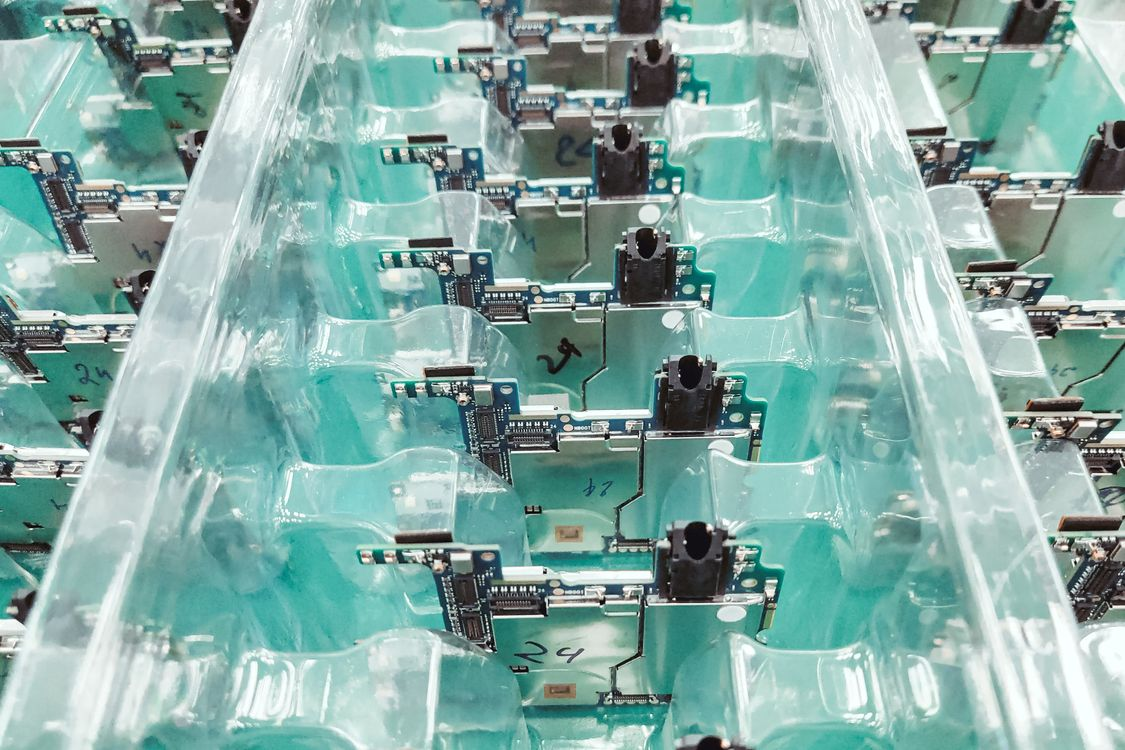
Production at higher volume involves more than obtaining assembly equipment. Printed circuit board manufacturing, automated placement, solder-process control, firmware programming and end-of-line electrical tests must be repeatable over successive lots. High-current ESCs also need functional testing under loads that exercise their switching devices and temperature rise. Incoming-component inspection and lot traceability become particularly important if the same assemblies are destined for numerous airframe configurations and supply contracts.
The company ultimately wants capacity for up to two million circuit boards annually, a substantially larger figure than its immediate ESC output target. That upper figure describes intended production capacity, not confirmed annual orders or shipments. Arctic RAVN has not released the operating shifts, line speeds, product mix or acceptable yields needed to assess when the factory could reach that rate. The manufacturing plan therefore contains two separate tests: commissioning enough reliable output for near-term customer demand, then demonstrating that the process can scale without sacrificing traceability or electrical performance.
The business is part of Finnish Defence House’s venture-building portfolio and reports discussions and follow-up orders involving European defence manufacturers. It has also stated that the convertible loan commitments arrived before the official launch of its first product. Consequently, the near-term commercial test is whether prototype and early customer demand translate into repeat orders for parts that meet required electrical and environmental specifications.
Cost, product interchangeability and component availability will influence whether the business can secure repeat defence orders. ESCs must retain consistent firmware settings and electrical characteristics between production lots, especially when manufacturers integrate controllers into several aircraft types. By the end of 2026, completed controller deliveries, customer acceptance results and progress on flight-control hardware will offer more concrete measures of Arctic RAVN’s industrial expansion than its proposed two-million-board ceiling.