IN Brief:
- Merlin has received a $500,000 AFRICOM contract for an autonomous casualty evacuation demonstration.
- A Cessna 208B Grand Caravan equipped with Merlin Pilot will perform a simulated mission without reliance on an onboard flight crew or remote ground station.
- The Morocco demonstration is planned for December 2026, with subsequent operational procurement remaining unconfirmed.
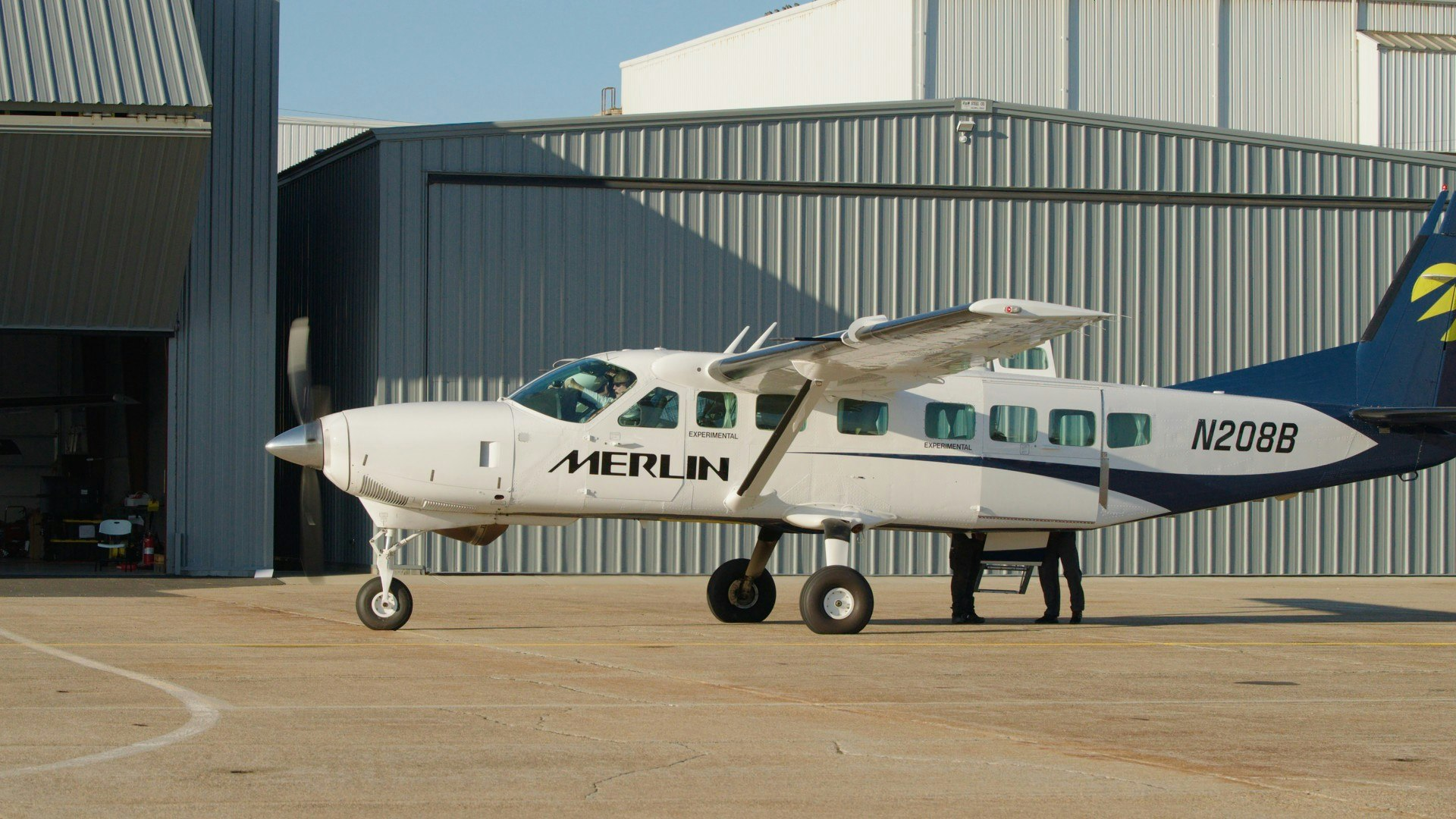
Merlin has secured a $500,000 contract from US Africa Command to demonstrate autonomous casualty evacuation using a modified Cessna 208B Grand Caravan, extending its aircraft autonomy programme into a military medical transport application.
The award covers the initial phase of AFRICOM’s Autonomous Casualty Evacuation Industry Technology Challenge. Merlin plans to conduct the demonstration in Morocco during December 2026, within the early part of the US government’s 2027 fiscal year.
Its Merlin Pilot system will be tasked with executing a simulated casualty evacuation mission, including flight planning, departure, navigation to a collection location, and a return flight following simulated patient loading. The planned activity does not involve the evacuation of an actual casualty.
The demonstration is intended to operate without relying on an onboard flight crew or continuous control from a remote ground station. Merlin has not published the detailed flight authorisations, safety arrangements, or operating restrictions that will govern the proposed trial.
AFRICOM’s area of responsibility includes extensive territories where transport distances and limited infrastructure can complicate access to medical treatment. The challenge seeks to examine whether autonomous aircraft can provide an additional transport option where conventional crewed aviation faces logistical or security constraints.
Remotely piloted aircraft depend on communications between the vehicle and its controlling station. Where those connections become unavailable, the aircraft must either continue under an approved automated procedure or respond according to its programmed contingency arrangements.
Merlin’s system is designed to carry more of the flight-management process aboard the aircraft. It combines software and aircraft interfaces intended to execute an authorised mission, manage navigation, and respond to selected changes in operating conditions without continuous instructions from an external pilot.
The proposed demonstration begins with an operator assigning a mission. Merlin Pilot is then intended to generate a route, undertake the departure, and complete the flight to the designated casualty collection location.
During the journey, the system is designed to replan around hazards and communicate with air traffic control using natural language processing. These functions are part of Merlin’s stated capability, but their performance during the AFRICOM demonstration has not yet been established.
The company also intends to demonstrate continued operation when a communications link becomes unavailable. The aircraft would remain responsible for following its authorised flight plan within the applicable operating limits, rather than depending on uninterrupted commands from a remote station.
Aircraft autonomy involves several interacting engineering systems. Navigation sensors provide information about position and motion, flight-control equipment commands the aircraft, and onboard software manages the sequence of actions needed to carry out the approved mission.
Contingency handling adds further complexity because the aircraft must identify conditions requiring a change to its planned behaviour. Responses must be consistent with the system’s approved design and operating procedures, especially where external communications are limited.
Merlin has selected the Cessna 208B Grand Caravan for the initial demonstration. The single-engined turboprop aircraft provides a comparatively accessible platform for evaluating autonomous flight in conjunction with the physical requirements of patient transport.
The Caravan’s large cargo door and flat-floor cabin are intended to allow stretcher loading from ground level. The proposed configuration does not require the rotor wash, hoisting arrangements, or other access procedures associated with helicopter transport.
Merlin plans to install an air ambulance module providing oxygen, electrical power, and mounting positions for patient-monitoring equipment. The arrangement is intended to demonstrate the aircraft’s suitability for carrying medical equipment alongside the autonomous flight system.
Medical equipment integration affects aircraft weight, electrical demand, securing arrangements, and access to patients. The requirements become particularly important when equipment is added to an existing airframe rather than incorporated into a new aircraft designed specifically for casualty evacuation.
The company has not disclosed the final medical module specification, aircraft loading limits, or the detailed configuration proposed for the trial. The demonstration will use simulated patient loading, so it should not be interpreted as proof of a certified operational medical evacuation service.
Merlin has undertaken previous autonomous flight testing using Cessna Caravan aircraft and has received additional US military funding for aircraft autonomy development. Its separate work includes a programme involving the C-130J transport aircraft for US Special Operations Command.
The company describes Merlin Pilot as an aircraft-independent architecture intended to support integration across different fixed-wing platforms. Individual installations still require engineering and evaluation appropriate to each aircraft’s controls, avionics, operating characteristics, and approved limitations.
Merlin has identified the Beechcraft King Air family as a possible future platform for expanding autonomous casualty evacuation capability. A twin-engined aircraft could offer different payload and cabin arrangements, although no procurement or integration contract for that proposed extension has been confirmed through the AFRICOM award.
The $500,000 contract funds the initial demonstration rather than a fleet acquisition or deployment programme. Subsequent activity will depend on the results of the planned mission and decisions about further testing, aircraft integration, and operational requirements.
The Morocco trial is intended to assess the complete sequence of autonomous aircraft operations rather than a single isolated navigation or control function. Its results will provide evidence of how Merlin Pilot performs during the specified scenario, while any wider operational application would require additional validation and approval.