IN Brief:
- The Royal Navy will purchase three offshore support vessels from the UK–Norway P1118 programme, with an option for three more.
- The vessels are intended to deploy and support uncrewed mine countermeasure systems away from conventional minehunter crews.
- An earlier £90m allocation supports the vessel purchase; first delivery is expected in 2031.
The Royal Navy will acquire three offshore support vessels through Norway’s P1118 Standardised Vessel Programme to operate uncrewed mine countermeasure systems. British and Norwegian defence ministers confirmed the commitment on 12 November at the Atlantic Future Forum in Oslo, with the first vessel expected to enter UK hands in 2031. The arrangement also provides an option for three additional vessels. It gives the Royal Navy a defined route into a new class of mothership while aligning its procurement with a Norwegian programme already being developed for national and allied requirements.
A further £90 million for the acquisition was identified in the UK’s Defence Investment Plan earlier in 2026. The 12 November commitment now ties the intended British purchases to Norway’s P1118 programme and gives the first delivery year, rather than announcing a second £90 million allocation. The final vessel design, shipbuilder, total acquisition cost, and detailed mission equipment have not been disclosed. Norway is pursuing a competitive procurement for its standardised vessels, so the British commitment precedes selection of the eventual design and industrial delivery arrangements.
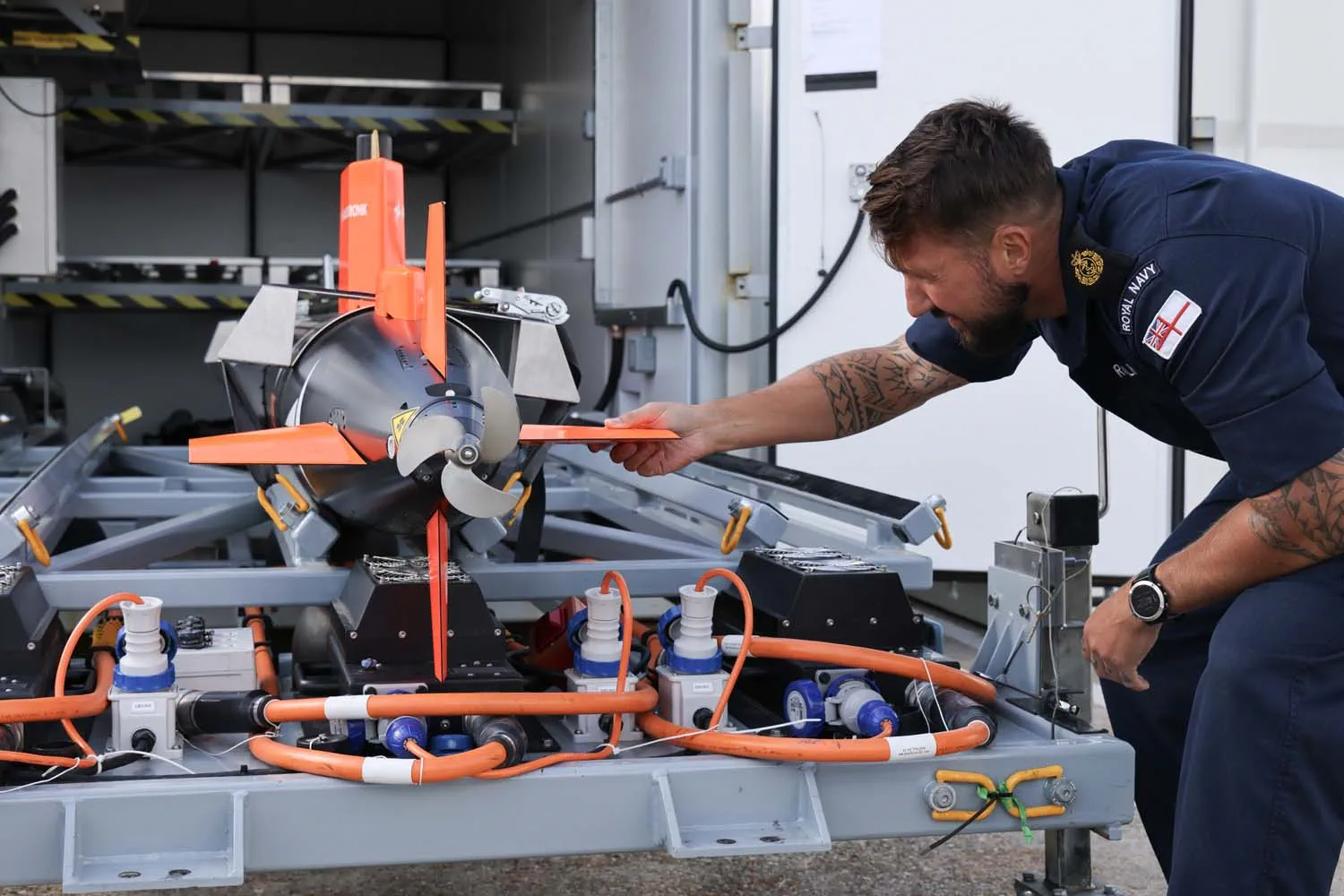
The vessels will act as floating bases for uncrewed mine-hunting systems, supporting their deployment, recovery, maintenance, and operational control. In a traditional mine countermeasure operation, a crewed ship may need to enter or work close to a potentially hazardous area while using its own sensors and equipment. A mothership arrangement allows smaller remotely controlled or autonomous vehicles to approach the suspected threat while the principal support vessel and its crew remain at greater distance. The degree of separation depends on the vehicles’ capability, operating environment, and communications links. That separation is only useful if operators can preserve an accurate picture of vehicle position and recover a craft safely following technical faults, adverse weather, or an interrupted control connection.
Mine countermeasure missions typically require more than detecting an object. Survey platforms collect acoustic or other sensor information, operators assess contacts, and a suitable disposal system may then be tasked to identify or neutralise a confirmed mine. Maintaining the sequence requires reliable navigation, accurate localisation of objects, controlled exchange of sensor data, and safe procedures for deploying and recovering the vehicles. The mothership must provide enough deck space, handling equipment, power, and maintenance support for the selected mix of systems, but the government’s latest commitment does not yet specify which uncrewed craft will be embarked.
Joining Norway’s P1118 programme offers a route towards vessel standardisation between two allied navies. Shared hull or support-system arrangements can simplify training, maintenance planning, and some supply chain activity, although national mission equipment may still differ. The Norwegian procurement authority has said the standardised programme is intended to support naval and coastguard requirements and has begun by focusing on the larger seagoing variant. The UK announcement identifies the ships as Offshore Support Vessels, described within the Norwegian programme as standardised vessels.
The vessels will be delivered through the Maritime Capability Partnership Framework between the two governments. This sits alongside Norway’s acquisition of Type 26 frigates from Britain, part of a wider naval industrial relationship. The Royal Navy said the frigate programme supports approximately 4,000 jobs across the UK supply chain, including more than 2,000 at BAE Systems’ Glasgow shipyards. Those employment figures describe the frigate contract: the government has not assigned the same jobs or an additional employment estimate to the offshore support vessels. The latter programme’s industrial workshare remains dependent on the selected design and procurement arrangements.
The mothership purchase is one strand of the Royal Navy’s work to bring crewed and uncrewed systems into routine operations. The separate Atlantic Net programme concerns distributed underwater sensing and autonomous surveillance, rather than the acquisition of these support ships. Both involve the deployment and control of uncrewed maritime systems, but their procurement purposes and £90 million funding references are distinct. The new vessels are intended to carry the mine countermeasure systems and personnel needed to conduct operations at a distance from suspected mine threats.
The Royal Navy expects the ships to support mine countermeasure operations and allied maritime security on NATO’s northern flank. Their final mission fit will determine the numbers and types of uncrewed craft they can carry, the recovery equipment required, and the maintenance capability available aboard each ship. With the first delivery expected in 2031, the shipbuilder, hull design, handling systems, and mission-system integration arrangements still need to be confirmed before the Royal Navy can plan equipment acceptance and crew training against a firm vessel configuration.