IN Brief:
- Cerberus has agreed to acquire the US Space Systems business of Airbus U.S. Space & Defense.
- The Florida operation has produced more than 650 satellites that have subsequently been launched.
- Completion is anticipated by the end of 2026, subject to customary closing conditions.
Investment management group Cerberus Capital Management has signed an agreement to acquire the US Space Systems business of Airbus U.S. Space & Defense, including its spacecraft manufacturing operation in Merritt Island, Florida. The proposed transaction would establish an independently owned American satellite supplier serving commercial and national security customers.
Cerberus expects completion by the end of 2026, subject to the customary closing conditions. The investment group intends to expand the acquired company’s engineering organisation, product portfolio, and US supply chain, although it has not disclosed the transaction value or committed to a specific level of additional capital expenditure.
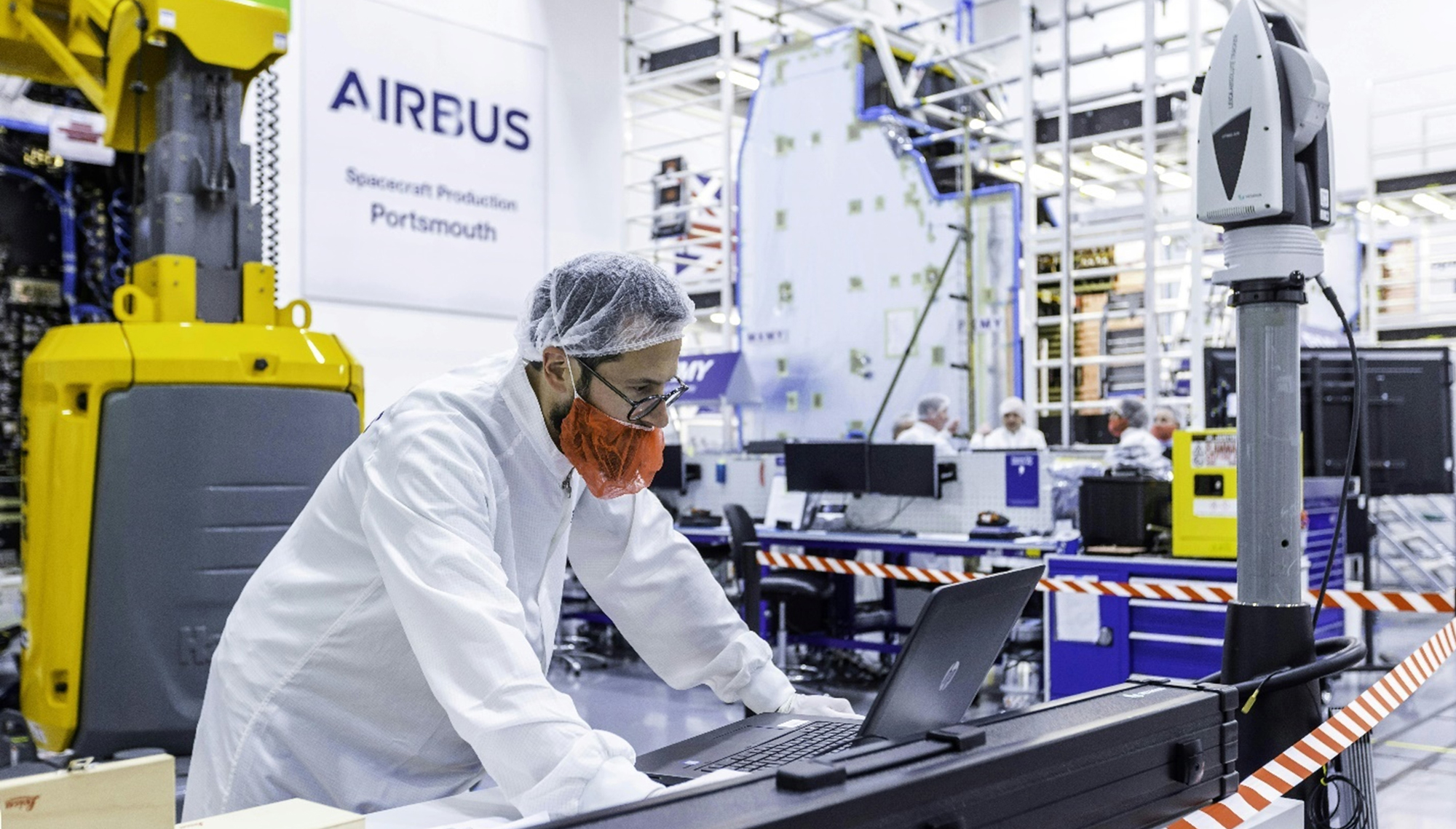
The business operates a manufacturing facility of approximately 200,000 square feet near the Kennedy Space Center. Its activities encompass spacecraft design, manufacturing, integration, testing, and preparation for launch. More than 650 satellites manufactured by the operation have been launched for customers, according to Cerberus.
The Florida factory originated in Airbus’s joint venture with satellite communications company OneWeb, established in 2016 to manufacture spacecraft for a commercial constellation. The resulting industrial programme required Airbus to develop production arrangements capable of supporting substantially larger volumes than those associated with individually commissioned satellites.
The original joint venture produced more than 600 spacecraft for OneWeb’s first-generation network. In January 2024, Airbus acquired Eutelsat OneWeb’s remaining 50% interest in the business, taking sole ownership of the Florida facility. Eutelsat separately confirmed completion of the divestment that month.
By that point, Airbus had begun adapting the operation to serve a wider range of customers. It had reconfigured the factory to accommodate its Arrow450 product line and identified further expansion opportunities among both commercial and government customers. Cerberus would therefore acquire an established industrial operation whose development already extends beyond the initial OneWeb production programme.
Constellation procurement has changed the economics of satellite manufacturing by increasing the number of spacecraft purchased under individual programmes. Suppliers can distribute the costs of production engineering, tooling, and qualification across a greater number of units, provided orders are sufficient to sustain factory utilisation. Production continuity becomes a material financial consideration as manufacturers invest in equipment and recruit specialist personnel ahead of contracted deliveries.
A common spacecraft platform can also reduce repeated development expenditure when serving several customer programmes. The commercial benefit depends upon how much engineering can be shared between orders, since the equipment installed on a spacecraft and its intended use still influence integration and acceptance requirements. A manufacturer supplying different customer groups must maintain the appropriate documentation and quality controls across the products it delivers.
Government space procurement introduces additional responsibilities concerning the ownership of suppliers, access to technical information, and the availability of domestic industrial resources. Cerberus has identified investment in the US supply chain as one of its priorities for the acquired business. The proposed expenditure would complement the Florida factory’s existing manufacturing capabilities rather than establish an entirely new spacecraft production operation.
The acquisition agreement coincides with further Airbus investment in European satellite programmes. In December 2024, Eutelsat contracted Airbus to manufacture an initial 100 spacecraft for the extension of its OneWeb network, with delivery targeted from the end of 2026. Airbus subsequently secured an order for 229 additional satellites in September 2026. The initial extension order identified Toulouse as the manufacturing location, rather than Merritt Island. Together, the two announced orders account for 329 additional spacecraft for the commercial constellation.
These contracts are distinct from the US Space Systems divestment. The transaction does not encompass the entirety of Airbus Defence and Space or its European satellite manufacturing activities. Nor has Cerberus announced that existing contracts will be transferred between the US and European manufacturing organisations.
The new ownership structure would allow the Florida business to pursue its own investment and commercial priorities, subject to the obligations attached to its customer contracts. Continuity of engineering personnel, manufacturing processes, supplier agreements, and customer acceptance arrangements will be central to the transition if the transaction closes.
Cerberus’s investment case rests partly upon the demand for American spacecraft manufacturing capacity from both government and commercial operators. The extent of that demand available to the Florida business will become clearer through new customer commitments and subsequent manufacturing orders. Completion of the acquisition remains the immediate milestone, with the size and timing of further investment to be established thereafter.