IN Brief:
- Abaco has launched the FMC600 fibre-optic module carrier for harsh environments.
- The platform supports PAM4 optics and up to eight bidirectional channels.
- Integration speed will depend on production-ready ruggedisation and test.
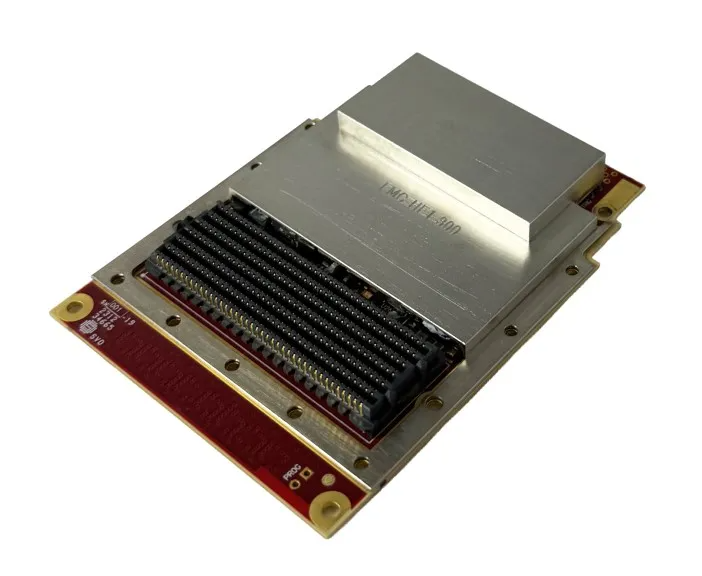
Abaco Systems has introduced the FMC600, a ruggedised fibre-optic module carrier designed for deployed defence systems operating in harsh environments, as the company targets growing bandwidth demand across radar, electronic warfare, and distributed sensing architectures.
The FMC600 is positioned as a modular carrier that can be configured to suit different platform needs across air, land, and sea domains. Abaco states the design can support up to eight bidirectional channels and uses PAM4 optical modules to increase throughput, aligning with the shift toward higher-bandwidth data movement between sensor front ends and processing nodes.
Abaco also says the FMC600 can be supplied with up to two Samtec FireFly optical modules, each providing up to four bidirectional channels and a combined 100 Gb/s of aggregated data per module, with an intended migration path toward Halo PAM4 optics as requirements increase.
For defence integrators, fibre-optic throughput upgrades are not simply about peak speed. They are about predictability under vibration and thermal stress, and about maintaining modularity inside open architectures where cards and carriers are swapped or upgraded without redesigning the whole backplane.
Rugged photonics is an industrial packaging problem
Rugged fibre solutions live and die by mechanical and thermal design choices. Optical modules and high-speed connectors are sensitive to alignment, contamination, and stress, which means the manufacturing burden shifts into controlled assembly, inspection discipline, and repeatable handling processes.
In production, that typically translates into tighter work instructions, more rigorous incoming inspection for connectors and cables, and environmental screening that is closer to “platform-grade” than most commercial data centre optics ever see. The goal is not maximum throughput in a lab; it is stable performance after months of shock, vibration, and temperature cycling.
Integration and test are the hidden schedule drivers
High-bandwidth modules also amplify the test load. Signal integrity validation, BER testing, and end-to-end throughput verification can become pacing items if they are not engineered into the manufacturing flow early. For modular carriers, configuration flexibility is a selling point, but it can also explode the combinatorial test matrix unless the vendor provides clear, bounded configurations with repeatable acceptance criteria.
As defence platforms push more sensor processing to the edge, fibre bandwidth is becoming a standard design assumption rather than a specialist upgrade. Abaco’s pitch with FMC600 is that modular open architectures can absorb that shift without the usual bespoke integration penalty — provided the hardware ships with production discipline, not just performance claims.