IN Brief:
- A US-led push to multiply advanced weapons output is pulling major primes deeper into long-cycle capacity expansion.
- For BAE Systems, the industrial challenge runs well beyond assembly, into energetics, guidance, qualification, and plant throughput.
- The pace of any ramp will depend less on political theatre than on how quickly suppliers, facilities, and skilled labour can be locked in.
BAE Systems has tied itself to a US framework aimed at sharply increasing the output of advanced munitions, as allied stockpiles remain under pressure and procurement cycles move from replenishment into outright expansion. The significance for industry is immediate. This is no longer a question of drawing down inventory and placing follow-on orders; it is a question of whether the production base can sustain materially higher throughput without collapsing under its own bottlenecks.
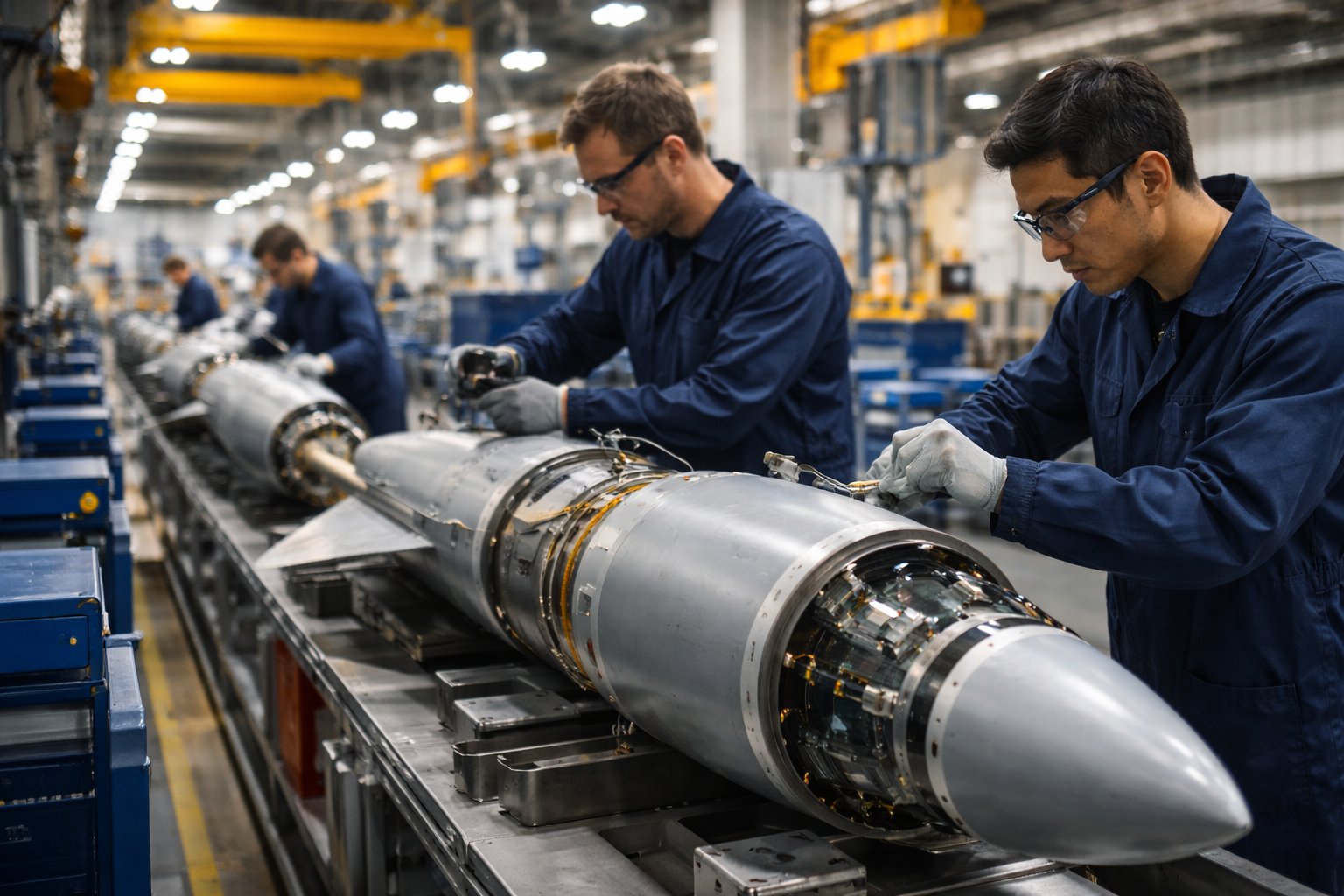
For a prime such as BAE, that means a wider industrial commitment than the headline suggests. Precision weapons production depends on a chain of tightly controlled inputs, from energetics and rocket motor materials through to guidance electronics, actuators, machined casings, fuzing systems, and final integration capacity. Any attempt to quadruple output, even under a phased framework, quickly runs into the unglamorous limits of the defence factory floor.
That is where the current production environment becomes harder to ignore. Western munitions demand has already been stretched by sustained operational requirements, export commitments, and the slow rebuild of reserve inventories. The result is a manufacturing landscape in which new demand does not simply fill spare capacity; it competes for line time, specialist labour, hazardous-process permits, and a supplier base that was never designed for surge conditions lasting years rather than months.
Energetics and fill-finish capacity
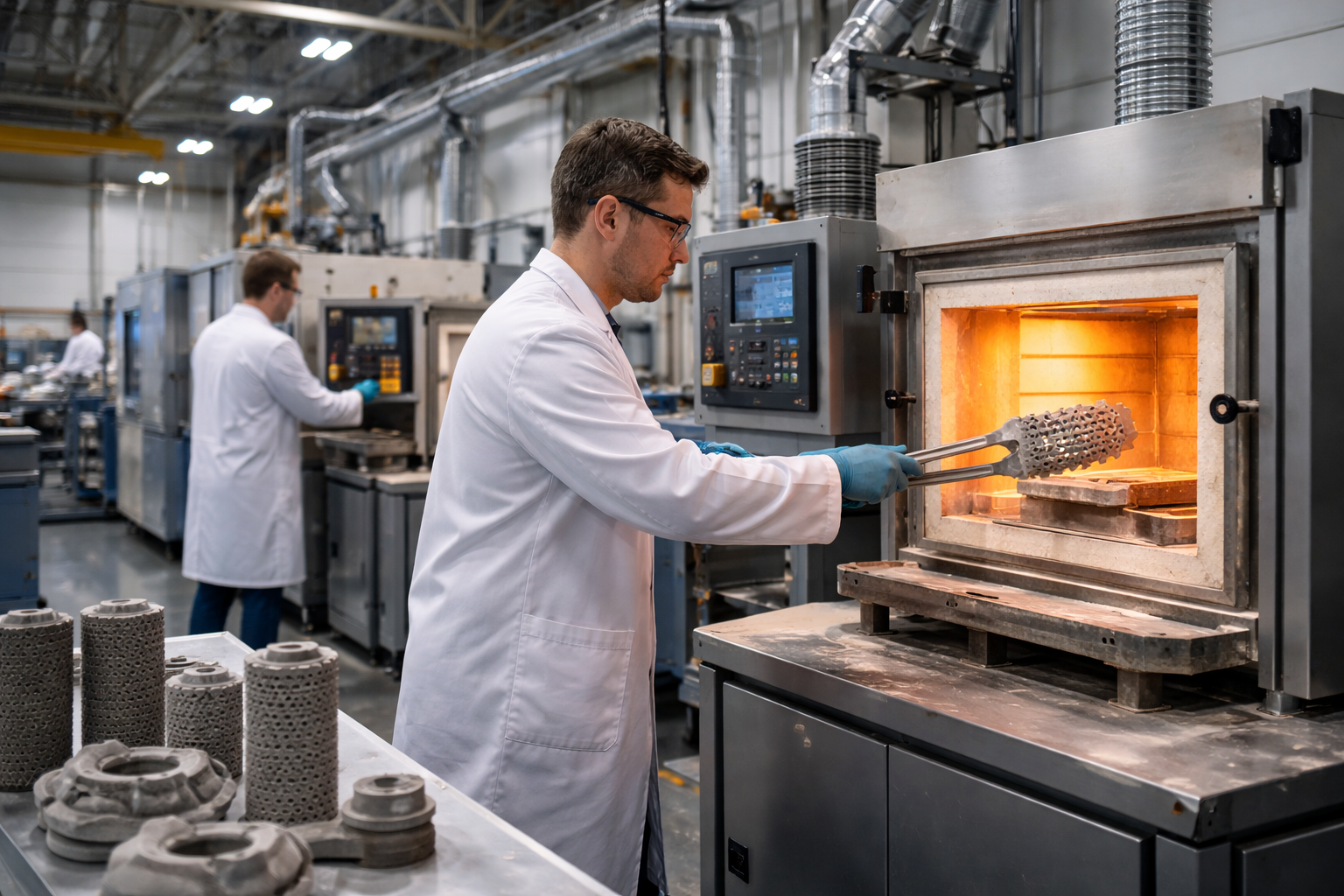
The least flexible part of the equation is often the most decisive. Energetics production, explosive filling, and propellant processing require heavily regulated facilities, blast-safe layouts, and a workforce trained for hazardous manufacturing. These are not capabilities that can be expanded with a few extra shifts and a procurement announcement.
If BAE and its peers are serious about sustaining a higher production rate, they will need more than assembly expansion. They will need dependable access to explosive precursors, casting and curing capacity, safe storage, environmental approvals, and a second layer of suppliers that can meet defence-grade audit requirements. In practice, the bottleneck is rarely a single plant. It is the cumulative drag of every constrained process between raw chemical input and a finished round or missile section.
Advanced weapons bring a second problem: complexity. The more precise the munition, the more pressure falls on subsystems that are slower to qualify and harder to dual-source. Seekers, inertial sensors, processors, power units, connectors, and control surfaces all sit in a narrower supplier pool than basic steel structures or general-purpose machining.
That puts a premium on supplier qualification and configuration discipline. Scaling output at speed while holding performance and reliability is a hard manufacturing exercise, particularly when parts traceability, export control, and cybersecurity assurance all sit inside the same build cycle. A production ramp that looks straightforward on paper can stall quickly if one guidance component, one energetic fill step, or one machining house fails to keep pace.
The result is that BAE’s role in any US-led expansion will be judged less by summit-stage commitments than by what happens inside plants, test cells, and supplier frameworks over the next several quarters. If capacity expansions already under way can be translated into repeatable output, the company stands to deepen its position in a market that is becoming structurally larger. If not, defence ministries will discover, again, that industrial resilience is harder to procure than the weapon itself.