IN Brief:
- The Air Force has raised the KC-46 foreign military sales contract ceiling from $5.7bn to $19.1bn.
- The modification covers Japan, Israel, and future partner countries, with Seattle-based work running through April 2035.
- The expanded vehicle provides contractual capacity for further aircraft, integration, support, and capability work as international fleets develop.
Boeing has received a $13.4bn ceiling increase on the US Air Force contract used for KC-46 foreign military sales, lifting the vehicle from $5.7bn to $19.1bn and adding scope for Japan, Israel, and future partner countries. The modification extends work in Seattle through 28 April 2035, creating substantially more contractual capacity for international tanker acquisition and support. No funds were obligated at award, so the headline value is a ceiling rather than an immediate purchase.
Contract FA8609-19-D-0007 has previously supported KC-46A Foreign Military Sales activity, including Israel’s tanker acquisition. The latest modification therefore expands an established procurement route through which allied requirements can be placed rather than creating a separate tanker programme. The Air Force Life Cycle Management Center at Wright-Patterson Air Force Base remains the contracting activity.
Japan and Israel are already international KC-46 customers. By the end of August, six aircraft had been delivered to the Japan Air Self-Defense Force and two to the Israeli Air Force, alongside 112 delivered to the US Air Force. Israel received its first aircraft in May and has six tankers on contract, while Japan has progressively expanded its Pegasus fleet since receiving its first KC-46A in 2021.
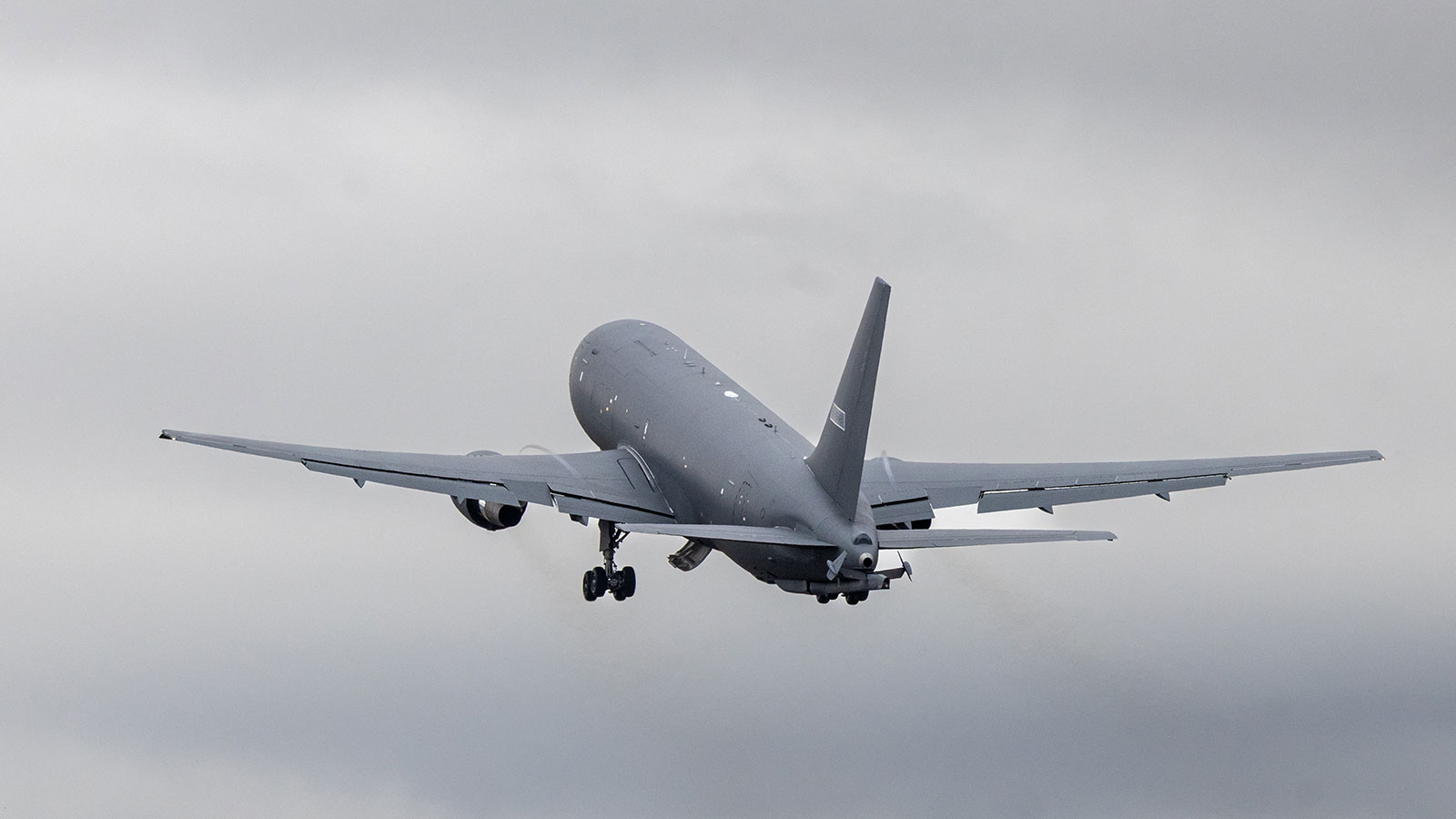
That international fleet gives the enlarged ceiling a direct industrial foundation. Boeing builds the KC-46 on its 767 production line in Everett, Washington, before militarisation and mission-system integration, tying export demand into the same widebody manufacturing system supporting US production. Country-specific orders can also generate work across support equipment, engineering, integration, training, sustainment, and later capability upgrades.
The modification does not amount to a $13.4bn aircraft order from Japan or Israel. An indefinite-delivery contracting ceiling establishes the maximum value that may be ordered under the vehicle, while individual task or delivery orders create funded work. Including future partner countries nevertheless gives the Air Force a much larger framework through which additional international demand can be contracted if customers emerge.
The new ceiling also extends the KC-46 international contracting horizon into the middle of the next decade. US planning now keeps Pegasus production active through the next decade after the Air Force moved away from a separate near-term tanker competition and towards continued KC-46 procurement. International work can support continuity across aircraft assembly, engineering, mission-system integration, spares, and support while domestic production proceeds through its own lots.
The expanded sales framework arrives while Boeing and the Air Force continue capability and readiness improvements across the tanker. Flight testing of Remote Vision System 2.0 reached an initial milestone in June, bringing 4K three-dimensional displays, new cameras, and updated processing hardware intended to improve the operator’s view during refuelling. Separate measures are also intended to accelerate upgrades and improve fleet readiness, placing future international deliveries alongside an active programme of configuration change.
Common configuration can simplify allied training and support, although foreign sales inevitably introduce integration work. Israel’s aircraft incorporate national systems, while each customer brings its own communications, certification, training, support, and operational requirements. The larger contract ceiling gives the programme room to accommodate those differences without implying that every partner will buy an identical tanker package.
The KC-46’s multi-role design broadens the through-life workload beyond air-to-air refuelling. Operators use the aircraft for boom and hose-and-drogue refuelling, cargo, passenger movement, and aeromedical evacuation, while defensive systems and secure communications make the tanker significantly more complex than its civil 767 ancestry might suggest. Each international fleet therefore creates long-term requirements for technical data, mission-system support, spares, training, and configuration management.
For Boeing’s Everett operation, the modification is a long-duration framework rather than an immediate production spike. Funded workload will continue to depend on delivery orders, partner decisions, and aircraft schedules, but the contract now has room for substantially greater international activity through 2035. With Japan and Israel already operating within the programme and future partners explicitly included, KC-46 export work has been given a considerably broader contractual runway.