IN Brief:
- The U.S. Air Force has awarded Boeing a C-17A flight deck modernisation contract.
- The upgrade replaces obsolete avionics with a MOSA baseline for plug-and-play growth.
- Long-life certification work creates a multi-decade sustainment engineering pipeline.
Boeing has been awarded a U.S. Air Force contract to design, manufacture, integrate, qualify, and certify a modernised flight deck for the C-17A Globemaster III, targeting a cockpit refresh that keeps the heavy airlifter viable for decades. The company said the programme will replace critical avionics and mission-essential equipment with a modern, modular open systems architecture (MOSA) that enables plug-and-play enhancements and supports faster adoption of new capabilities.
The C-17 fleet’s operational profile makes avionics obsolescence a persistent problem rather than an occasional nuisance: aircraft are expected to operate globally, in mixed environments, and alongside coalition partners, while flight deck components age out of supplier catalogues and certification baselines drift. A MOSA approach is intended to reduce the cost and friction of periodic upgrades by defining interfaces and allowing components to be swapped without re-engineering the entire system, though the real work still sits in qualification, airworthiness evidence, and the discipline of configuration management across a large fleet.
“The C-17A has been the backbone of global air mobility for over three decades,” said Travis Williams, vice president of United States Air Force Mobility & Training Services, Boeing. “With the U.S. Air Force requirement to keep the C-17A viable through 2075, we already have a clear and achievable roadmap to support their needs, and the needs of our international partners around the globe. By resolving avionics obsolescence and introducing MOSA, we’re preserving a proven, highly dependable, heavy airlifter and keeping it at the forefront of performance and efficiency for decades to come.”
Industrial impact sits well beyond the cockpit screens. A flight deck modernisation programme drives design authority work, certification test campaigns, software assurance activity, and long-tail spares planning, while also forcing decisions on training devices and simulator fidelity so that aircrew conversion remains aligned with the aircraft baseline. It also pulls the supply chain into a predictable, standardised build, rather than a series of last-time-buys driven by component discontinuations.
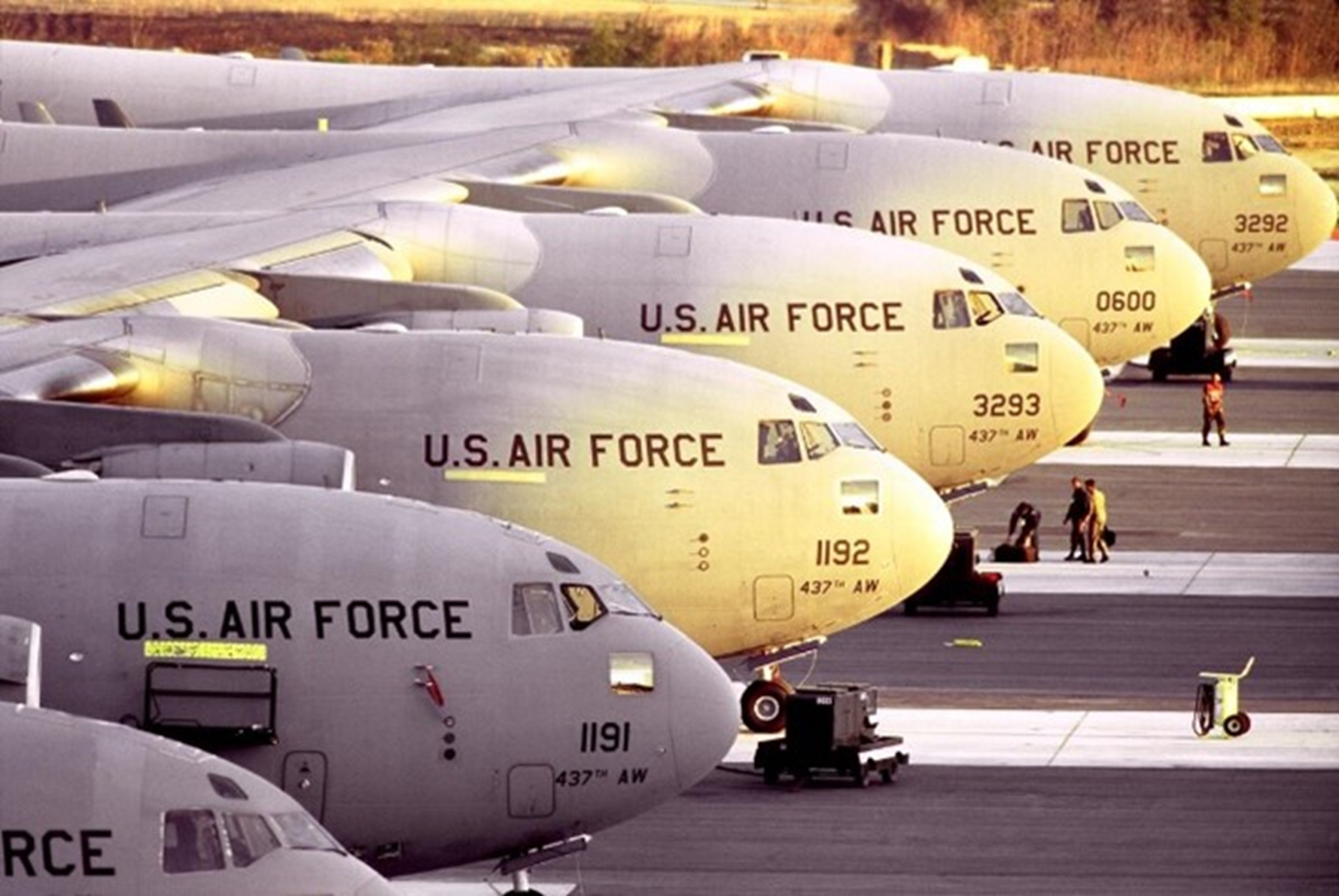
Boeing delivered 275 C-17A aircraft between 1993 and 2015, with 222 delivered to the U.S. Air Force and 53 to international partners. That installed base forms a large, distributed sustainment market where common upgrades can reduce divergence between national fleets, and where avionics commonality supports shared tactics, training, and interoperability.
Boeing has not set out a public fielding timeline in its announcement, but the scope — including military certification — signals a programme built around disciplined incremental growth rather than a one-off refresh, with the MOSA baseline intended to keep cockpit capability moving forward without reopening the entire airworthiness case each time.