IN Brief:
- SPEE3D’s expeditionary cold-spray system was used to restore a deadlined U.S. Army vehicle in less than 24 hours during a field exercise.
- The demonstration combined design, printing, heat treatment, machining, and installation at point of need, rather than waiting for the conventional depot chain.
- For defence manufacturing, the result strengthens the case for digital part libraries, trained operators, qualified materials, and distributed repair capacity closer to the fight.
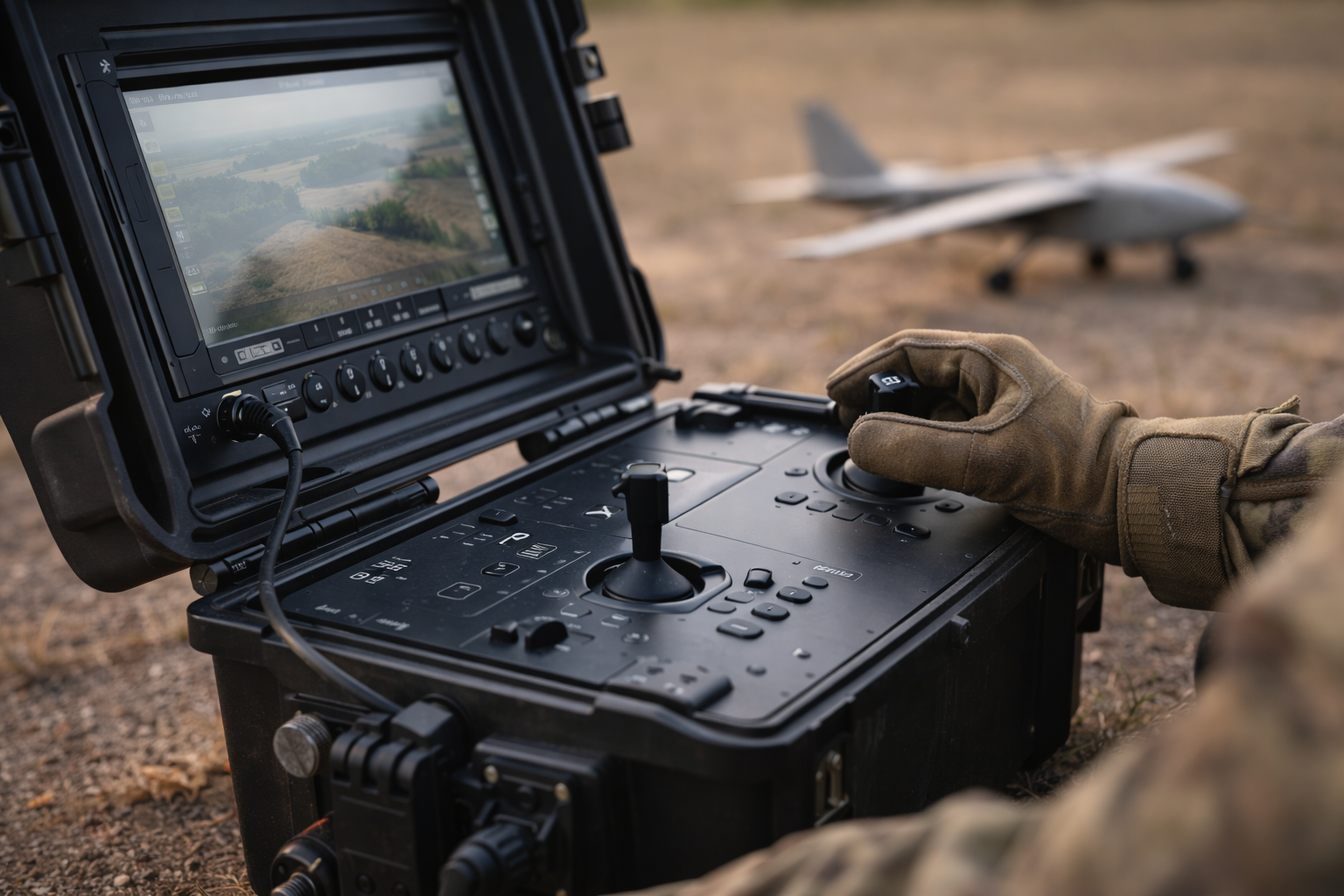
SPEE3D has used a field-deployable additive manufacturing unit to restore a deadlined U.S. Army vehicle in under 24 hours, compressing what would typically be a six-to-ten-week replacement cycle into a single-day repair. The demonstration, carried out with the Tennessee Army National Guard, the University of Tennessee, Knoxville’s Defense Development and Applied Research Center, and DEVCOM Army Research Laboratory, centred on a failed Battle Lock Handle that had left an MRAP-type combat support vehicle out of action.
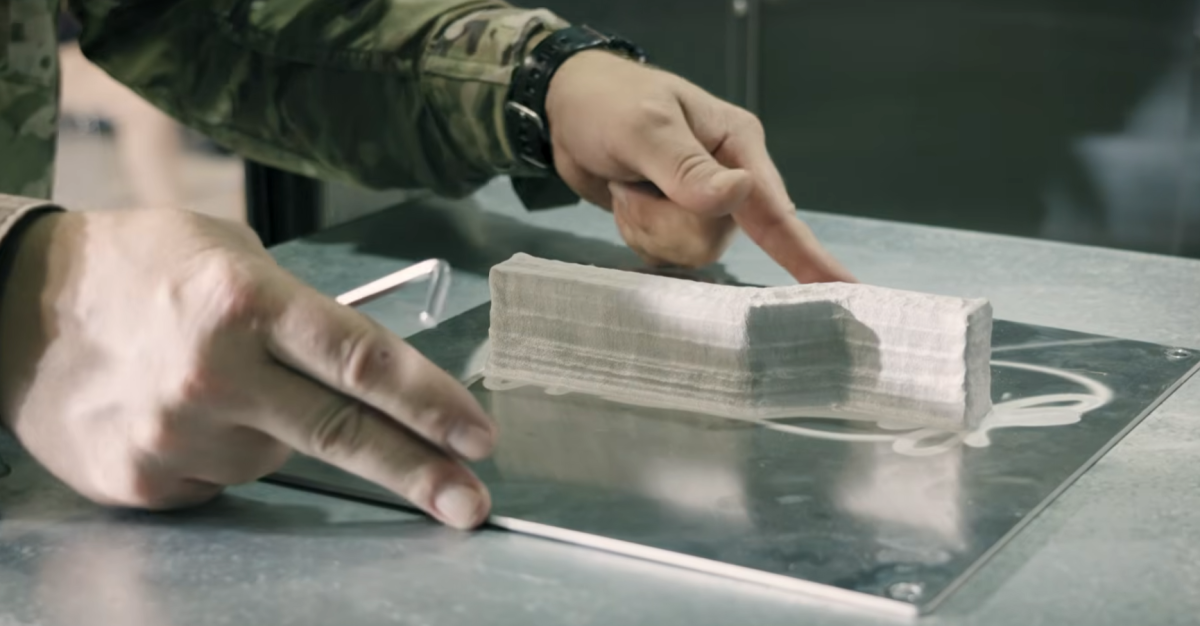
The part was not simply printed and bolted in. According to SPEE3D, the team used its Expeditionary Manufacturing Unit to design, print, heat-treat, machine, and install the replacement in less than 10 hours, returning the vehicle to service within the exercise window. The project later received an Expeditionary and Tactical 3D Printing Excellence Award at MILAM 2026, which tells its own story about where Army sustainment attention is shifting.
The wider significance lies in the logistics problem it is trying to attack. In a contested or remote operating environment, even small metal failures can strand vehicles for weeks while a replacement part works its way through depots, airlift, and ground convoys. That is tolerable in peacetime admin cycles. It is much less attractive when readiness is being measured in hours and the resupply route is itself part of the threat picture.
The Army has been pushing in this direction more broadly. Army leaders have recently pointed to more than 1,000 fully qualified parts in the service’s digital advanced-manufacturing repository, while Ordnance Corps and sustainment units continue to expand training around additive and hybrid manufacturing tools. The travel direction is plain enough: reduce dependence on distant repair chains, and give units more ability to solve material problems where they occur.
Printing is only one step in the chain
That is also why the Tennessee trial matters industrially. Point-of-need manufacturing is often sold as though a printer alone solves the problem, when in reality the process chain is the capability. In this case, the repair required part design, material deposition, heat treatment, machining, installation, and a level of operator competence that goes well beyond pressing a start button.
Cold-spray additive manufacturing has obvious appeal in that setting because it can build or restore metal parts without dragging a full conventional production line into the field. Even so, serious adoption still depends on feedstock control, machine calibration, post-processing, dimensional accuracy, inspection, and confidence that the part being produced is suitable for the use case. Tactical manufacturing is only useful when it is both fast and trustworthy.
That has implications well beyond one field exercise. If armed forces want distributed repair at scale, OEMs and suppliers will have to think harder about digital part libraries, authorised geometry files, material specifications, and repairability by design. Components that can be recreated, machined, or restored in modular form will hold more value than parts that remain locked into long, centralised replenishment chains.
The Army’s own direction reflects that pressure. Its Metal Working and Machining Shop Set already combines welding, plasma cutting, lathes, mills, and polymer additive manufacturing in deployable shelters, and additional metal-additive capability is being pushed into the system. The point is not to replace depots or the organic industrial base. It is to cut dead time between failure and function.
That is where defence manufacturing is heading more broadly. Distributed production will not eliminate the need for central qualification, industrial capacity, or formal supply chains, but it does change the failure response. A broken vehicle no longer has to sit and wait because one modest metal component is trapped somewhere inside a warehouse network. For expeditionary forces, that is not a gimmick. It is a different sustainment model.