IN Brief:
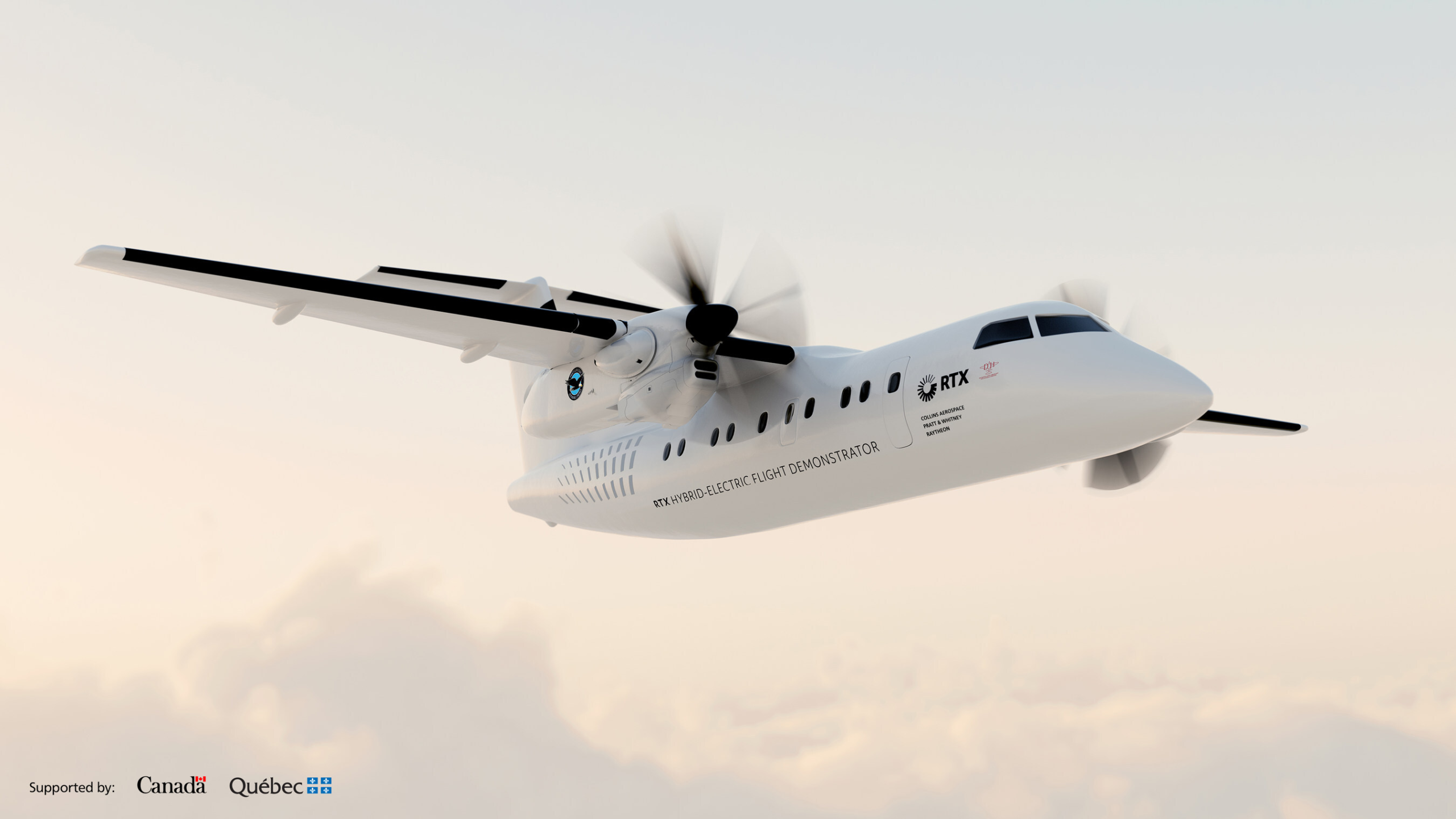
- H55’s battery technology is supporting the RTX Hybrid-Electric Flight Demonstrator targeting up to 30% better fuel efficiency for regional turboprops.
- The architecture builds on smaller aircraft experience and is being scaled into a modified Dash 8-100 demonstrator with a 1 MW electric motor.
- Industrial significance lies in certifiable battery design, modular integration, and the supply-chain discipline needed to move into larger aerospace markets.
The hybrid-electric aircraft race is often presented as a question of motors and emissions targets, but the harder industrial problem may be certification-grade energy storage. H55’s role in the RTX Hybrid-Electric Flight Demonstrator is therefore more consequential than it first appears. The Swiss company is not merely supplying batteries to a research aircraft; it is helping define how a proven electric aviation architecture might scale into the regional aircraft class.
The programme has already passed a full-power propulsion and battery test, combining a Pratt & Whitney Canada thermal engine, a Collins Aerospace 1 MW motor, and a 200 kWh battery system on a modified Dash 8-100 pathfinder. H55’s contribution is built on battery technology the company has already flown on smaller platforms, which gives the demonstrator a certifiability advantage compared with starting from a clean sheet.
That distinction matters in aerospace. A battery is not useful to a serious programme simply because it stores energy. It needs a safety case, an integration philosophy, containment strategy, thermal behaviour that can be characterised, and a manufacturing route that can be reproduced under airworthiness scrutiny.
Scaling battery systems is an industrial challenge
Moving from smaller electric aircraft into regional-class systems is not a matter of multiplying cells. Weight distribution, protection architecture, fire containment, electrical isolation, cooling, inspection access, and maintenance all become more demanding as aircraft size and mission complexity increase. The design must also support modular installation without creating impossible certification overheads.
That is where H55’s positioning is strongest. A battery architecture with flight time behind it and test history with regulators gives primes a more stable baseline for demonstrators and future products. In defence-adjacent aerospace, that can shorten development cycles for special-mission aircraft, unmanned systems, and auxiliary hybrid platforms.
The long game is in production support
Even if hybrid-electric regional aircraft remain some distance from widespread service, the supply chain is already taking shape. Certified battery providers will not only sell hardware; they will support replacement packs, inspections, software updates, failure analysis, and lifecycle compliance over many years.
That is why H55’s progress deserves attention beyond the demonstrator itself. The company is trying to move from promising battery developer to aerospace production partner, and in this sector the second identity is the one that lasts.