IN Brief:
- The UK has ordered the Type 45 destroyer HMS Dragon and armed Wildcats to the Eastern Mediterranean after a spike in drone threats.
- Sea Viper provides area air defence on Type 45, while Wildcat’s Martlet adds a lower-cost option against small, fast aerial targets.
- Operational deployments are now tightly coupled to industrial capacity — maintenance slots, missile inventories, and upgrade pipelines.
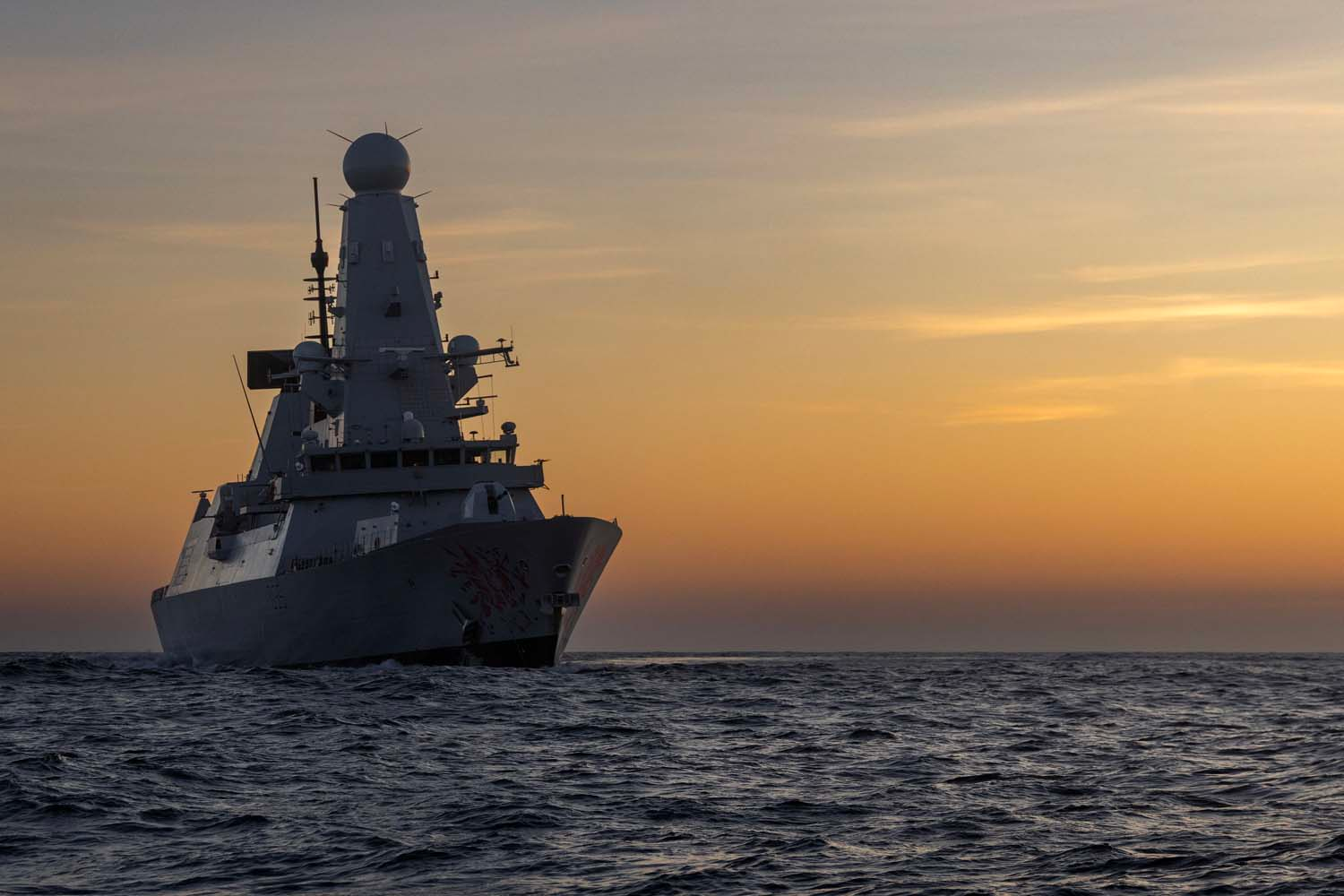
The UK is deploying the Type 45 destroyer HMS Dragon, alongside Royal Navy Wildcat helicopters armed with Martlet missiles, to the Eastern Mediterranean to bolster regional air defence and counter-drone capability. The Ministry of Defence said the deployment is intended to defend British interests and support the collective self-defence of allies, as UK forces adapt to evolving aerial threats.
The platform choice is deliberate. Type 45 destroyers are built around the Sea Viper air-defence system, designed to detect, track, and engage complex airborne threats. The Ministry of Defence has highlighted the system’s ability to launch eight missiles in under 10 seconds and guide up to 16 missiles simultaneously, a headline capability aimed at coping with saturation-style attacks rather than single, isolated contacts.
Defence Secretary John Healey said: “We are moving quickly to further reinforce our defensive presence in the Eastern Mediterranean.” He added: “HMS Dragon brings world-class air defence capability, and our Wildcat helicopters are armed with Martlet missiles to counter the growing drone threat.”
The air picture around UK and allied facilities has become a test of layered defence rather than single-platform heroics. Sea Viper provides the outer ring, but drones and one-way attack systems also force a closer-in response where magazine depth, engagement cost, and reaction time matter. Wildcats carrying Martlet are being used to add that lower-tier option, particularly against small targets where burning high-end interceptor missiles is rarely sustainable.
Readiness depends on sustainment capacity
A warship sailing to a hotspot is, frankly, not much of a headline in and of itself at this particular moment in time. It is, however, a headline that sits atop an interesting and intensive industrial sequence. A destroyer at short notice needs dockyard capacity, parts availability, and a munitions load-out that matches the threat. That extends from vertical launch system safety checks through to the logistics pipeline that moves missiles, spares, and embarked support equipment to the ship before sailing.
Type 45 availability has been shaped by upgrade and maintenance cycles, including ongoing work aimed at improving fleet readiness. When deployment tempo accelerates, the constraint is rarely the number of hulls on paper; it is how many are out of upkeep, crewed, supplied, and certified to fight.
Counter-drone operations also chew through inventory in a way traditional “presence” missions did not. Sea Viper relies on the Aster missile family and associated command-and-control and radar integration, while Martlet is a separate production line with its own subcontractor network and test regime. The UK has previously committed to upgrades for Sea Viper to better address ballistic and more stressing air threats, a reminder that “capability” is frequently a software-and-integration programme as much as a hardware one.
For manufacturers, sustained deployments translate into predictable, albeit unglamorous, demand: missile rebuilds, seeker and fuze test equipment, radar sustainment, and the qualification work that keeps upgraded interceptors compatible with ship systems. The deployment of HMS Dragon and armed Wildcats underlines that the counter-drone fight is now as dependent on production planning and support engineering as it is on rules of engagement.