IN Brief:
- Honeywell and LIG Nex1 have signed an MoU to explore UAV and defence technology collaboration.
- Focus areas include UCAVs and Collaborative Combat Aircraft, plus drone management and resilient navigation.
- The framework is non-exclusive, with follow-on activity subject to evaluation and approvals.
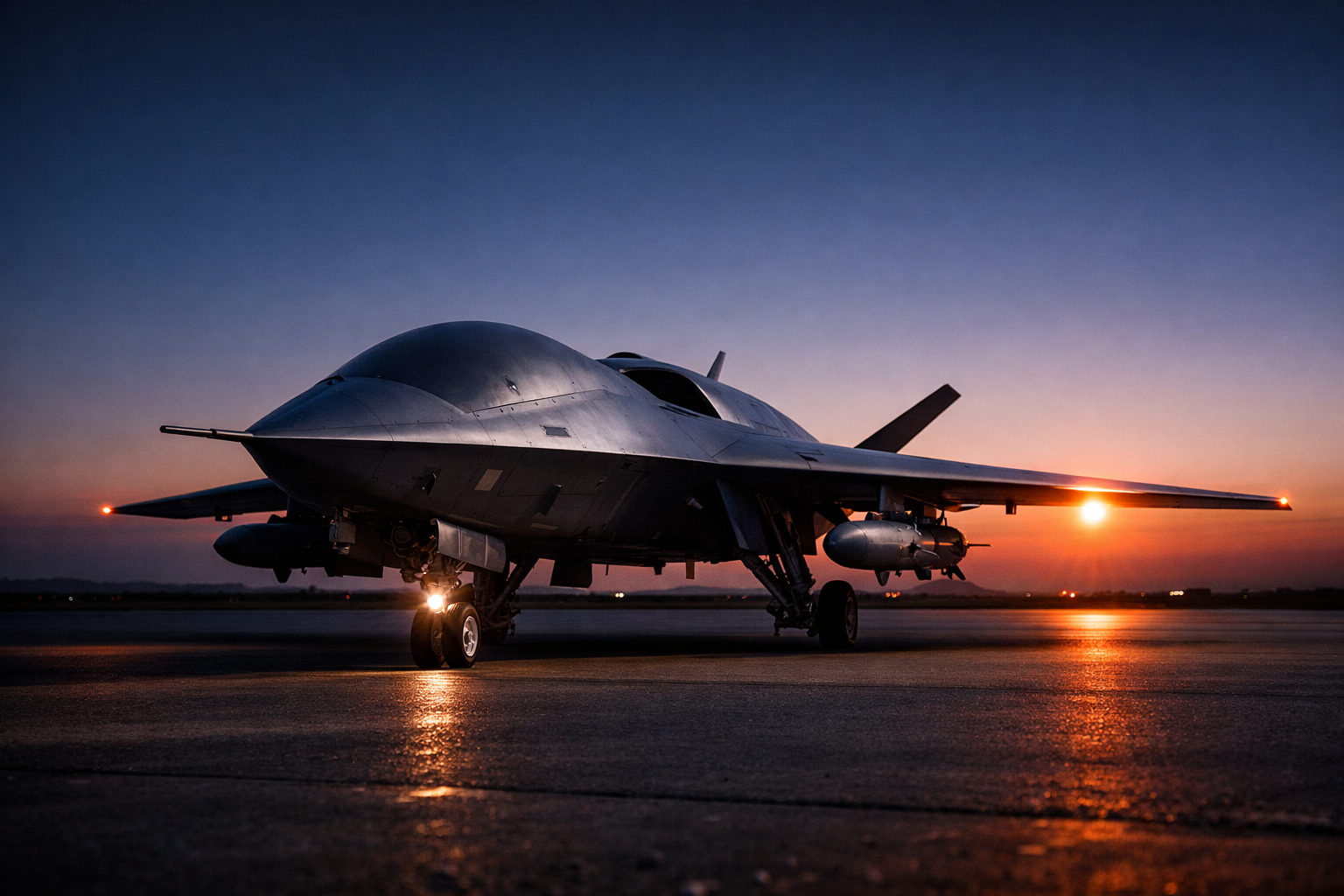
Honeywell and South Korea’s LIG Nex1 have signed a Memorandum of Understanding to explore collaboration across unmanned aerial vehicle technologies, including Unmanned Combat Aerial Vehicles and Collaborative Combat Aircraft, as well as selected workstreams spanning space, electromagnetic defence, and cybersecurity.
The MoU is structured as a non-exclusive framework, with both companies signalling intent to assess market needs, identify potential customers, and evaluate how existing commercial unmanned capabilities could be adapted for defence-specific applications. The emphasis, at this stage, is on a pathway to development and commercialisation rather than a committed programme, with any resulting activity framed as subject to further evaluation and applicable approvals.
From Honeywell’s side, the collaboration is framed around unmanned-enabling subsystems that can be ported across platforms: resilient navigation, drone management systems, and advanced communications. For LIG Nex1, the MoU builds on its position as a developer of precision electronic systems in the Republic of Korea and its experience across unmanned air, surface, and marine platforms, alongside its relationships with aircraft and defence original equipment manufacturers.
“This framework provides an opportunity to evaluate how our experience in advanced defense systems can be aligned with Honeywell’s unmanned and navigation technologies. By exploring these areas together, we aim to better address evolving requirements for unmanned and autonomous platforms,” said Jongsung Park, president, Corporate Strategy & Investment, LIG Nex1.
Sathesh Ramiah, vice president, Defense & Space, Asia Pacific, Honeywell Aerospace, said: “Honeywell’s work with LIG Nex1 represents a disciplined approach to advancing the future of aviation and defense technologies. By exploring opportunities with LIG Nex1, we are evaluating how proven commercial unmanned capabilities can be responsibly adapted to support next-generation defense and autonomous systems.”
The agreement lands in a region where sovereign industrial participation is often a practical requirement rather than a policy preference, and where unmanned platforms are increasingly tied to networked command-and-control, autonomy tooling, electronic protection, and secure communications. For suppliers, that pushes value away from single components and toward integrated architectures that can be certified, updated, and defended against evolving threats.
The companies also flagged potential export opportunities as part of the framework, subject to further assessment and regulatory review, suggesting that any eventual solution set is expected to be relevant beyond a single national customer.