IN Brief:
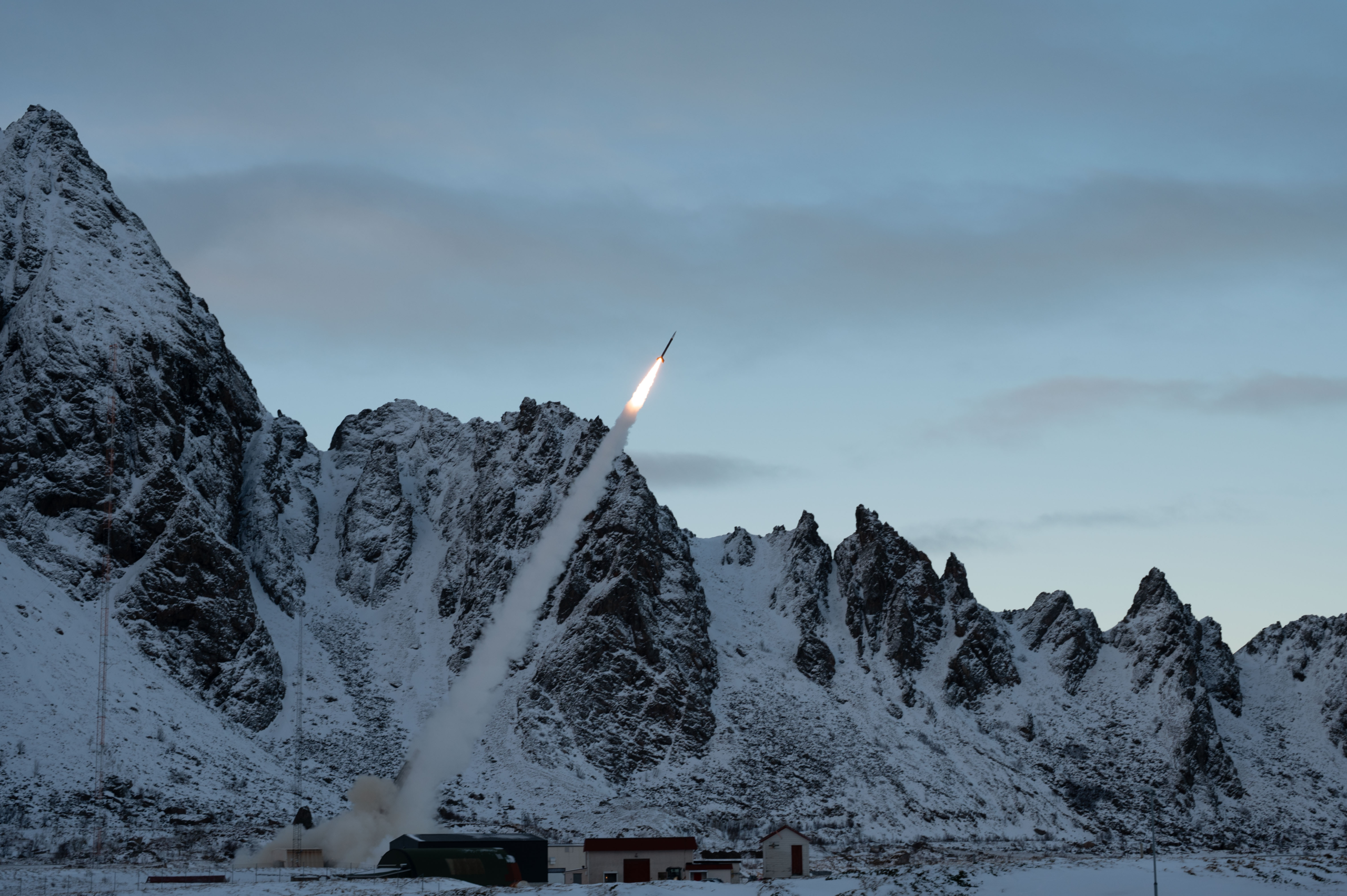
- The SCOOTER HS-1 test vehicle launched from Andøya Space on 3 February.
- Hypersonica said its prototype exceeded Mach 6 over a 300 km range.
- The startup is targeting further tests and a sovereign European strike system by 2029.
Hypersonica has completed its first hypersonic test flight from Andøya Space in Norway, with both the range operator and the company describing a Mach 6-plus mission that returned substantial flight data for follow-on development.
Andøya Space said the hypersonic test vehicle, designated SCOOTER HS-1, flew on 3 February and was designed as a single-stage platform intended to build experience in hypersonic flight testing, operate payload systems under hypersonic conditions, and collect sensor data for system validation and model calibration. The vehicle launched at 10:14:45 UTC, accelerated to speeds exceeding Mach 6, and then splashed down in a designated danger area.
Kolbjørn Blix, head of Andøya Space’s suborbital division, said: “It was a flawless flight and an important first step for Hypersonica in their efforts to strengthen Europe’s access to hypersonic flight technologies.” Andøya Space said its contribution included launch services and telemetry downlink to capture payload data gathered during the flight.
Hypersonica, an Anglo-German defence and aerospace startup, said its missile prototype exceeded Mach 6 and achieved a range of more than 300 km, with systems operating nominally through ascent and descent. The company said system performance was validated down to subcomponent level at hypersonic speeds, and it expects the datasets collected to feed directly into future high-speed strike designs.
Hypersonica co-founders Dr. Philipp Kerth, CEO, and Dr. Marc Ewenz, CTO, said: “Hypersonica has achieved a major milestone on our pathway to developing Europe’s first sovereign hypersonic strike capability by 2029.” The company also highlighted the pace of the programme, stating that concept, design, procurement, integration, ground testing, export control, safety, and range organisation were completed within nine months.
The flight lands inside a wider European push to compress timelines for advanced strike and counter-hypersonic capabilities, even as the gap between a clean test profile and a fielded weapon remains defined by guidance robustness, thermal protection, manufacturability, and repeatability at scale. In the UK, the Ministry of Defence has set out a hypersonic technology route with a framework intended to accelerate supplier entry and spiral development toward a demonstrator by 2030, and France has already conducted a hypersonic glide vehicle test as part of its V-MaX programme. Europe’s parallel focus on defence against hypersonic threats is also visible in collaborative work on interceptor concepts.
For Hypersonica, the immediate question is whether it can turn a successful first flight into a disciplined test cadence that proves controllability and repeatable performance as speed, manoeuvre demands, and integration complexity rise. The company has set out a phased approach, moving from demonstrating hypersonic flight, to advanced control, to complex manoeuvrability, and then to full mission requirements on the way to its 2029 objective.