IN Brief:
- Nearly 100 part-level suppliers and 25 major subcontractors are being readied for higher Javelin output.
- The ramp includes new tooling, test equipment, added floor space, automation, and AI-driven forecasting.
- Second-source qualification and material buffering suggest the programme is shifting from surge activity to a more durable missile production model.
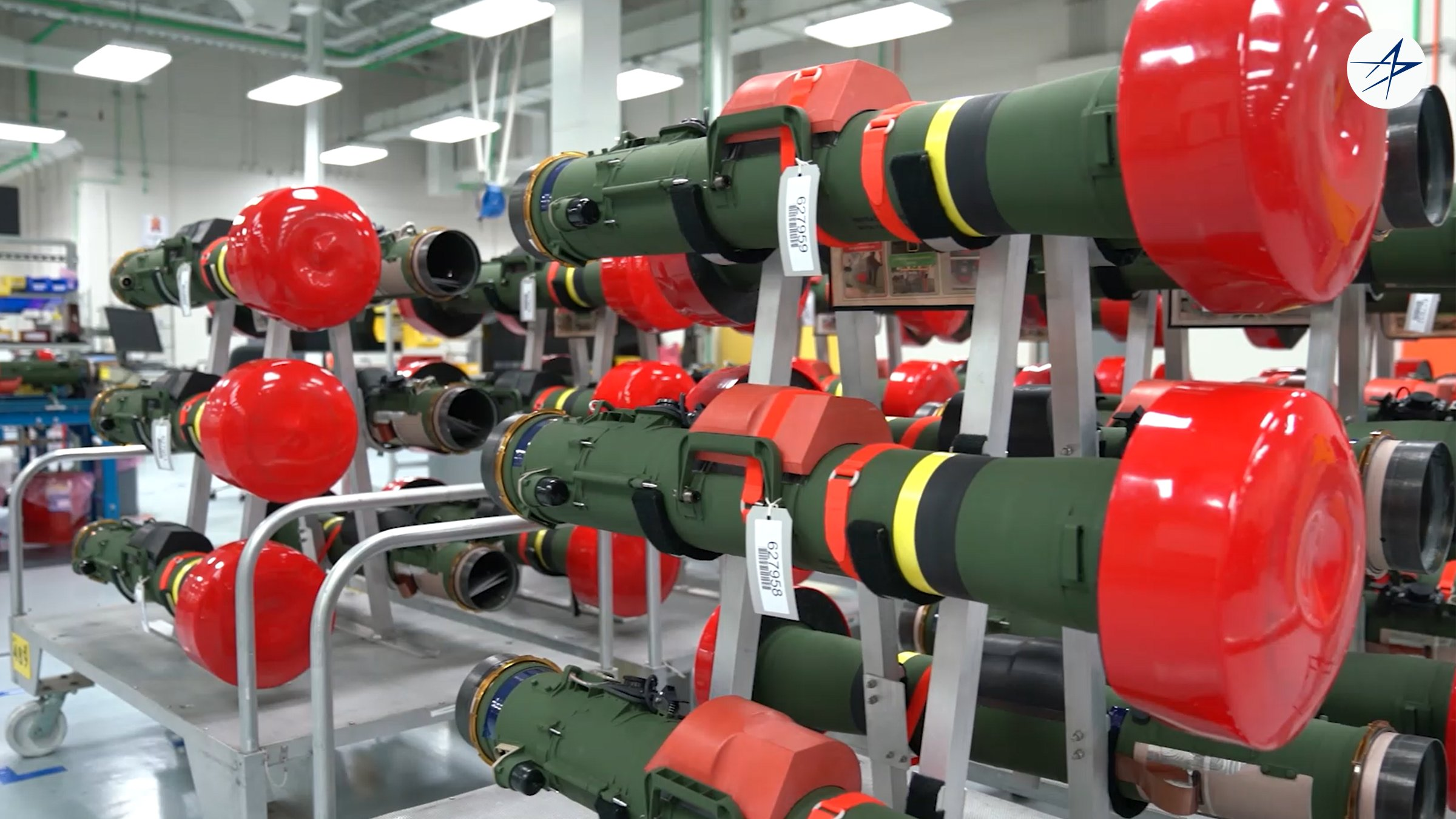
Lockheed Martin and Raytheon are pushing the Javelin programme deeper into industrial expansion mode, broadening supplier capacity as global demand for anti-armour missiles remains elevated. The work now underway reaches well beyond final assembly, with the joint venture preparing a network of almost 100 part-level suppliers and 25 major subcontractors to support higher output later this year.
That matters because Javelin production is constrained less by one headline assembly line than by the accumulated pace of propulsion, guidance electronics, structural components, test equipment, and specialist subassemblies arriving on time and to tolerance. Over the past year, suppliers have been carrying out non-recurring engineering work, adding tooling, installing extra test assets, and expanding floor space to absorb the higher tempo.
Each supplier, according to the programme, has spent between eight and 10 months implementing upgrades to support the production ramp. Rich Liccion, vice president of the Javelin Joint Venture at Lockheed Martin, said the programme’s early supplier engagement has allowed the venture to increase output while preserving quality, while Raytheon’s Jenna Hunt Frazier pointed to automation and AI-driven forecasting as part of a broader effort to make the supply base more resilient.
Lockheed had already indicated last year that Javelin annual capacity was set to rise sharply by late 2026, and the latest supply chain work shows how that target is being turned into factory reality. Missile manufacturing is always limited by the slowest specialised node, and for a system such as Javelin that means the pressure quickly migrates into lower-tier machining, electronics, energetics support, inspection, and long-lead materials.
What the ramp means on the shop floor
For suppliers, the expansion is not simply about adding another shift. Higher missile throughput typically demands repeatable fixtures, more environmental and functional testing capacity, tighter process control, and better visibility of demand several quarters out. In practice, that means investment in production engineering as much as in headcount.
The Javelin effort also underlines how modern missile programmes are increasingly managed as data problems as well as manufacturing ones. Real-time forecasting, if it is accurate and shared early enough, can reduce idle inventory in one part of the chain while preventing shortages in another. That matters when a supplier base is simultaneously serving multiple munitions and air-defence programmes competing for the same skilled labour, materials, and specialised equipment.
Where the bottlenecks remain
The joint venture’s plan to qualify second sources for high-risk components is one of the more important signals in the latest ramp. Dual sourcing takes time, money, documentation, and qualification discipline, but it is one of the few reliable ways to reduce programme exposure when demand moves from episodic ordering to sustained replenishment.
The same logic applies to stockpiling critical materials and trying to keep lead times below 52 weeks. That is still a long planning horizon by commercial standards, yet in defence production it marks the difference between a managed ramp and a brittle one. The Javelin programme is now showing what sustained missile production actually looks like: not a single factory sprint, but a supplier network being retooled, digitised, and hardened for a longer cycle of demand.