IN Brief:
- Leonardo is seeking clarity on the UK’s New Medium Helicopter programme.
- Yeovil is positioned as the UK’s only end-to-end military helicopter line.
- The company is warning of irreversible industrial capability loss if the site closes.
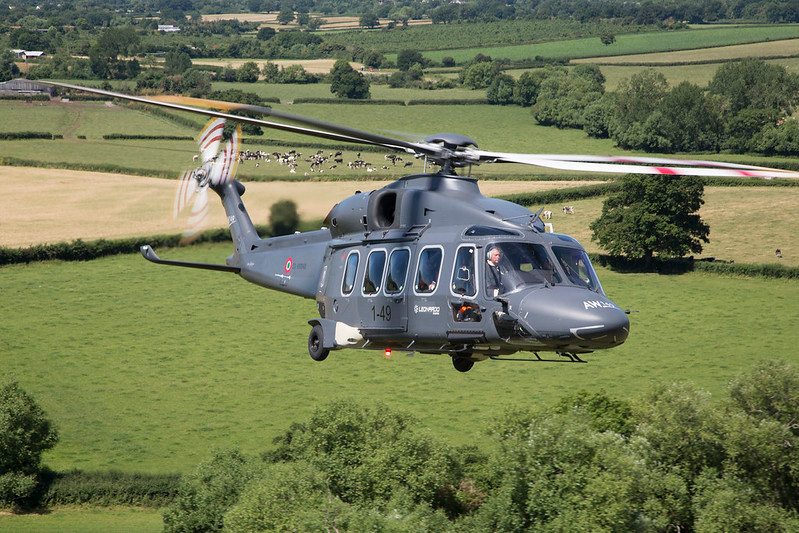
Leonardo is escalating its warning that the future of its Yeovil helicopter operation depends on near-term certainty from the UK government, with the company linking the site’s viability to decisions around the New Medium Helicopter (NMH) programme and the industrial workload that would follow.
Yeovil is the UK’s only end-to-end military helicopter production line, combining final assembly, integration, test, and support activity in one location. The strategic sensitivity is obvious: if the capability is allowed to lapse, reconstituting it would be costly, slow, and dependent on rebuilding specialist skills and supplier capacity that tends not to survive long gaps in demand.
The company’s position is essentially an industrial arithmetic problem. Maintaining a full-spectrum helicopter manufacturing capability requires a baseline of funded work — not intermittent peaks. Absent that, overheads shift from being absorbed into programme delivery to being carried as a standing cost, and the political value of “sovereign capability” starts to collide with finance’s insistence on traceable returns.
Against that backdrop, Leonardo has been explicit that it cannot subsidise the operation indefinitely without clarity on NMH timing and procurement intent. The warning is landing in a UK defence context where industrial resilience is being talked up, even as programme schedules remain vulnerable to budget cycles, shifting requirements, and the temptation to treat industrial capacity as something that can be switched on at will.
For the wider supply chain, the stakes extend beyond the gate of a single site. Rotary-wing manufacturing draws on specialised machining, composites, avionics integration, test equipment, and certified process control. If a prime operation winds down, the second- and third-tier ecosystem often thins out first, taking apprenticeships, quality systems, and niche capability with it.
The UK government’s decision on NMH will therefore set more than a fleet outcome; it will set an industrial direction. If Yeovil’s line is preserved with a funded production path, the UK retains a domestic rotorcraft manufacturing nucleus. If it is allowed to close, future choices tilt toward off-shore production and in-country support models, with a materially reduced ability to shape design, integrate mission systems domestically, or surge manufacturing in response to operational demand.