IN Brief:
- Lockheed Martin has unveiled its Lamprey Multi-Mission Autonomous Undersea Vehicle concept.
- The design is built around open-architecture payloads, from torpedoes to UAV launchers.
- A host-attachment and recharge approach targets longer-range, scalable autonomous presence.
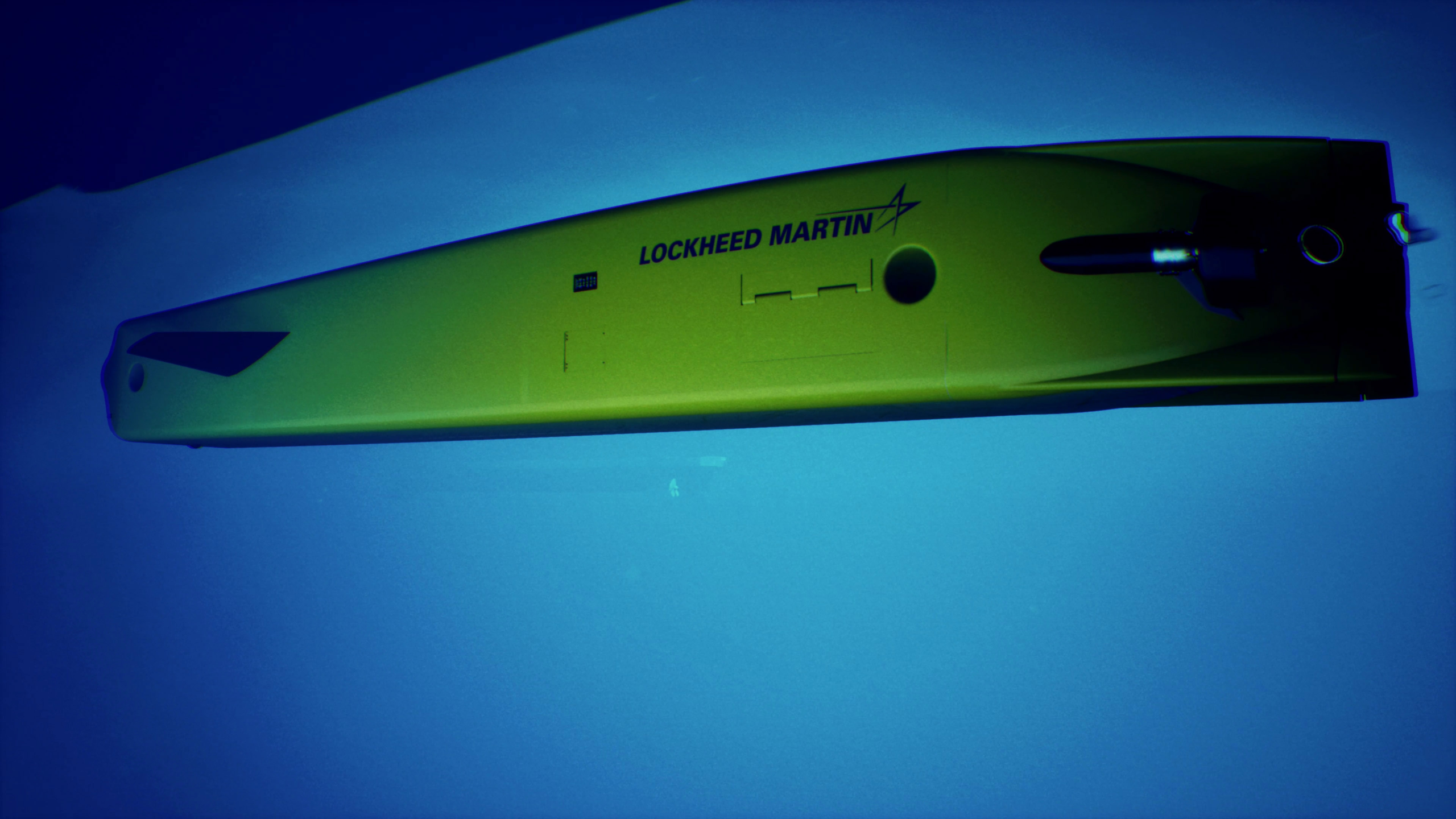
Lockheed Martin has unveiled the Lamprey Multi-Mission Autonomous Undersea Vehicle (MMAUV), positioning the system as a “plug-and-play” submersible aimed at covert assured access and sea denial operations. The company said Lamprey can arrive in theatre with a fully charged battery, hitching a ride on a host surface ship or submarine without requiring host modifications, then using built-in hydrogenators to recharge batteries before commencing operational missions.
The mission set described is wide by design, spanning undersea and air kinetic and non-kinetic effects, intelligence, surveillance, reconnaissance, targeting, multi-intelligence collection, and deployment of equipment to the seafloor. That breadth maps to an industrial strategy that treats the platform less as a single-purpose vehicle and more as a payload carrier, with a common vehicle form intended to be re-tasked through modular mission packages rather than bespoke build variants.
“The modern battlespace demands platforms that hide, adapt and dominate,” said Paul Lemmo, vice president and general manager of Sensors, Effectors & Mission Systems at Lockheed Martin. “LampreyMMAUV was internally funded, letting us iterate at lightning speed and hand the Navy a true multi mission weapon that detects, disrupts, decoys and engages on its own.” The company’s description also framed dual mission modes: assured access, which it characterised as stealthy intelligence, persistent surveillance, and precision strike, and sea denial, described as electronic disruption, decoy deployment, and kinetic attack.
Lockheed’s own “key innovations” list is explicit about the payload ambition, citing an open-architecture payload bay that can range from anti-submarine torpedoes to UAV launchers. If that modularity holds through integration and safety cases, it creates a supply chain opportunity for third-party payload developers, while shifting more value into interface standards, mission software, energy management, and the mechanical and electrical design that allows payloads to be swapped without turning every upgrade into a requalification programme.
The host-attachment concept is similarly telling, because it targets a practical constraint that has limited many autonomous undersea systems: the logistics of getting the vehicle where it needs to be with usable energy reserves and without tying up specialist support ships. By treating deployment as a “ride-along” problem and recharge as an integral function rather than an afterthought, Lockheed is signalling that range, endurance, and operational tempo are now expected to be engineered into the system architecture, not managed around it.
Lockheed has not provided procurement timelines or customer contract details in its announcement. What it has done is put an industrial marker down around scalable undersea autonomy built on open architecture and long-range deployment concepts, which is the part of the market currently drawing the most attention from navies trying to increase seabed awareness and denial options without multiplying crewed hull counts.