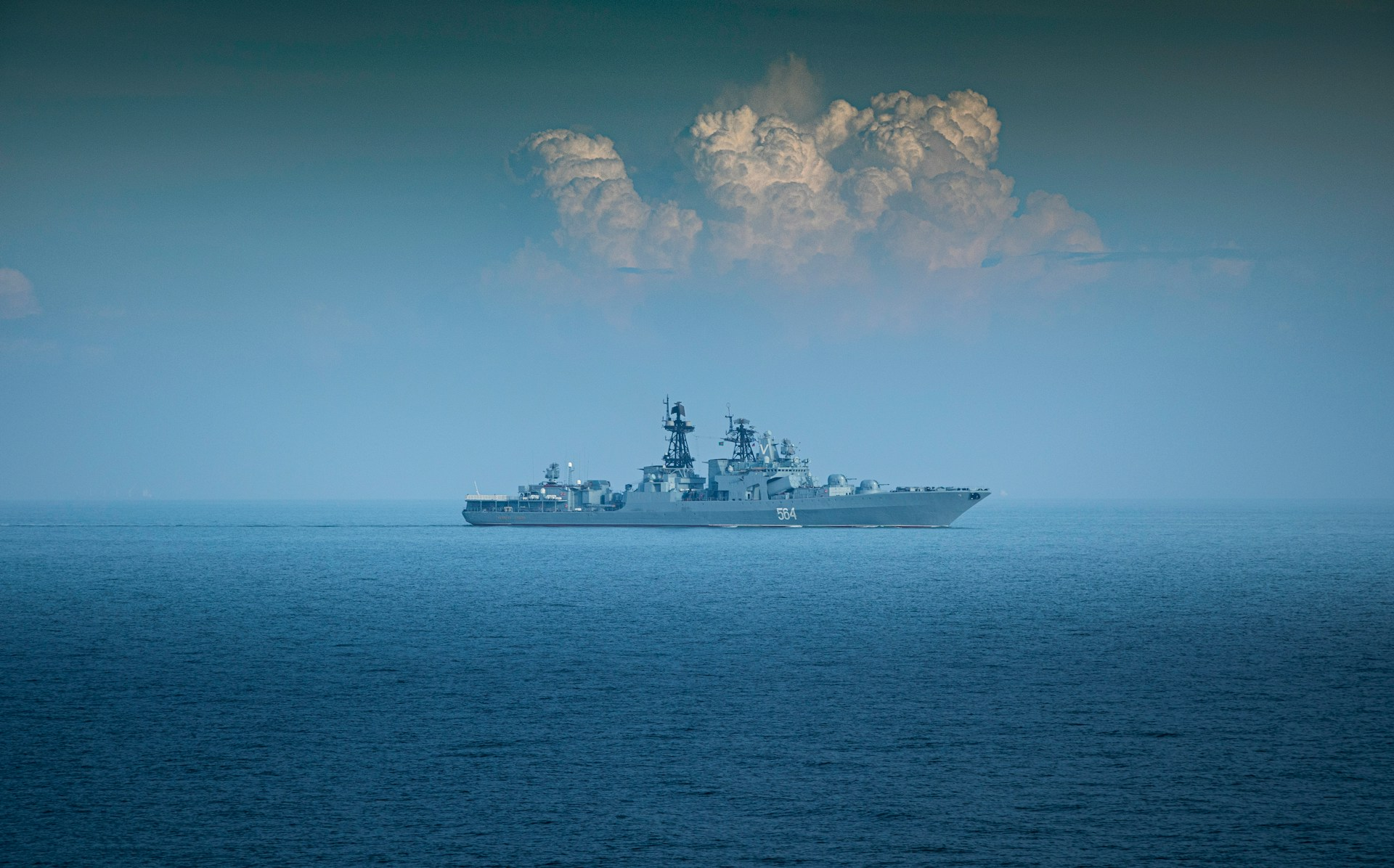
IN Brief:
- Malaysia plans to procure a multi-purpose command platform vessel to replace Tun Sharifah Rodziah.
- The platform is expected to support surveillance, rapid response, and unmanned air and surface systems.
- The programme could create work around shipbuilding, radar, secure communications, C2, mission systems, and local sustainment.
Malaysia plans to replace its ageing Tun Sharifah Rodziah offshore sea-basing facility with a multi-purpose command platform vessel, shifting a static maritime-security asset into a mobile operational hub.
The existing facility, repurposed from an offshore oil rig, has supported security operations in waters off eastern Sabah. A vessel-based replacement would give Malaysia greater flexibility across areas where maritime incursions, smuggling, illegal activity, and rapid-response requirements demand mobility rather than fixed presence.
The planned platform is expected to support long-range surveillance radar, command facilities, and unmanned systems, including UAVs and unmanned surface vessels. That turns the requirement into a systems-integration programme rather than a conventional patrol-vessel acquisition. A command platform needs sensors, secure communications, mission-planning spaces, operator consoles, small-boat handling, aviation or UAV support, accommodation, medical capacity, and resilient power generation.
Malaysia has signed a government-to-government memorandum of understanding with Türkiye covering the project, which could shape design support, technology transfer, local industrial involvement, and future sustainment. Malaysia’s wider naval relationship with Türkiye is already visible through the LMS Batch II corvette programme, where Turkish design, procurement, systems integration, documentation, and logistics support are central to delivery.
The command-vessel requirement sits at a different point in the maritime force mix. Corvettes deliver patrol and combat capability; a command platform provides persistence, coordination, and the ability to host offboard systems. For shipbuilders and systems houses, that changes the industrial emphasis toward mission architecture, communications, launch-and-recovery arrangements, and through-life support.
Operating UAVs and USVs from a command vessel brings its own design demands. Launch and recovery equipment, storage, workshops, batteries or fuel, secure datalinks, control stations, spare parts, weather protection, and electromagnetic management all need to be designed into the ship from the outset. Retrofitting those elements later can consume space, power, and budget.
The vessel will also need strong data-handling capacity. Surveillance radar, electro-optical sensors, unmanned systems, coastal-security feeds, and patrol assets generate information that has to be processed, displayed, shared, and protected. A command ship without robust C2 and secure communications quickly becomes a floating accommodation block with sensors attached.
Malaysia’s geography adds further pressure. Eastern Sabah’s maritime environment is dispersed, weather-exposed, and operationally complex. A forward command vessel must handle sustained deployment, corrosion, equipment cooling, spare-part availability, and crew endurance while remaining ready to support rapid-response operations.
The manufacturing route will influence how much value lands locally. A foreign-built ship could provide faster delivery, but local outfitting, electronics installation, maintenance preparation, and training-system support would strengthen Malaysian industrial participation. A more ambitious local-build route would demand stronger yard capacity, tighter programme management, and careful risk control.
Sustainment should be planned early. Mobile command vessels carry more mission equipment than their size may suggest, and availability depends on maintenance access, corrosion control, electronics support, software updates, spares, and trained technicians. Those requirements become especially important when the ship is expected to remain forward for extended periods.
Malaysia’s move from fixed offshore base to mobile command vessel reflects a practical shift in maritime security. Presence still matters, but presence now needs sensors, mobility, unmanned systems, and digital command tools. The procurement gives naval industry a chance to build a platform where integration quality, not hull form alone, will define operational value.