IN Brief:
- A multi-million-pound Royal Navy order is returning large-anchor production to UK industry after decades of import dependence.
- The contract covers anchors, chain cables, and fittings, with heavy forging, casting, assembly, and certification spread across Midlands suppliers.
- The wider significance is sovereign sustainment: naval readiness depends on retaining overlooked heavy-engineering capabilities as much as frontline platforms.
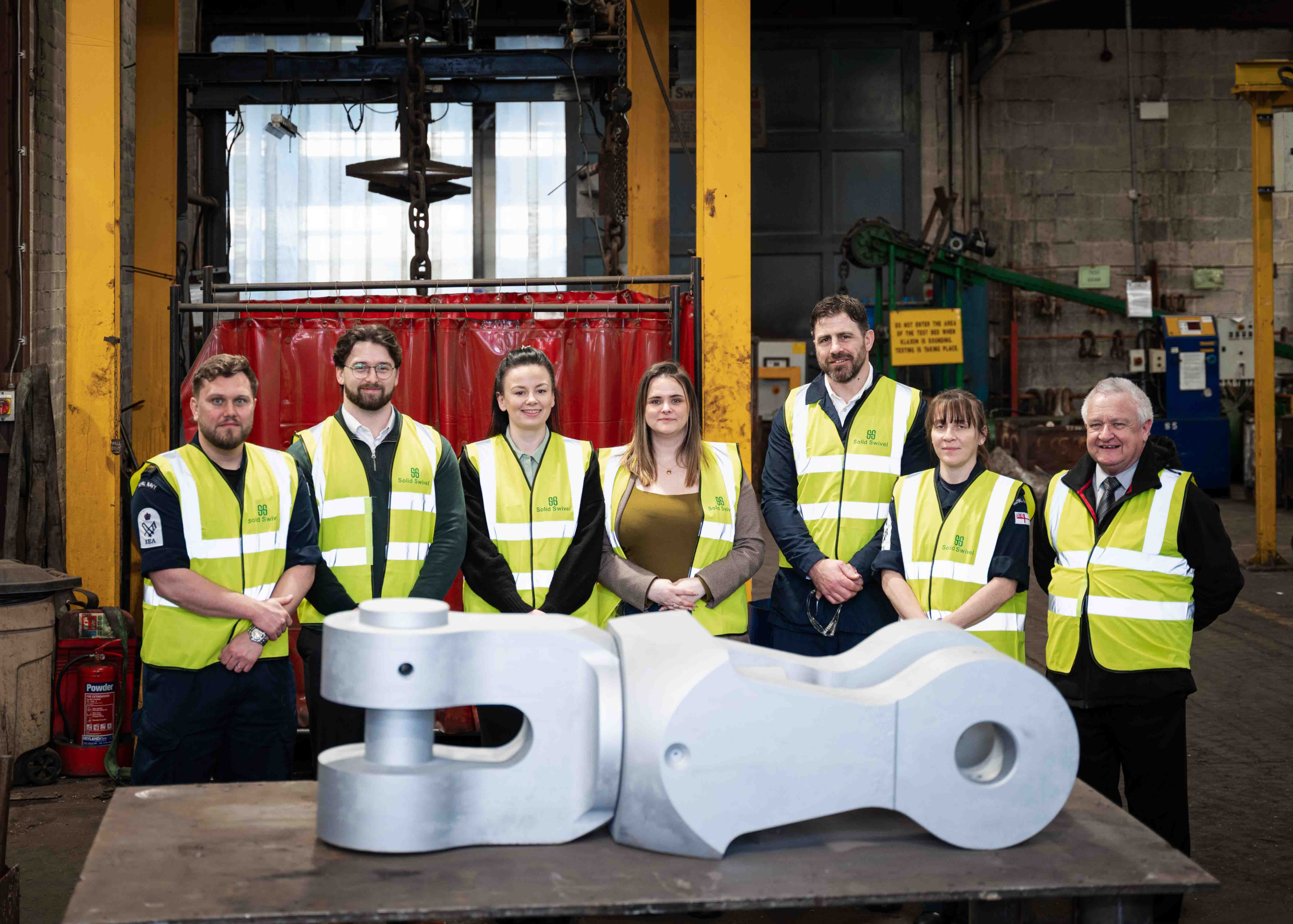
The Solid Swivel contract is one of those defence stories that looks modest until the industrial detail comes into focus. Britain’s last known anchor and chain manufacturer will produce more than 30 anchors of varying sizes and over 2,300 metres of anchor chain for Royal Navy vessels, including six of the largest anchors the company has ever made for HMS Queen Elizabeth and HMS Prince of Wales.
That makes it one of the clearest recent examples of sovereign capability being rebuilt in a niche but essential area of naval engineering. Anchors are not glamorous procurement items, but they are safety-critical, certification-heavy components with long service lives and unpleasant lead times when domestic capacity disappears. Once that manufacturing base is gone, navies do not just lose a supplier. They lose the know-how around metallurgy, proof testing, chain compatibility, classification requirements, and repair or replacement at speed.
The contract also spreads work in a recognisable industrial pattern. Somers Forge will start forging the carrier anchor shanks, Goodwin Castings will produce the fluke components, and final assembly will be completed by Solid Swivel, with Lloyd’s Register overseeing certification. In other words, this is not a single-factory story. It is a short, regional supply chain doing heavy, precise, safety-critical work that imported components had displaced.
Heavy forgings are a supply-chain discipline
Large naval anchors place unusual demands on manufacturing. The steelwork is heavy, but the complexity lies in consistency and assurance. Forged and cast elements have to meet tight mechanical and dimensional requirements, interfaces with chain and fittings have to be exact, and the finished assembly has to pass inspection and classification before it goes anywhere near a frontline ship.
That makes the contract valuable beyond the headline units. Once shops are cutting, forging, machining, testing, and certifying at this scale again, some of that capability becomes reusable for adjacent naval or offshore work. The production line does not need to be enormous to matter. It just needs to stay alive, qualified, and economically viable.
Why anchor work matters to naval sustainment
The Royal Navy’s bigger vessels may attract attention for flight decks, radars, and propulsion, but sustainment depends on a large catalogue of specialist parts that cannot be improvised when the need arises. Anchors and chain systems sit firmly in that category. They are bulky, expensive to transport, awkward to substitute, and subject to long replacement cycles that can hide the risk of capability loss until it is too late.
That is why this award matters. It supports jobs immediately, but more importantly it restores an industrial discipline that underpins naval availability. Defence resilience is often discussed in terms of munitions, shipbuilding, and electronics. Heavy marine hardware deserves to be on that list as well.