IN Brief:
- Nuburu Defense and Maddox Defense have signed a binding JV agreement, with Tekne supporting European pathways, to build a containerised additive manufacturing platform.
- The concept targets rapid, on-demand fabrication of drone components, structural parts, and pods, closer to operational demand.
- Making the model viable will depend on qualification discipline — repeatability, inspection, post-processing, and secure digital part control.
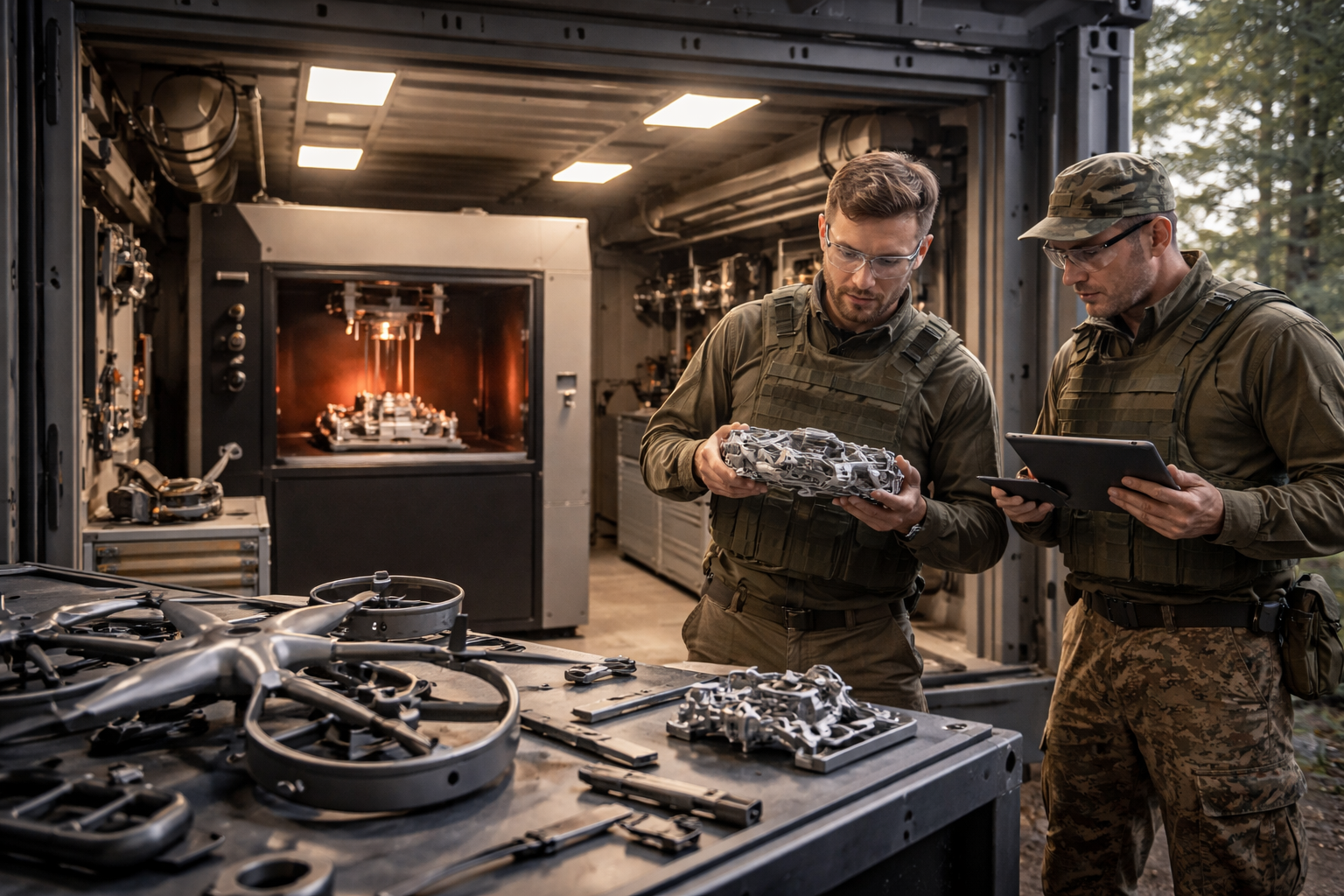
Nuburu, through its subsidiary Nuburu Defense, has executed a binding contractual joint venture agreement with Maddox Defense to develop and commercialise a modular, containerised, mobile additive manufacturing system intended for drone components and other mission-critical parts. Tekne is named as a European partner supporting EU and NATO-aligned execution pathways, forming what the companies describe as a transatlantic industrial framework.
The platform is pitched as a transportable production unit designed for on-demand fabrication and rapid deployment, with the explicit goal of reducing reliance on centralised supply chains. The intended output spans unmanned system components, structural defence parts, pods, and related items — the kind of mid-complexity hardware that is frequently constrained by lead times, not raw materials.
Alessandro Zamboni, Executive Chairman and Co-Chief Executive Officer of Nuburu, said: “This joint venture represents a deliberate expansion of NUBURU’s Defense & Security platform into deployable industrial capability.” He added that distributed manufacturing resilience and unmanned systems support are becoming “increasingly essential components of modern defense architectures”.
The agreement sets out a Phase I development joint venture, with a pathway to form a dedicated commercialisation entity after Phase I completion is certified, structured with majority ownership and strategic oversight by Nuburu Defense. Dario Barisoni, Co-Chief Executive Officer of Nuburu and CEO of Nuburu Defense, said Phase I will focus on “disciplined development, validation, and technical certification of the mobile additive system,” with an emphasis on export-control and regulatory compliance across US and allied markets.
Jason Maddox, Chief Executive Officer of Maddox Defense, described the aim in production terms: “The future of defense manufacturing requires adaptable, scalable production capabilities that can support unmanned systems and mission-critical component deployment across multiple operational environments.”
Containerised qualification and throughput
Additive manufacturing becomes strategically interesting when it is repeatable at the point of need, not merely impressive in a lab. Containerisation forces hard decisions about machine selection, environmental control, power conditioning, and the stability of build parameters under transport and redeployment — all of which affect whether parts can be treated as “real” spares, rather than local expedients.
The industrial sweet spot for drone components is often brackets, mounts, housings, airframe fittings, and structural interfaces where geometry changes frequently and conventional tooling is slow to update. The trade-off is inspection and traceability: defence users will expect documented material pedigree, controlled process windows, and non-destructive testing routes that can be executed without a full factory ecosystem.
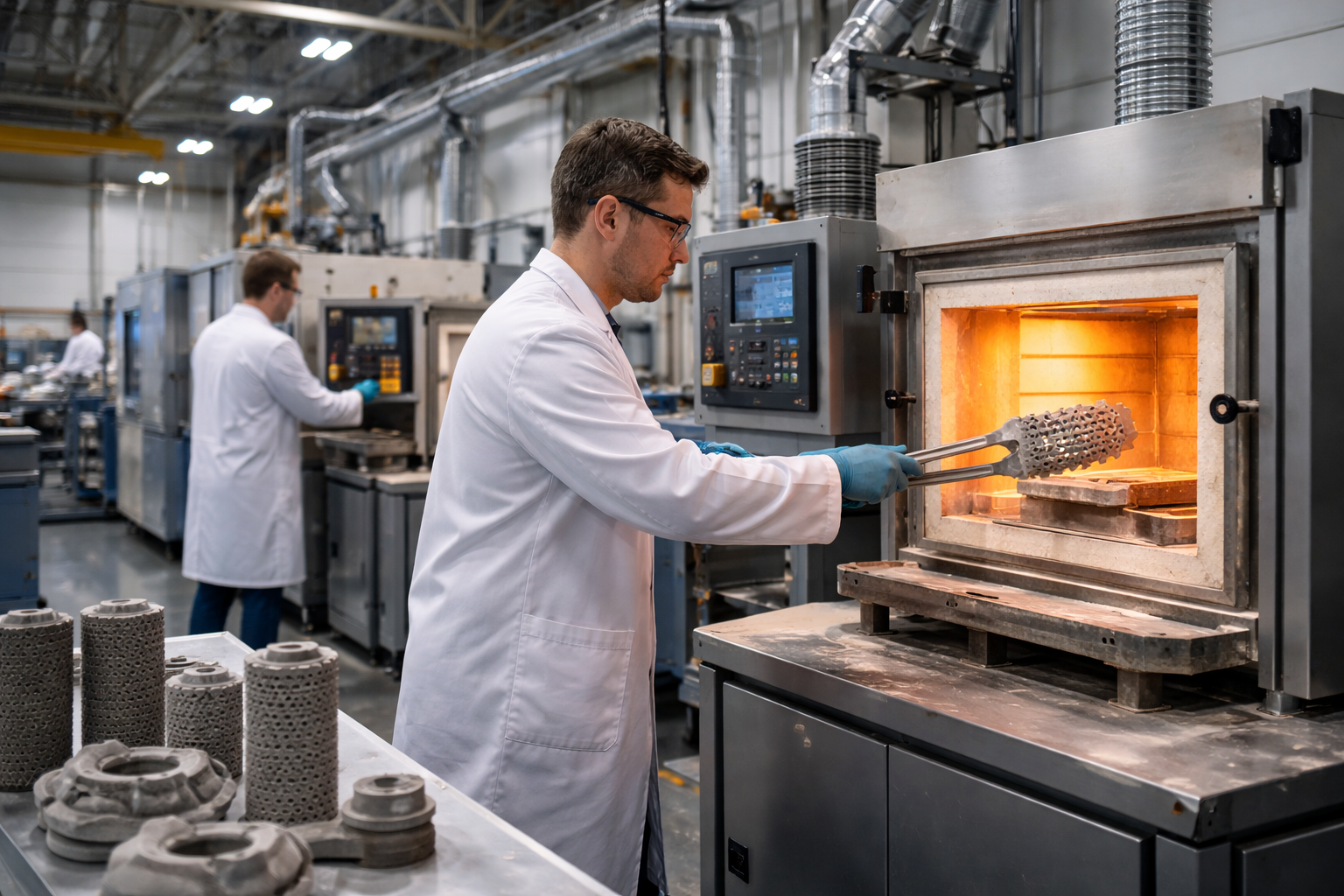
A mobile print cell still depends on a supply chain. Powders, wire feedstock, inert gases, consumables, calibration artefacts, and spare parts must move reliably, and they must be managed as controlled items in many jurisdictions. Post-processing is the other pinch point: heat treatment, surface finishing, and machining frequently determine whether an additively produced part is fit for service.
If the JV’s platform is to support NATO-aligned procurement, it will also need a secure digital thread for part files, build records, and configuration control, plus the cyber protections that prevent design data from becoming the next leaked supply chain vulnerability. The appeal is clear — compress lead times and reduce transport burden — but the manufacturing discipline is what will decide whether containerised AM becomes a sustainment tool at scale.