IN Brief:
- AFRL-backed work targets a domestic supply line for a constrained photonics material.
- Thin-film lithium niobate wafers sit at the heart of high-speed optical modules.
- The handover to merchant production will test yield, metrology, and scale discipline.
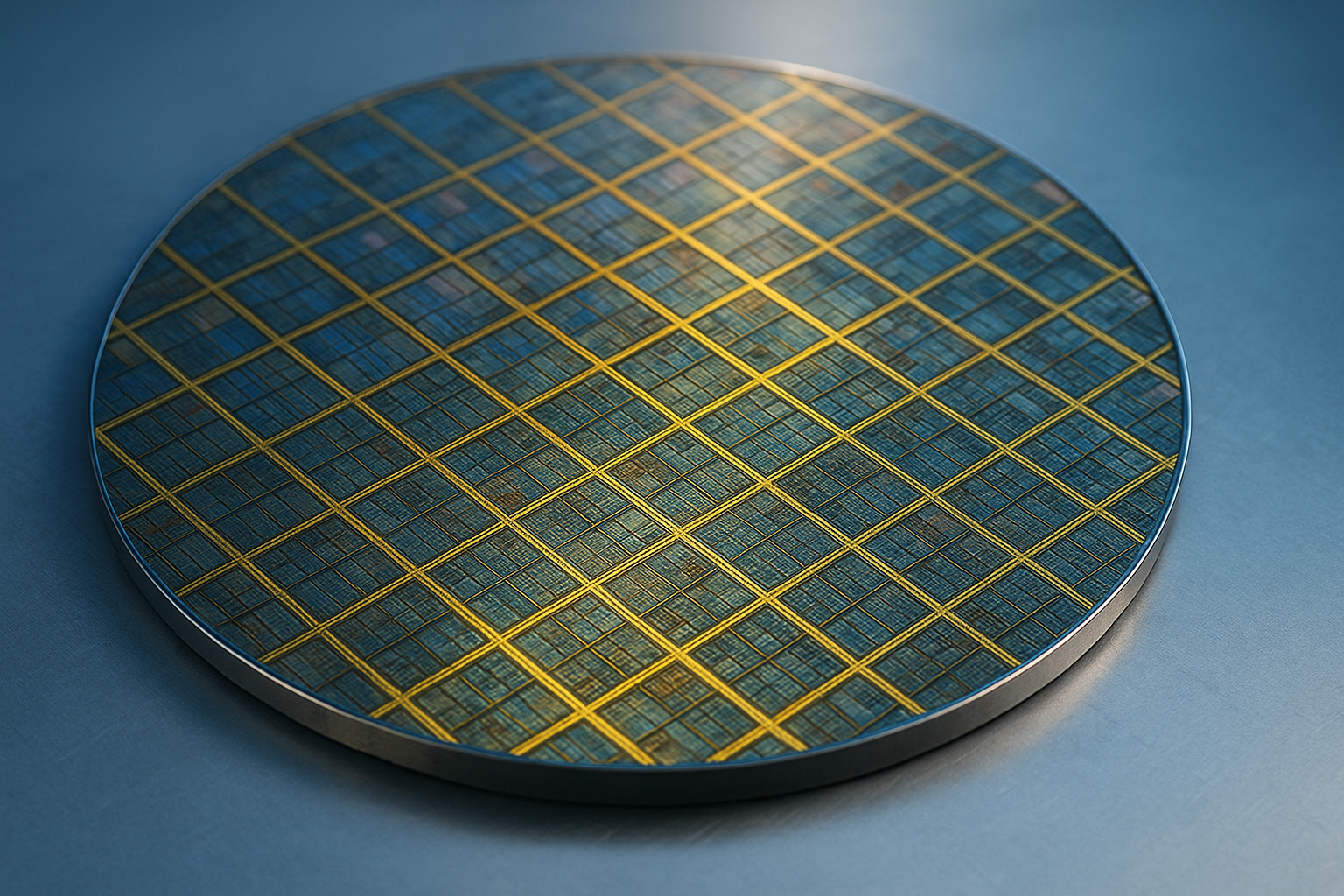
Raytheon has been awarded a contract by the U.S. Air Force Research Laboratory to establish a domestic production capability for thin film lithium niobate wafers, a material used in high-speed secure communications and advanced sensing.
The work is intended to reduce reliance on foreign supply for a component increasingly tied to both defence and commercial photonics roadmaps. Under the programme, Raytheon’s Advanced Technology team will use its materials and process experience to help G&H develop a repeatable manufacturing flow, with production set to transition to G&H in early 2026 at low-rate initial output.
“Global access to TFLN has become increasingly constrained, with supply consolidation leaving U.S. companies vulnerable to international disruptions,” said Colin Whelan, president of Advanced Technology at Raytheon.
Dr. Stratos Kehayas, president, Photonics at G&H, said, “G&H’s vertically integrated crystal and wafer manufacturing capabilities enable the reliable transition of this technology into U.S.-based production.”
The intent is not a captive supply for one prime, but a broader merchant base that can feed multiple programme lines. That framing matters in practice, because it shifts the engineering focus from a single “good wafer” demonstration to a controlled, auditable process with defined incoming specs, statistical process control, and a credible yield curve.
Thin-film lithium niobate is a process problem disguised as a materials problem. The upstream is crystal and substrate quality; the downstream is getting uniform thin films, consistent interfaces, and low-defect surfaces that can survive subsequent device fabrication steps. Methods such as ion-slicing-based transfer and wafer finishing demand cleanroom discipline, high-resolution metrology, and a tight grip on contamination sources that are easy to miss in low-volume lab production.
The other pressure is variability. Photonics manufacturing can be unforgiving of small shifts in thickness uniformity, surface roughness, or crystalline defects, because performance margins in high-speed modulators and sensing devices are often set by loss, drift, and repeatability, not headline throughput.
Moving production to a merchant supplier forces industrial choices that prototypes can avoid: standard wafer formats, defined edge exclusions, scalable polishing and bonding capacity, and qualification data that can be shared across customers without reopening the process each time. Defence programmes add their own layer of scrutiny around traceability, export controls, and multi-source resilience, which tends to drive additional documentation and tighter configuration management.
If the handover to G&H proceeds on schedule in early 2026, the next measurable milestone will be stable low-rate output with repeatable electrical-optical performance at the device layer — the point at which wafer supply stops being a strategic vulnerability and becomes a purchasable line item.