IN Brief:
- NVL’s shipyards and subsidiaries are now under Rheinmetall control, with the transition completed on 1 March 2026.
- The new Naval Systems division targets full-platform delivery plus sensors, electronics, and effectors integration.
- Maritime autonomy is being treated as a production problem — not a prototype exercise — inside European naval supply chains.
Rheinmetall has completed its takeover of Naval Vessels Lürssen (NVL), with the transition concluded on 1 March 2026 after regulatory approvals. The acquisition folds NVL and its subsidiaries into Rheinmetall, with the purchase price undisclosed, and sets up a dedicated Naval Systems division intended to design, engineer, and manufacture naval and coastguard vessels alongside maritime autonomous surface systems.
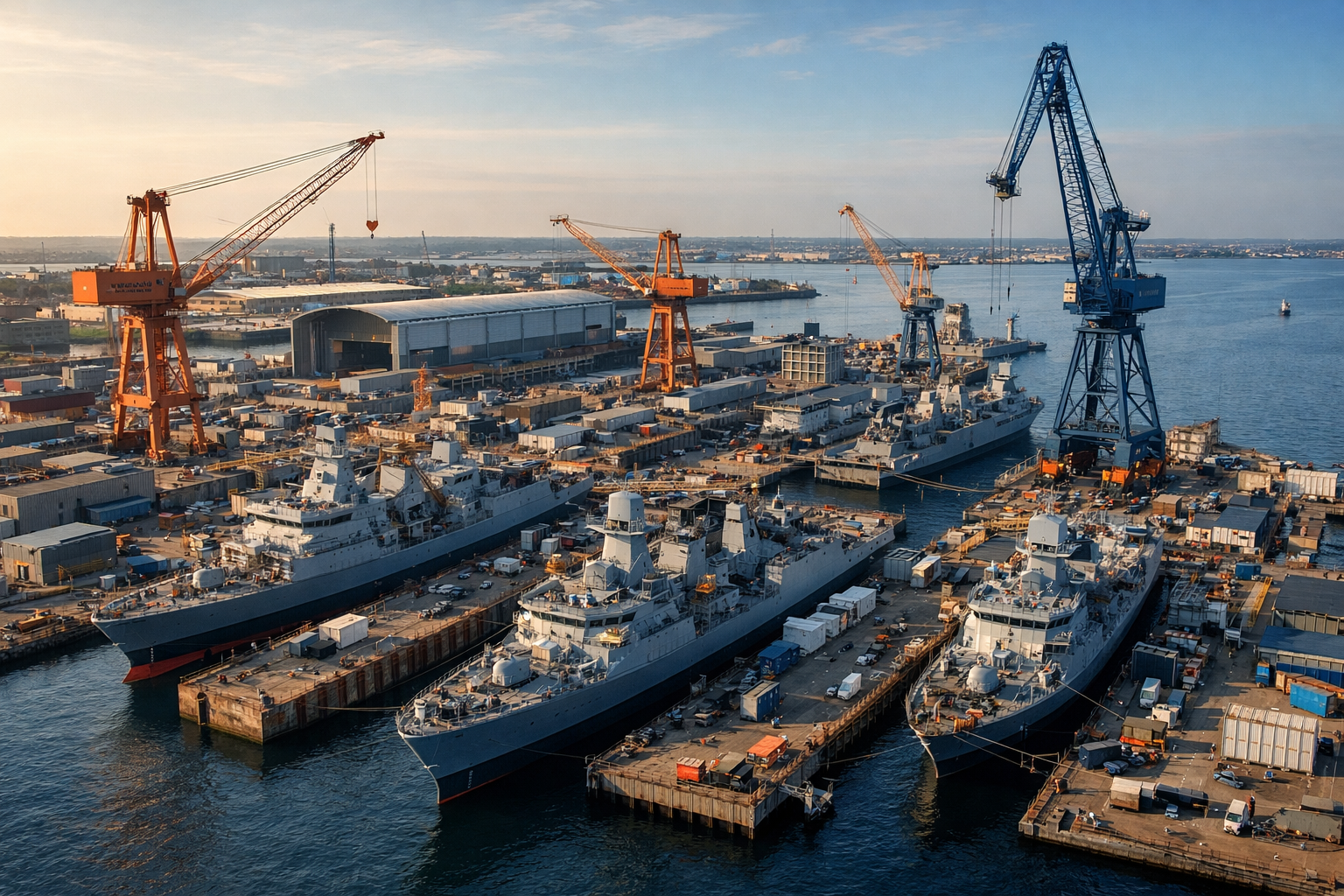
NVL brings a concentrated industrial footprint. The group’s German shipyards include Blohm+Voss and Norderwerft in Hamburg, Peene-Werft in Wolgast, and Neue Jadewerft in Wilhelmshaven, alongside headquarters functions in Bremen-Vegesack. NVL positions itself as a specialist in naval surface ships and life-cycle services, and it has also developed activity around uncrewed surface craft and related services.
Rheinmetall is framing the move as a shift from being a supplier of marine equipment into a full systems house in the maritime domain. Armin Papperger, CEO of Rheinmetall AG, said: “In future, Rheinmetall will be a relevant player on land, on water, in the air and in space and is thus developing into a cross-domain system house.” The company’s intent is to combine platform build with onboard electronics, sensors, and effectors — an integration play that aligns with how modern surface combatants are increasingly procured and sustained.
The strategic rationale is obvious enough: European navies are facing renewed demand for platforms, fleet availability, and persistent maritime surveillance, while autonomy is creeping from trials into acquisition. The more industrial question is whether Rheinmetall can standardise shipbuilding and mission-system integration across multiple yards without slipping into bespoke rework.
Consolidating yards into a systems house
Traditional shipbuilding already runs on distributed manufacturing — block construction, module outfitting, and final integration across sites — but the coordination burden rises sharply when combat system integration is brought under the same corporate roof. Rheinmetall’s advantage is a mature portfolio in sensors, effectors, and digital infrastructure, but turning that into repeatable shipyard work packages requires common interfaces, stable baselines, and production planning that respects long-lead items such as propulsion trains, switchboards, cabling, and mission electronics.
For the yards themselves, consolidation typically drives investment into digital shipyard tooling, laser scanning for as-built verification, and tighter supplier qualification. Those are not optional if the objective is shorter build cycles and higher availability across a class.
Autonomous surface systems add a different kind of pressure. The hull may be smaller, but the complexity is denser: navigation, comms, power management, cyber hardening, and sensor fusion become the bill of materials. Production discipline matters because autonomy programmes tend to iterate quickly, and uncontrolled change kills manufacturability.
Rheinmetall’s stated focus on “highly modern digital infrastructure” is effectively an acknowledgement that the next wave of naval competition will be built as much in electronics and software production as in steel. The acquisition gives Rheinmetall the yards; the next test is whether it can turn autonomy into a deliverable product line, rather than a perpetual demonstrator.