IN Brief:
- Rheinmetall has demonstrated the FV-014 loitering munition to a prospective NATO buyer, signalling near-term procurement intent.
- FV-014 combines reconnaissance and strike in a 20 kg class system, with container launch, electric propulsion, and GNSS-denied operating modes.
- The industrial question is throughput: consistent electronics, warhead integration, and safe packaging for high-volume field distribution.
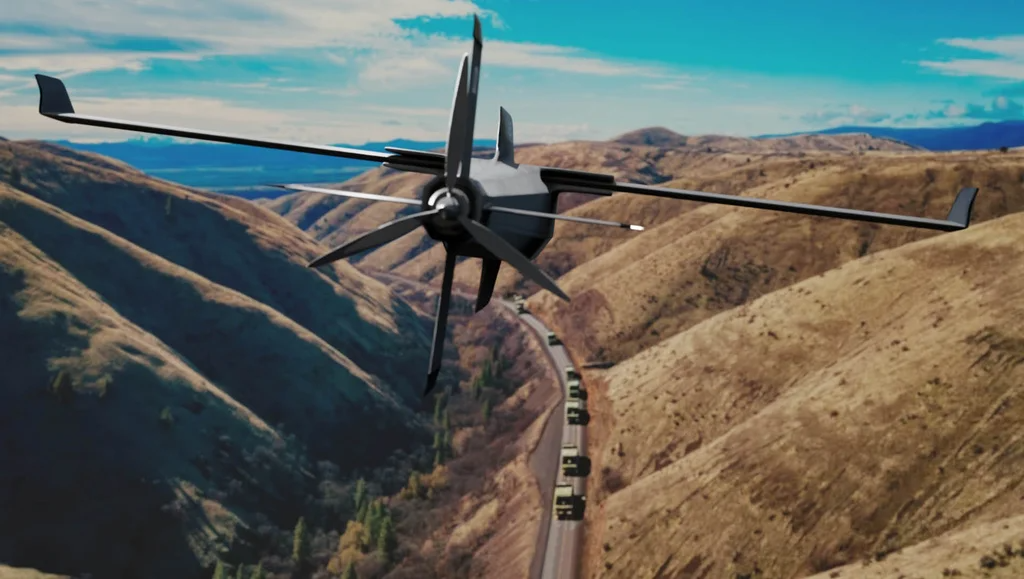
Rheinmetall has demonstrated its FV-014 loitering munition system to a potential NATO customer, completing a test event on 18 February 2026 at the German Aerospace Centre’s National Test Centre for Unmanned Aerial Systems in Cochstedt, Saxony-Anhalt. The system is designed to deliver both reconnaissance and strike in a single expendable platform, reflecting how European primes are now treating loitering munitions as a core product line rather than a niche add-on.
FV-014 is built around container launch using a booster, with an option for multi-launcher deployment. After launch, folding wings deploy and the aircraft transitions to aerodynamic flight. Rheinmetall lists an operational range of up to 100 km, a 70-minute flight duration, and a launch weight of around 20 kg carrying a 6 kg payload, including a 5 kg HEDP warhead claimed to exceed 600 mm RHA penetration. The company also positions the system for use in GNSS-jammed environments, with networked operation and “human-in-the-loop” control via a ground station.
Technically, the feature set sits squarely in the modern loitering munition template: low signatures, enough endurance to search and confirm targets, and the option to swarm. Industrially, it is a very different proposition from traditional missile work. These systems are judged by availability, production cadence, and the ability to ship and store them safely in large numbers, rather than by a small batch of high-value rounds.
From prototype to volume output
Container launch simplifies fielding, but it shifts manufacturing effort into packaging discipline. The munition, booster, and container have to leave the factory as a controlled unit, with predictable storage life and clear handling protocols, because the user’s “integration” task often ends at loading a launcher.
Electric propulsion also changes the production bill. Battery consistency, motor quality, and thermal management become line-stopping issues at scale, and endurance claims only hold if assembly tolerances and quality control remain stable across batches.
Software and datalink configuration management is equally unforgiving. A loitering munition is a flying network endpoint, and every change needs to be traceable, tested, and rolled out without fragmenting the fleet.
Electronics, warheads, and container logistics
The warhead chain remains the hardest industrial boundary. Explosives production, fuzing, and compliance controls do not scale the way airframe assembly can, and they require specialist capacity that competes with other munitions programmes.
On the electronics side, the pressure is supply continuity: sensors, compute modules, and secure communications components are globally constrained categories, and defence procurement cycles can clash with commercial obsolescence timelines.
FV-014’s demonstration is a tactical milestone, but the procurement signal is also an industrial one. Buyers will want to know how quickly Rheinmetall can turn an order into pallets — and how resilient that production line is under sustained demand.