IN Brief:
- Joint procurement model opens the door for additional co-financiers.
- TRIDON Mk2 provides mobile gun-based air defence for drones and missiles.
- Deliveries are scheduled to start within 12 months.
Sweden and Denmark have agreed a joint procurement of TRIDON Mk2 mobile anti-aircraft artillery systems for donation to Ukraine, establishing a framework that allows other countries to co-finance additional production and accelerate deliveries.
Sweden’s Ministry of Defence said the approach is intended to increase volumes, reduce unit costs, and expand production capacity, while providing Ukraine with additional air-defence assets suited to mass attack profiles. The announcement comes as gun-based air defence continues to reassert its role as an economical layer against drones and some cruise missile profiles, particularly where missile stocks are pressured by sustained rates of fire.
TRIDON Mk2 is produced by BAE Systems Bofors and built around a newly developed version of the Bofors 40 mm gun, mounted on an off-road Scania truck carrier vehicle. Sweden said the system can also be integrated onto other platforms, including tracked vehicles, aligning with Ukraine’s need to disperse, relocate quickly, and protect a mix of fixed infrastructure and manoeuvre formations.
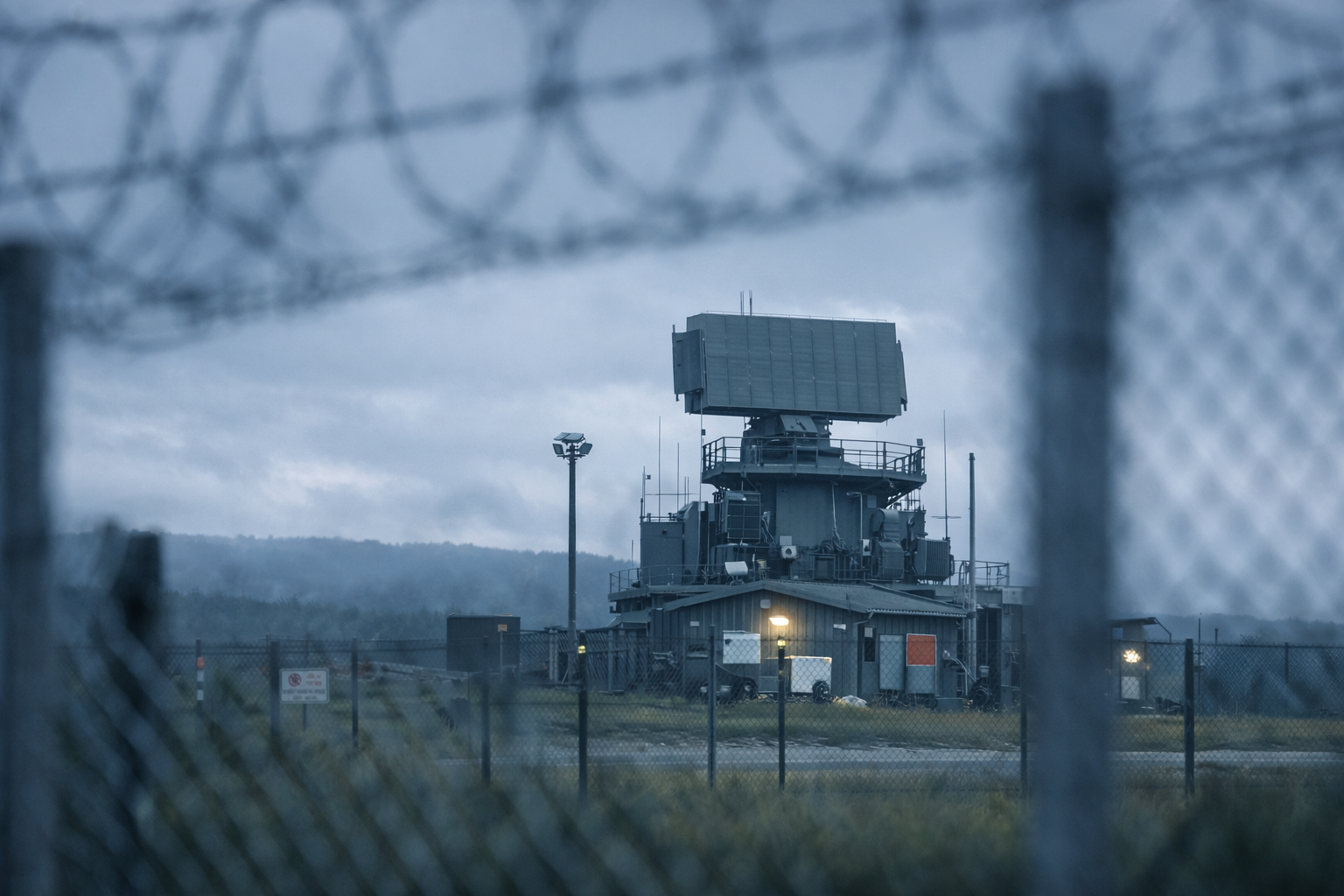
The configuration being procured for Ukraine will be upgraded with command-and-control systems and Saab’s Giraffe 1X radar, according to Sweden’s Ministry of Defence, and will include spare parts and large quantities of ammunition, including pre-fragmented, programmable, proximity-fused 3P rounds. That package is designed to push the system beyond a standalone gun, enabling cueing, engagement coordination, and sustained operation under high sortie rates and repeated relocations.
Within Sweden’s 18th, 19th, and 20th support packages to Ukraine, Sweden has financed TRIDON systems with a total value of SEK 2.1 billion. Denmark is expanding procurement with additional systems and equipment upgrades valued at SEK 480 million, which Sweden said corresponds to equipment for an anti-aircraft battalion. Delivery is set to start within 12 months, with Sweden stating it is prepared to place further orders quickly if other partners join the co-financing structure.
Sweden’s Defence Minister Pål Jonson said, “A joint procurement to support Ukraine not only helps Ukraine with more materiel on the battlefield, but will also strengthen the Swedish, Nordic and European security of supply.” Denmark’s Defence Minister Troels Lund Poulsen linked the donation to protecting civilian infrastructure and energy supply through winter, describing continued large-scale military assistance as crucial.
For European suppliers, the procurement structure also signals a more industrialised approach to sustaining Ukraine support, shifting from one-off transfers toward pooled production orders that can be scaled as partners rotate funding into a common line.