IN Brief:
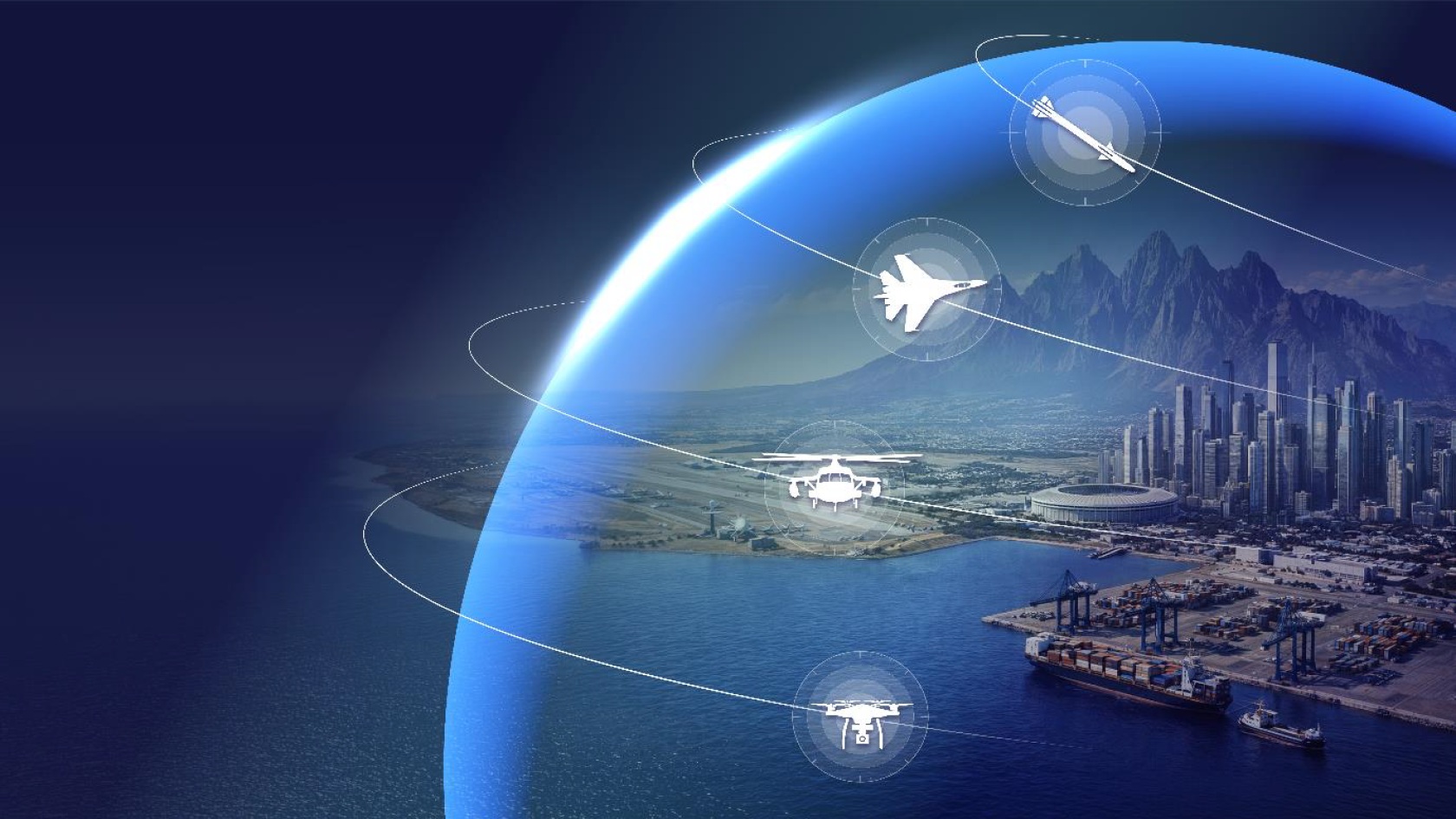
- Thales is positioning SkyDefender as a layered IAMD offer spanning short-, medium-, and long-range defence.
- The system combines ForceShield, SAMP-T NG, long-range radar assets, satellite warning, and SkyView command-and-control.
- Its wider significance is industrial, with open-architecture integration becoming a sellable defence product in its own right.
Thales has launched SkyDefender, a multi-layer integrated air and missile defence architecture intended to address threats ranging from drone incursions at short range to ballistic and hypersonic missiles at far greater distances. The system brings together the company’s existing short-range ForceShield offer, the SAMP-T NG medium-range layer with Ground Fire radar, long-range radar and warning assets, and the SkyView command-and-control environment into one marketed defensive package.
The significance lies less in a single new interceptor than in the way Thales has assembled a complete air-defence architecture for customers that want a faster path to deployment. European forces have spent years acquiring radars, missiles, battle-management software, and support equipment through separate programmes, then paying heavily to integrate them. SkyDefender is positioned as a more coherent answer to that long-running problem, particularly for buyers that need layered protection without starting from scratch.
Thales is also clearly aiming at the interoperability market. By stressing an open, modular design, the company is presenting SkyDefender as a system that can absorb legacy assets while still connecting into allied command structures and wider multi-domain operations. That is an attractive proposition for European and NATO-aligned buyers that cannot afford wholesale fleet replacement but still need defensive architectures that can scale quickly and talk to adjacent systems.
That pitch reflects a wider shift in procurement. Ministries are under pressure to field more capability at pace, which favours architectures that can be bought in phases, integrated around existing inventories, and sustained without years of bespoke engineering. Packaging integration as a product in its own right is becoming commercially valuable, especially in a market where layered air defence is moving from a specialist requirement to a baseline expectation.
From bespoke integration to repeatable production
The industrial interest sits in the layers beneath the headline. A modern air-defence dome is not only a missile story; it is also a systems engineering, radar manufacturing, software assurance, datalink, cyber resilience, and test-and-validation story. If those layers can be standardised and qualified across multiple customer configurations, primes can reduce delivery risk and move closer to repeatable production rather than treating every programme as a semi-custom integration exercise.
That changes the workshare across the supply chain. Software teams, command-system integrators, radar manufacturers, ruggedised computing suppliers, secure communications specialists, and verification engineers all become more central to the output than the public framing of missile defence often suggests. In effect, the industrial backbone of layered air defence is increasingly made up of electronics, software, processing power, and integration capacity rather than interceptor production alone.
Industrial pressures behind the dome
The manufacturing burden is still considerable. A credible layered shield depends on radar arrays, hardened processing hardware, cooling, launcher interfaces, secure communications, and a test regime capable of proving that different sensors and effectors can share tracks and engagement data reliably under stress. Even in an open architecture, the threshold for reliability is high because the system has to handle compressed decision timelines and multiple threat types without introducing confusion at the operator level.
There is also the question of supply-chain depth. Demand for air-defence systems across Europe has risen faster than every tier of the supply base can expand in step. Modularity may shorten the integration path, but it does not remove the need for semiconductors, high-grade electronics, skilled systems engineers, and enough integration capacity to qualify and field equipment at pace. For companies such as Thales, the real advantage will lie in proving they can industrialise that integration layer more effectively than rivals.
SkyDefender therefore speaks to a broader market direction. The next phase of European air defence will not be defined only by who can sell missiles. It will also be shaped by which companies can package sensors, software, command systems, and legacy assets into defensive architectures that are credible, interoperable, and deliverable on industrial timescales.