IN Brief:
- The UK has requested up to $1 billion in U.S. support for submarine combat systems, technical assistance, personnel, and training under AUKUS.
- The package reaches deep into design integration, covering launch architecture, electronics, software, simulation, and programme support rather than hull construction alone.
- For industry, this is where submarine manufacturing becomes locked to a combat-system baseline, shaping suppliers, workforce needs, and through-life support across the UK and Australia.
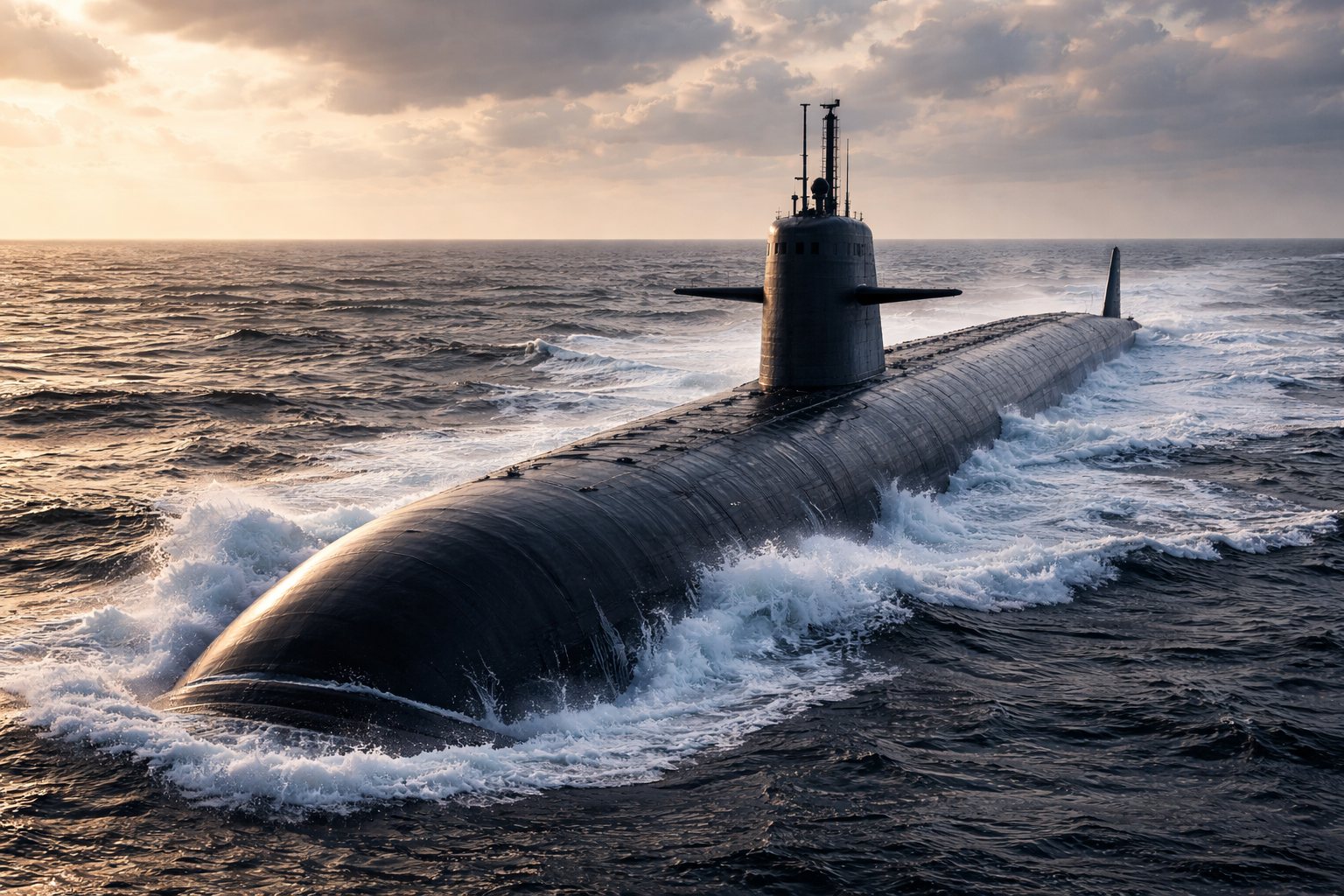
The UK’s request for up to $1 billion in U.S. support for submarine combat and weapon systems under the AUKUS programme looks, at first glance, like another large defence support case. In practice, it is a reminder that submarine production is now being defined as much by integration work as by steel, welding, and final assembly.
The proposed package covers a wide range of design and development support tied to SSN-AUKUS, including AUKUS-specific vertical deployment tubes, common weapon launchers, electronics, simulation equipment, software, source code, and embedded U.S. and UK personnel. It also includes engineering, logistics, test, and trials support. That is a substantial widening from the earlier $50 million case and signals that the combat-system architecture is moving into a much more demanding phase.
This matters because the combat system is not a bolt-on choice made late in build. It determines interfaces, cabinet layouts, cooling loads, data pathways, training devices, test rigs, and ultimately the factory and dockside work needed to deliver a boat that actually functions as a warfighting platform. In other words, it defines a large slice of the industrial task before a submarine ever reaches sea.
There is also a clear interoperability logic. Earlier this year, U.S. personnel demonstrated the AN/BYG-1 combat control system to UK Royal Navy, government, and industry representatives, supporting its planned integration into SSN-AUKUS. That system is already used by the U.S. Navy and Royal Australian Navy, and the attraction is obvious: a shared combat-system baseline reduces friction across three submarine fleets that are meant to train, operate, and sustain capability more closely over time.
For Britain, the request therefore looks less like dependence buying and more like programme compression. If the UK wants the future class to draw on U.S. launcher and combat-system technologies while also serving as the baseline for Australian boats, then the engineering burden has to be absorbed early, with people, software access, and design authority lined up before production matures.
Where the industrial load lands
The industrial implications reach well beyond one support notification. Vertical launch architecture, common weapon interfaces, and combat-system electronics all pull specialist suppliers into the programme earlier, because design choices made now drive qualification work for years afterwards. Once cabinets, networks, launch modules, and software environments are set, they shape build sequencing, shore integration, test regimes, and maintenance doctrine.
That is one reason AUKUS has become a workforce and supply-chain project as much as a naval one. Recent UK-Australia government statements have pointed to Australian industrial personnel embedded at Barrow, progress in reactor manufacturing, training for around 1,000 Australian personnel, and a deliberate effort to strengthen steel, supply-chain, and standards cooperation around SSN-AUKUS. The combat-system request sits inside that same industrial picture.
For manufacturers, the challenge is familiar and severe. Nuclear-submarine production already runs on tight specialist labour pools, long-lead materials, rigorous configuration control, and security-heavy supplier management. Adding a more integrated multinational combat-system and launcher architecture raises the premium on interface control, cyber assurance, software support, and test infrastructure.
A design choice that locks in production
What the latest support request really shows is that SSN-AUKUS will be built through tightly coupled industrial decisions rather than isolated national work packages. The pressure is not only on BAE Systems, Rolls-Royce, and the wider submarine enterprise, but on the network of electronics, systems, training, steel, and integration suppliers that must align around a common baseline.
That will not make the build easier. It will, however, make the programme more coherent if it works. Shared combat-system architecture promises stronger interoperability and potentially cleaner through-life upgrades, but it also leaves far less room for sloppy programme handoffs or late redesign.
For the defence industrial base, that is the real significance of the request. Submarines are still built from pressure hull sections, forgings, and reactors, but increasingly their production tempo is set by the parts of the programme that cannot be seen from the dockside — software baselines, system interfaces, embedded teams, and the long engineering tail behind them.