IN Brief:
- UJTS competition is moving toward a draft-to-final solicitation in 2026.
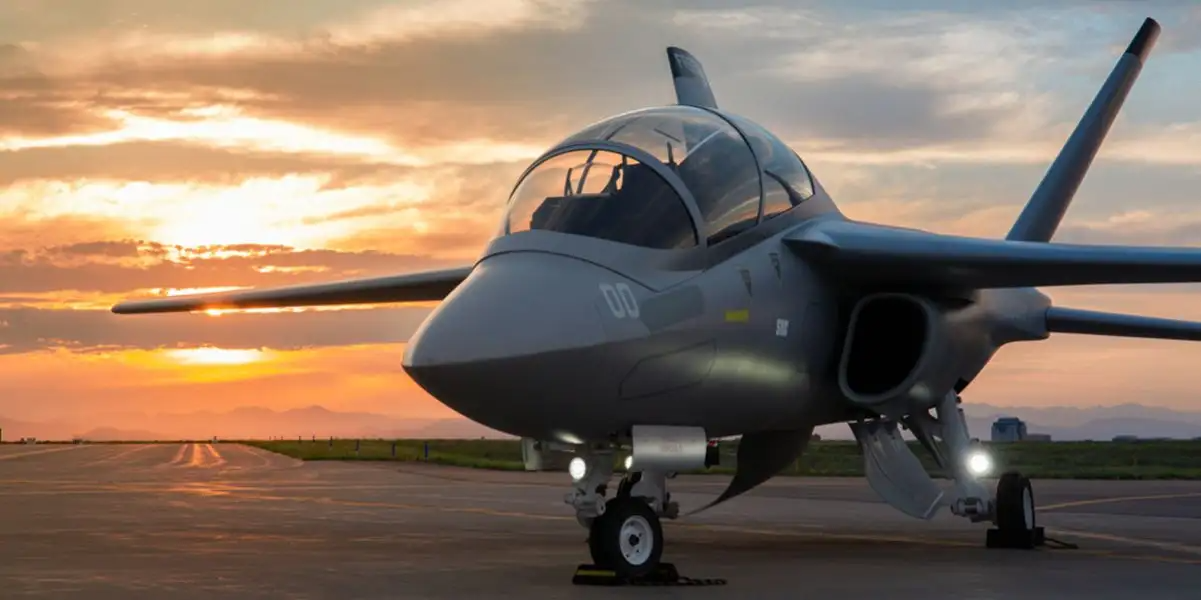
- “Freedom Trainer” pitches carrier-relevant handling and digitally integrated training.
- Teaming targets U.S. production scale, plus a potential FMS pathway.
Sierra Nevada Corporation (SNC) has signed an executive charter with Northrop Grumman and General Atomics Aeronautical Systems (GA-ASI) to pursue the U.S. Navy’s Undergraduate Jet Training System (UJTS) requirement, positioning a new “Freedom Trainer” aircraft as the centrepiece of a wider training system-of-systems.
SNC is presenting the aircraft as a clean-sheet design built around digital engineering methods and an open systems approach, with the company framing the offer as a complete training enterprise rather than a standalone airframe. Alongside the aircraft, SNC describes a comprehensive ground-based training system and an integrated logistics system intended to align simulators, courseware, and live flying, while tightening configuration control through a digital data package.
A key differentiator in SNC’s pitch is carrier-relevant landing practice. The company says the aircraft is designed to support Field Carrier Landing Practice (FCLP) through touchdown, with early and repeated exposure to the Navy’s no-flare landing technique. That emphasis is aimed at reducing downstream reliance on operational carrier-capable aircraft to complete basic training events later in the pipeline, particularly as frontline types become more in demand and more expensive to fly.
SNC’s Fatih Ozmen, CEO of SNC, said, “We are committed to bringing together a world class team to deliver the Freedom Trainer as the complete solution to prepare our naval aviators with the skills and instincts they need from the start.” The company’s charter with Northrop Grumman and GA-ASI formalises a production and manufacturing teaming relationship, with SNC pointing to Northrop Grumman’s aircraft production experience and capacity investment, and GA-ASI’s advanced manufacturing capabilities.
Performance and through-life cost claims are central to the Freedom Trainer proposition. SNC is advertising engine-related lifecycle costs 40 percent lower than the current T-45, a 16,000-hour airframe life, and longer average sortie durations than competing platforms. The company is also positioning U.S. Navy ownership of digital technical data package rights as a lever to avoid being locked into OEM-specific upgrade pathways as training requirements evolve.
SNC says “Team Freedom” includes CAE USA, Cubic, Red 6, Martin-Baker, and Williams International, indicating a broader training ecosystem spanning simulation, embedded training, and aircrew safety systems. With multiple primes and challengers expected to compete for UJTS, the pace and credibility of the production plan will matter as much as the concept aircraft — particularly if the Navy seeks a transition that avoids a capability dip as the T-45 ages out.