IN Brief:
- New agreements at DSA 2026 extend Türkiye–Malaysia cooperation in secure SATCOM and AI-led defence technologies.
- The work points to more local integration, software development, and support activity inside Malaysia.
- Regional demand for resilient communications and sovereign digital capability is shaping programme design.
Türkiye and Malaysia have used DSA 2026 in Kuala Lumpur to deepen defence-technology cooperation across secure communications and AI-enabled systems, adding fresh weight to an industrial relationship that has already been widening through naval modernisation and digital projects.
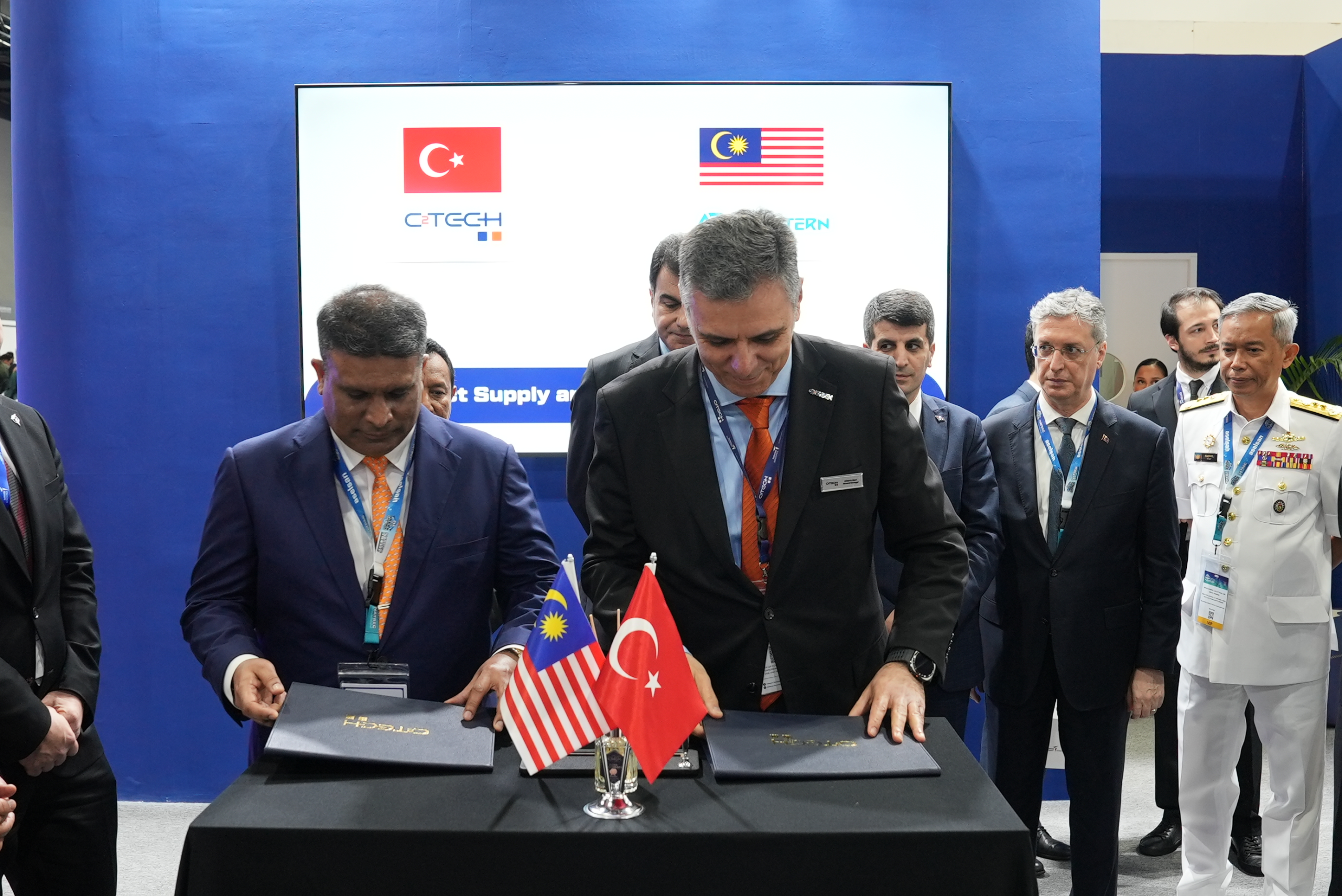
CTech, a subsidiary of Turkish Aerospace Industries, signed a product supply and cooperation agreement with Malaysian partner AR Eastern covering jamming-resistant satellite communication modem products and wider secure SATCOM work. The agreement also opens the door to joint activity aimed at ASEAN opportunities, giving the partnership a regional export dimension as well as a domestic one.
HAVELSAN and MIMOS International Venture also signed a teaming agreement to develop a localized foundational AI ecosystem for defence, security, telecommunications, and smart-infrastructure applications. The move builds on earlier cooperation in Malaysia around naval modernisation and AI, and pushes the relationship further into software, data handling, and mission-system development.
Platform partnerships are increasingly followed by work on communications resilience, digital mission support, and software-led capability layers that stay closer to national control.
Production and localisation
Jamming-resistant SATCOM hardware brings a demanding production chain. Modems, antennas, encryption assurance, electromagnetic compatibility, and integration testing all have to be aligned with the operating environment and the electronic-warfare conditions those systems are expected to face.
The AI programme carries a different production burden. A localized ecosystem needs computing infrastructure, trusted data pipelines, mission software, interface standards, and technical support that can be sustained in-country. That shifts value from imported equipment alone toward system integration and lifecycle engineering.
Where the industrial work sits
For Malaysian industry, the opportunity extends beyond final assembly. Secure communications and software-intensive systems require validation, integration, cyber hardening, and long-term support, which is where local engineering teams begin to shape programme performance as well as cost.
Turkish suppliers bring mature subsystems and software frameworks. Malaysian partners provide the local presence, support base, and operating context needed to adapt those systems for national use and for a wider Southeast Asian market.