IN Brief:
- BAE Systems Hägglunds is expanding CV90 production capacity at Örnsköldsvik.
- The site is adding facilities, staff, logistics space, and inspection capability.
- The expansion reflects rising European demand for armoured vehicles and battlefield-proven variants.
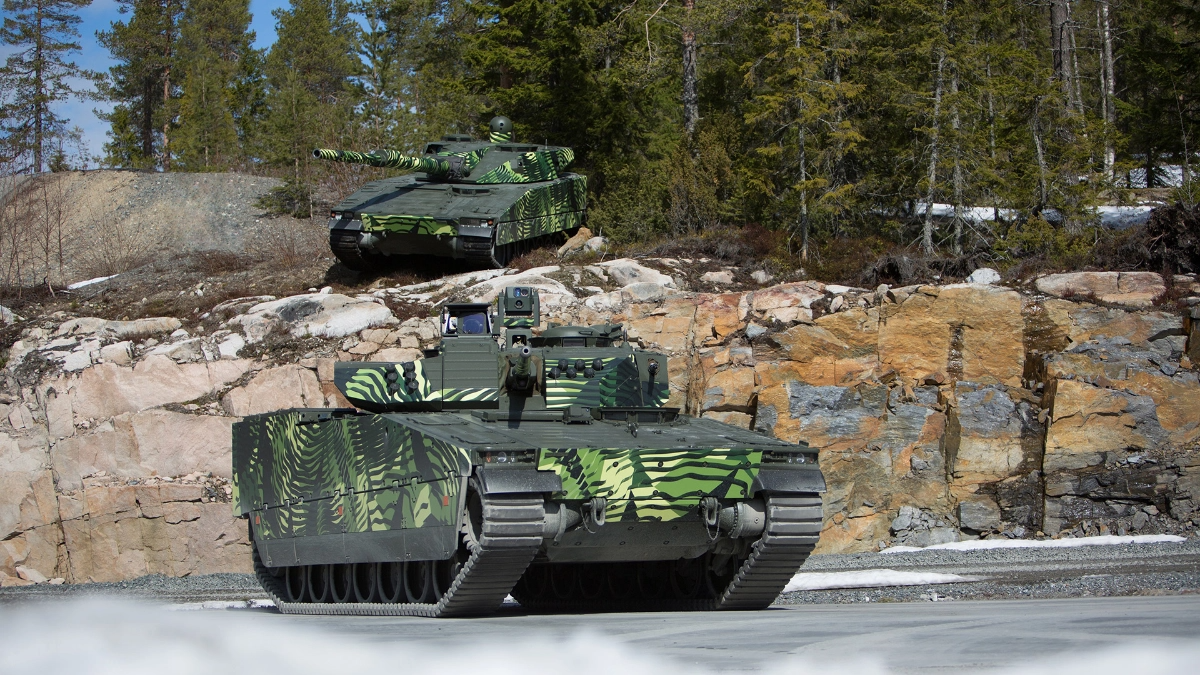
BAE Systems Hägglunds is expanding CV90 production capacity at Örnsköldsvik in northern Sweden as demand for infantry fighting vehicles continues to rise across Europe.
The investment is linked to sustained demand for new-build and upgraded CV90 vehicles, including Nordic requirements and orders from European customers replacing ageing fleets. The platform’s combat use in Ukraine has also sharpened interest in tracked infantry fighting vehicles with modern protection, mobility, and sensor packages.
The Örnsköldsvik site is adding production space, logistics capacity, staff, and inspection capability. The expansion is designed to increase output while supporting the greater variant complexity that comes with national requirements, export customers, and upgraded vehicle architectures.
The CV90’s position in the European market reflects the renewed importance of heavy land capability. Tracked vehicles remain exposed to drones, artillery, and anti-armour weapons, but armies are still investing in protected mobility where survivability, firepower, and digitised battlefield links can be combined.
Supplier depth and vehicle throughput
Armoured vehicle production is rarely constrained by hull fabrication alone. Output depends on engines, transmissions, tracks, armour packages, electronics, harnesses, sights, turrets, weapons, radios, displays, and battlefield-management systems arriving in sequence.
That makes smaller suppliers critical to vehicle rate. A missing cable assembly, sensor unit, bracket, or electronic box can delay a completed hull just as effectively as a late powerpack. Expanding final assembly without strengthening the lower supply chain leaves production vulnerable to bottlenecks.
Inspection capacity is equally important. Combat vehicles carry mechanical, electrical, software, ballistic, and safety requirements that need documented verification before delivery. Higher rate therefore demands more quality staff, test equipment, and controlled process flow, not only additional floor space.
The CV90 expansion shows where European land manufacturing is moving. Demand has returned quickly, but reliable output depends on supplier resilience, workforce growth, export-control discipline, and the ability to turn vehicle complexity into repeatable production.