IN Brief:
- Airbus Defence and Space and Alta Ares have signed an MoU to develop and integrate European counter-drone solutions.
- Alta Ares’ Pixel Lock, Black Bird, and X-Lock systems will be aligned with Airbus Fortion IBMS and SAMOC software.
- The partnership reflects rising demand for affordable, scalable, sensor-to-effector air defence against drones and cruise-missile-class threats.
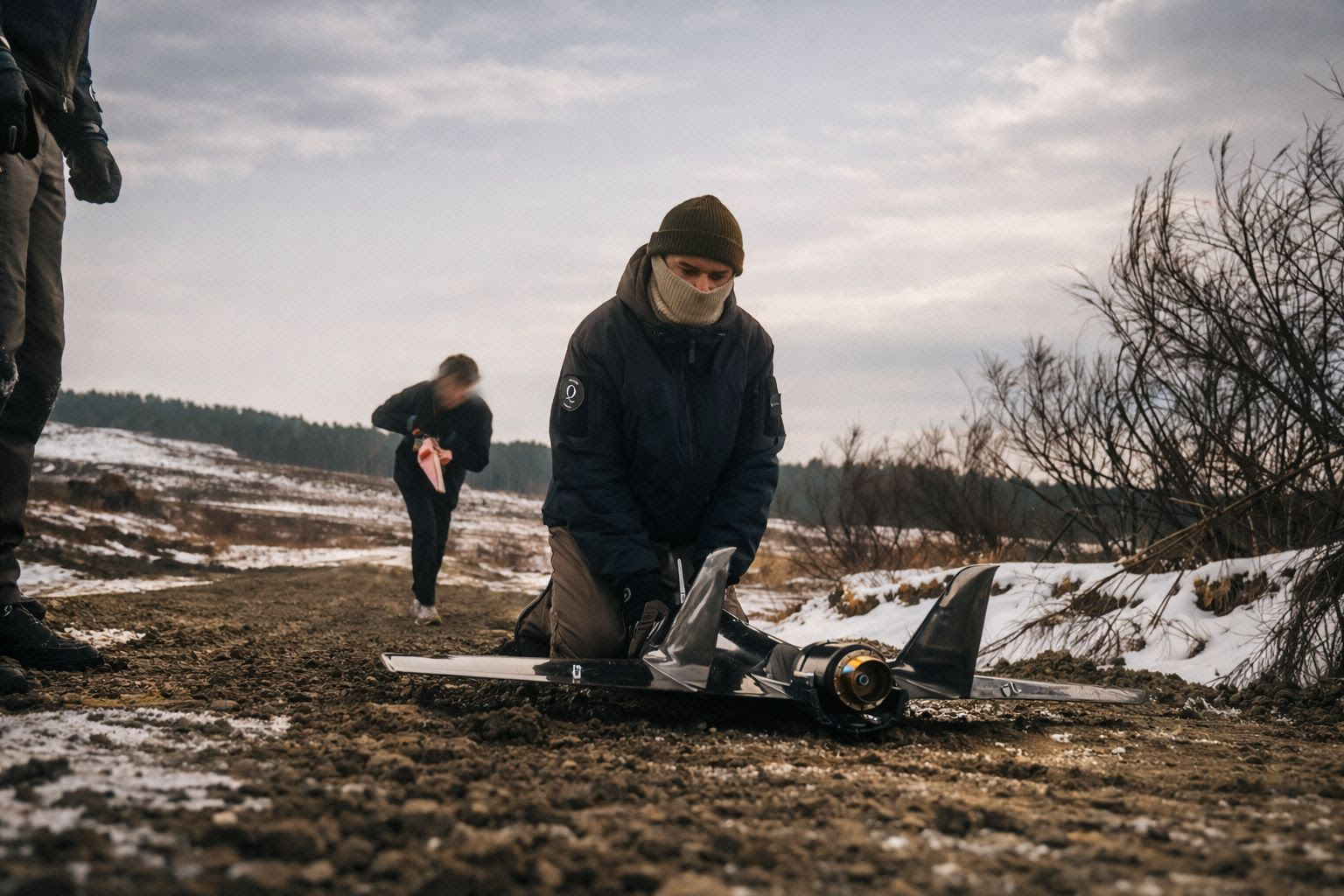
Airbus Defence and Space and Alta Ares have signed a memorandum of understanding to develop and integrate European counter-drone solutions, bringing Airbus’s air-defence command-and-control software together with Alta Ares’ AI-enabled tactical interceptors.
The partnership is built around Airbus’s Fortion IBMS integrated battle-management software and Fortion SAMOC surface-to-air missile operations suite, alongside Alta Ares’ counter-UAS systems, Pixel Lock technology, and interceptor portfolio. Alta Ares’ systems have been operationally deployed in Ukraine since 2024, giving the cooperation a direct connection to battlefield-tested counter-drone requirements.
François Lombard, head of Connected Intelligence at Airbus Defence and Space, said defending against suicide drones is an urgent priority that must be integrated into broader air-defence solutions. He said Airbus’s counter-drone strategy is intended to provide cost-efficient systems that can operate within the wider air-defence ecosystem.
The companies will continue developing and deploying Black Bird, a medium-range interceptor with a stated 30km range and a design focus on high-speed targets such as cruise missiles, and X-Lock, a short-range 15km system designed to counter drone threats. The goal is to integrate those effectors into Airbus’s battle-management environment, giving operators a coherent sensor-to-shooter chain from detection to neutralisation.
Hadrien Canter, co-founder and chief executive of Alta Ares, described modern air defence as both a software and hardware challenge, adding that integration of Pixel Lock and the company’s interceptors into Fortion IBMS would give operators a single chain from detection to neutralisation.
Europe does not lack counter-drone products. The market already includes jammers, guns, missiles, interceptors, radars, electro-optical sensors, acoustic sensors, and command systems. The harder requirement is integration: systems must classify targets, select effectors, deconflict engagements, manage ammunition, and reduce operator workload while keeping pace with massed or repeated attacks.
Airbus gives Alta Ares access to a larger command-and-control environment, while Alta Ares gives Airbus a tactical interceptor layer shaped by drone warfare in Ukraine. The industrial question is whether the companies can turn that combination into deployable capacity, with repeatable production, test evidence, software support, and enough affordability for customers to buy in numbers.
Counter-drone manufacturing has changed quickly because the threat has changed quickly. One-way attack drones, reconnaissance UAVs, loitering munitions, and low-cost autonomous platforms create an economic problem for defenders. Firing expensive missiles at cheap drones can be necessary in the moment, but it is not sustainable as a standing defence model. That pushes industry toward lower-cost interceptors, faster software updates, and modular effectors that can be replenished.
The same pressure is visible across Europe’s air-defence sector. Work on Skyhammer, DragonFire, and Britain’s air-defence manufacturing base has shown how interceptor cost, energetics supply, launcher integration, and production scale now sit behind counter-drone and missile-defence planning. Airbus and Alta Ares are working in that same environment, but with software-enabled integration as the organising principle.
Mobile and distributed air defence is also expanding, as seen in Diehl’s mobile IRIS-T SLS MK 4 development. Smaller, more flexible systems are being pulled toward networked command environments where sensors and effectors can be mixed according to threat and cost. Alta Ares’ Black Bird and X-Lock concept fits that layered approach, with different interceptors assigned to different ranges and target classes.
Manufacturing those interceptors will place different demands on suppliers. A 30km weapon aimed at high-speed targets requires propulsion, guidance, flight-control, seeker, and structural performance beyond a short-range drone interceptor. A 15km counter-UAS system must be cheap enough for volume but accurate and resilient enough to defeat small targets that may be manoeuvring, flying low, or operating under electronic-warfare cover.
Software will be equally important. AI-enabled onboard functions, target recognition, engagement management, and battle-management integration must be updated as threats evolve. A system deployed against drones in Ukraine may face different signatures, tactics, and countermeasures six months later. Customers will therefore look for software pipelines as much as launchers and interceptors.
Sovereign production will shape European procurement decisions. A European counter-drone ecosystem built around Airbus software and Alta Ares effectors could offer customers a more controlled route than fragmented imports, particularly where airbases, logistics hubs, critical infrastructure, and deployed formations all require layered protection.
The MoU itself does not create factories or inventory. Orders, manufacturing investment, supplier qualification, range testing, and software maintenance will determine whether the partnership becomes a scalable European capability. Yet the direction is well defined: counter-drone systems are moving away from isolated equipment and toward integrated kill chains.
Airbus and Alta Ares are combining battle-management software, AI-enabled targeting, and tactical interceptors at a point when Europe needs affordable air-defence layers that can be produced and upgraded quickly. The practical test will be whether the partnership can turn battlefield urgency into deployable systems, qualified production, and enough stock depth to meet the scale of the threat.