IN Brief:
- The first SPY-6(V)4 array has been installed at the Surface Combat Systems Center in Virginia.
- Testing will examine the radar, power equipment, and combat-system interfaces before the first ship installation.
- USS Pinckney is scheduled to receive the initial Flight IIA backfit during an availability extending into 2028.
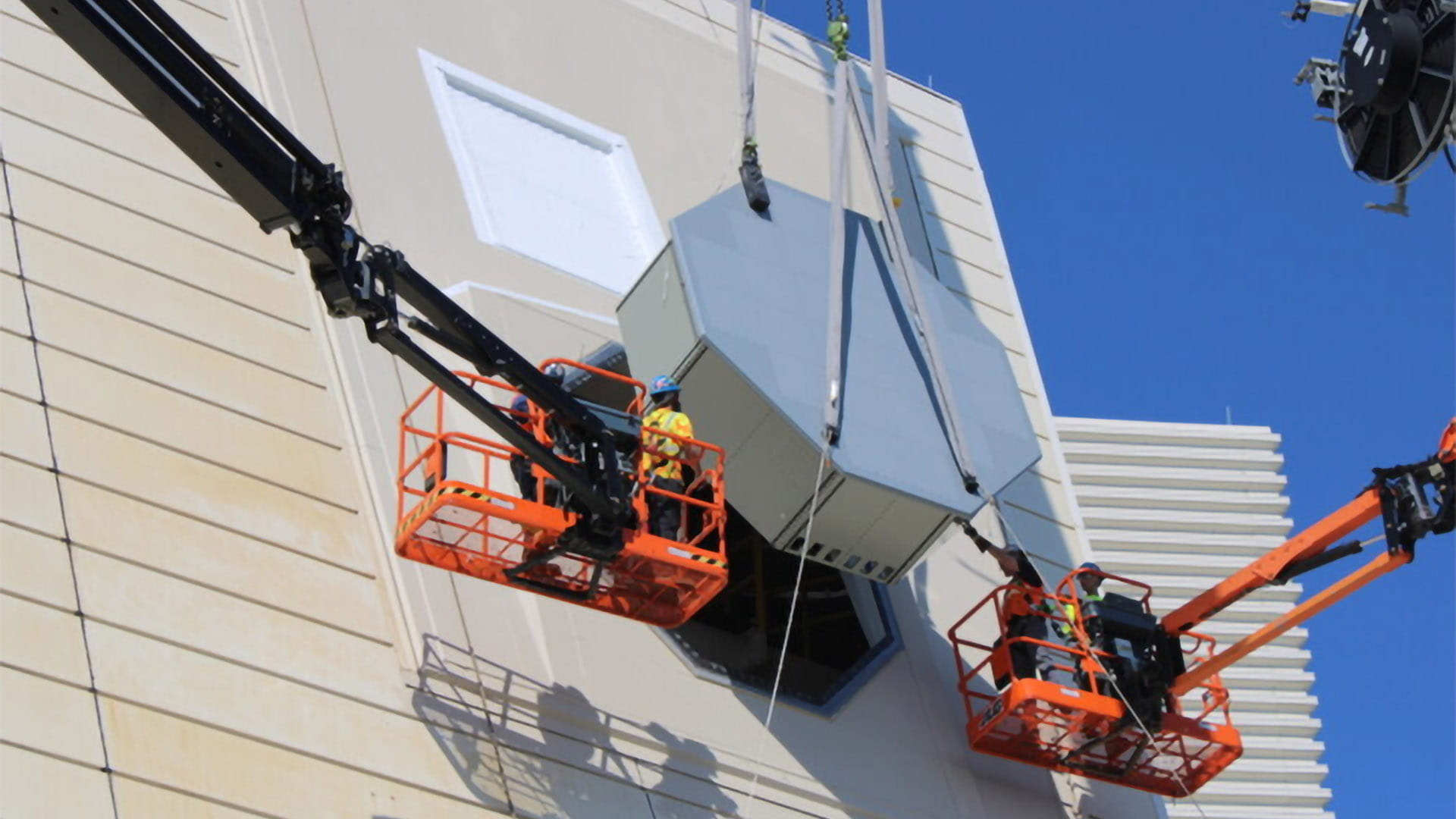
Raytheon has installed the first SPY-6(V)4 radar array at the Surface Combat Systems Center on Wallops Island, Virginia, beginning the land-based integration phase for the US Navy’s Flight IIA destroyer backfit programme. Testing is scheduled to begin later in 2026 and continue through the middle of 2028.
The Wallops facility provides an open-water environment where the radar can operate with its dedicated power equipment and combat-system interfaces before the first shipboard installation. USS Pinckney (DDG 91) is scheduled to become the initial Flight IIA destroyer to receive SPY-6(V)4 during a modernisation availability running from late 2026 into 2028.
Using a shore site allows the Navy and Raytheon to find integration problems before the equipment enters a shipyard programme governed by a fixed schedule. Engineers can exercise the array, power system, cooling, processing equipment, and combat-system connections as one installation while retaining better access to instrumentation and replacement hardware than would be available aboard a destroyer.
Barbara Borgonovi, president of Naval Power at Raytheon, said the approach was intended to reduce the testing required aboard DDG 91. “That means less time in the shipyard, more time dedicated to the mission, and a smoother path for future backfit ships,” she said.
SPY-6(V)4 is the radar-family variant developed for backfitting Flight IIA Arleigh Burke-class destroyers. It uses four fixed array faces, each assembled from 24 radar modular assemblies, to provide continuous coverage and greater sensitivity than the equipment it replaces.
The radar modular assembly is the common building block used across the SPY-6 family. Different quantities of the self-contained units are combined to create variants for destroyers, aircraft carriers, amphibious ships, and frigates.
Common hardware and software can support repeatable production and maintenance, but each ship class still requires its own foundations, power arrangements, cooling, cabinets, processing equipment, software baseline, installation kit, and combat-system integration.
For the Flight IIA backfit, the physical work is substantial. A radar is tied into the ship’s electrical generation and distribution, cooling plant, structural supports, cabling, displays, and weapons-control functions. The land-based campaign must establish that those interfaces can support the radar without producing unacceptable effects elsewhere aboard the ship.
Wallops also allows the programme to test representative targets in an open-water environment rather than relying solely on factory simulations. Engineers can examine track performance, software behaviour, and combat-system interaction while the installation remains accessible for changes.
The schedule creates its own pressure because the DDG 91 availability is expected to begin before the shore campaign has concluded. Test evidence, hardware availability, shipyard preparation, and configuration decisions will need to be sequenced carefully enough to prevent unresolved development work from moving aboard the ship.
A late discovery at Wallops could affect the first installation and every later destroyer using the same baseline. Conversely, closing problems ashore should reduce rework, shorten later test periods, and make subsequent modernisations more repeatable.
The programme extends beyond one array. Raytheon says SPY-6 variants are aboard two commissioned Navy ships and installed on 11 additional vessels undergoing testing before commissioning. More than 50 ships are expected to carry the radar family during the next decade through new construction and modernisation.
That scale changes the industrial requirement. Raytheon has invested $800 million in radar manufacturing facilities and says it is positioned to double SPY-6 output by 2028. Repeatable radar modular assembly production can support several variants, although ship-specific equipment and installation activity must still arrive in the correct sequence.
The Wallops installation is therefore both a technical test asset and a production-learning opportunity. Engineers can establish installation procedures, verify interfaces, collect fault data, and identify changes before the configuration is repeated across more Flight IIA destroyers.
This milestone is distinct from the production extension already awarded for the wider SPY-6 family. The immediate issue is not contract volume but whether the V4 backfit configuration can be proven ashore before it is installed aboard an operational hull.
The announcement does not identify the next Flight IIA ship in the sequence or state when USS Pinckney will complete modernisation. The next measure will be the start of testing later this year and evidence that the radar, power, and combat-system interfaces are mature enough to enter the first shipyard installation without carrying a land-based development programme onto the destroyer.