IN Brief:
- France has awarded MBDA the development contract for the ASN4G hypersonic nuclear air-to-ground missile.
- ASN4G is planned to replace ASMPA-R and enter service around 2035 on Rafale F5.
- The programme will test France’s ability to sustain sovereign propulsion, materials, guidance, and nuclear-weapons integration expertise.
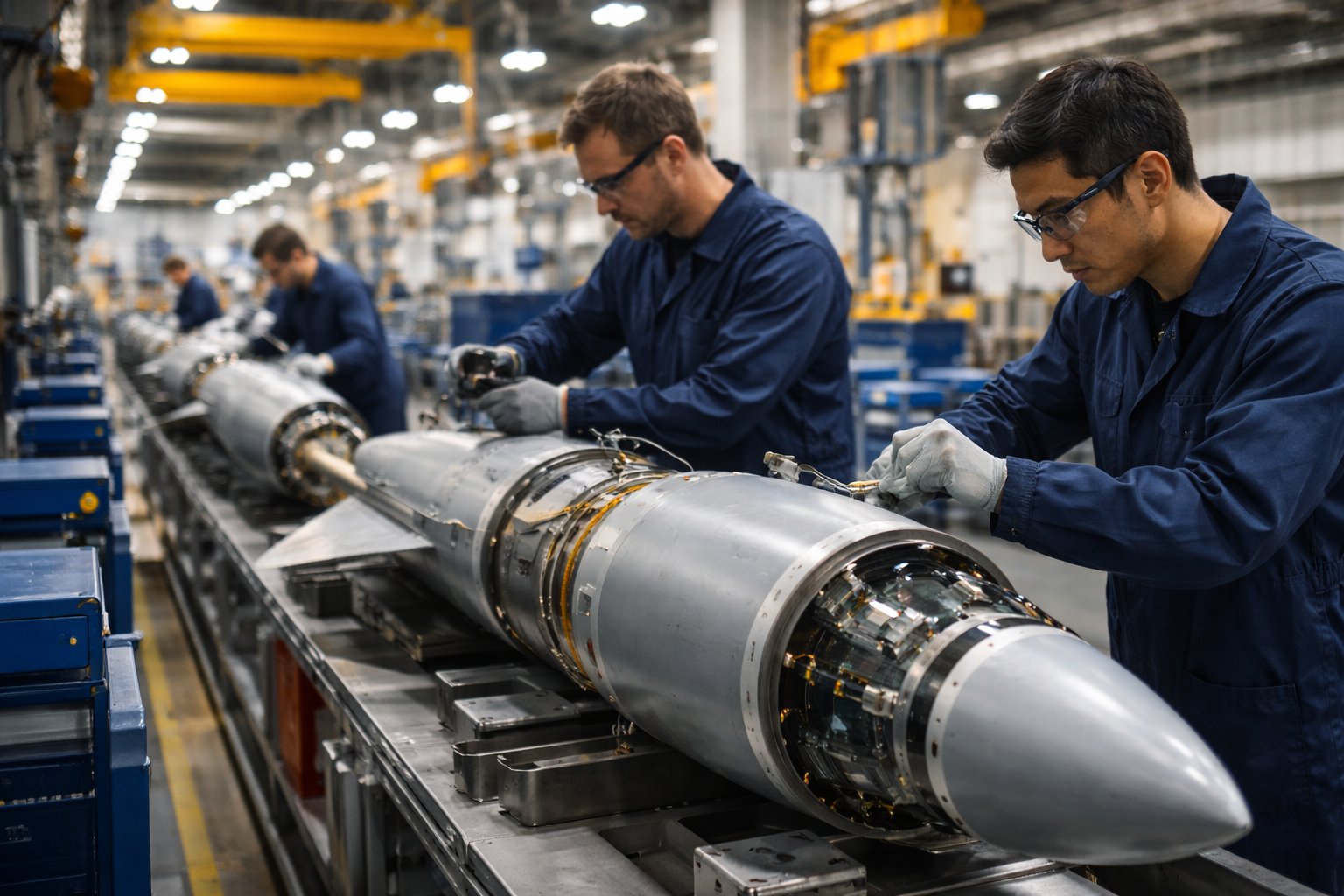
France has moved the ASN4G hypersonic nuclear missile into development, placing MBDA at the centre of the next phase of the country’s airborne deterrent and giving Europe one of its most consequential long-cycle weapons programmes.
The Direction générale de l’armement notified MBDA of the framework agreement and development contract for the fourth-generation nuclear air-to-surface missile on 2 June. The weapon is planned to enter service around 2035 and will be carried by the Rafale F5, the next major standard of Dassault Aviation’s fighter.
ASN4G will replace the ASMPA-R missile currently used by France’s airborne nuclear forces. It is intended for both the Strategic Air Forces and the naval nuclear aviation component, whose Rafale M aircraft operate from the aircraft carrier Charles de Gaulle. That dual operating model turns the programme into an aircraft, carrier aviation, weapons-handling, support, and nuclear-certification effort across two services.
A hypersonic air-launched weapon imposes heavy demands on propulsion, high-temperature materials, structural loads, guidance, control surfaces, safe carriage, release dynamics, and integration with the aircraft mission system. Changes to thermal protection affect structure and weight; changes to propulsion alter the flight profile; changes to carriage affect aircraft loads, mission planning, and certification evidence.
Rafale F5 now has a clearer deterrence role within France’s combat-air roadmap. The recent MICA NG development firing from Rafale showed the continuing importance of missile-aircraft qualification in French airpower. ASN4G sits at a different strategic level, but it depends on the same disciplined progression from ground work to captive carriage, release trials, flight testing, software integration, and weapons-system certification.
Supply-chain control will shape the programme alongside missile performance. Hypersonic weapons place pressure on specialist materials, propulsion manufacturing, precision machining, environmental test facilities, flight-test instrumentation, secure software, and quality assurance. Industrial capacity in these areas cannot be created quickly, and a small number of qualified suppliers can become a schedule constraint for years.
ASN4G also sits within a broader Western scramble for hypersonic and long-range strike capacity. Governments are investing in offensive hypersonic weapons, interceptors, long-range cruise missiles, advanced air defence, and new test infrastructure, but similar bottlenecks keep appearing: energetics, propulsion, test range access, high-temperature materials, guidance electronics, and specialist engineering labour. France’s programme gives the country a sovereign route to retain and extend those skills.
The programme contrasts with the instability visible in wider European combat-air politics. While Europe’s fighter divide has exposed the fragility of multinational combat-air structures, ASN4G is a nationally controlled deterrence programme with a defined aircraft host and a strategic requirement that leaves little room for industrial ambiguity.
For MBDA, the development contract adds to a growing European missile workload. Air defence, deep strike, anti-ship weapons, counter-drone effectors, and tactical missiles are all competing for engineering capacity and production investment. A nuclear hypersonic missile sits at the high end of that portfolio, but it depends on the same broad industrial base: motors, structures, seekers, electronics, software, test systems, safety cases, and certified manufacturing processes.
France will need to hold programme discipline over nearly a decade. Development stretching toward the mid-2030s must survive technology risk, cost pressure, airframe integration work, evolving air-defence threats, and a supply chain already being pulled by European rearmament. The missile’s classified performance will draw attention, but the less visible measure will be whether France can sustain the engineering and production system behind it.
ASN4G gives Rafale F5 a central deterrence role and keeps France’s airborne nuclear component on a modernisation path. For defence manufacturers, the programme underlines a blunt reality of strategic weapons: speed and range only become operational capability when the industrial base can design, qualify, build, certify, and sustain the system without brittle external dependencies.