IN Brief:
- SEA has won UK Defence Innovation funding under the 2025 AUKUS Maritime Innovation Challenge.
- The work will enhance SEA’s Underwater Acoustic Modelling Toolset for acoustic communications performance prediction.
- The production focus sits in undersea C2, autonomous systems, environmental modelling, software development, and exportable ASW expertise.
SEA has won a UK Defence Innovation funding contract under the 2025 AUKUS Maritime Innovation Challenge to enhance its Underwater Acoustic Modelling Toolset for acoustic communications and autonomous undersea control.
The work sits under AUKUS Pillar 2, the trilateral technology strand covering advanced military capabilities across Australia, the United Kingdom, and the United States. The 2025 maritime challenge focused on undersea communications and control of autonomous systems, placing SEA’s software directly inside one of the most difficult technical problems in naval modernisation.
Underwater communications are constrained by physics. Radio-frequency links that work in air and space do not translate cleanly below the surface. Acoustic communications can travel through water, but performance is shaped by salinity, temperature, depth, seabed conditions, ambient noise, sea state, range, frequency, platform movement, and interference from natural and human-made sources. Reliable undersea command-and-control depends on environmental understanding as much as communications hardware.
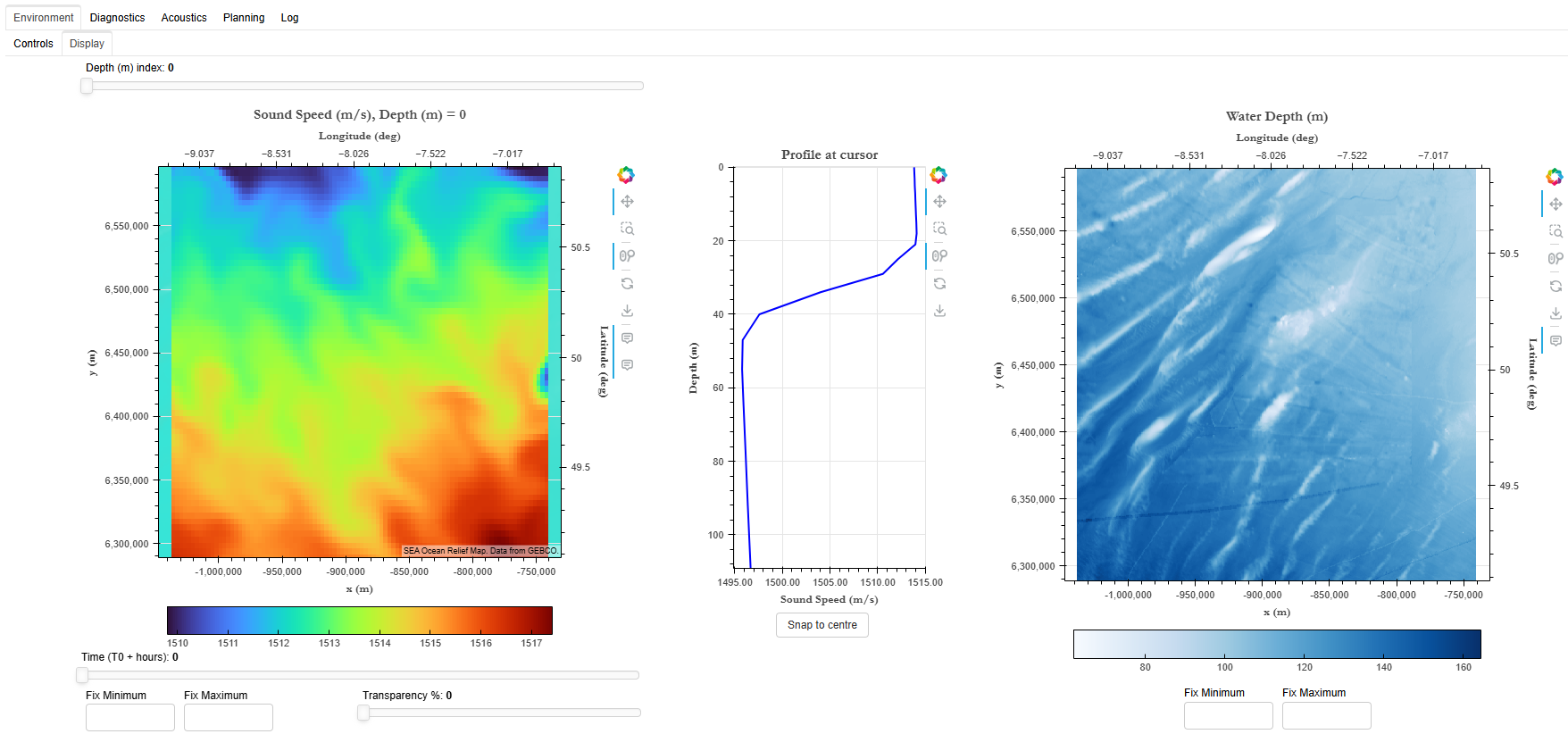
SEA will enhance its modelling software with acoustic communications performance prediction, allowing the toolset to respond to changing mission requirements and operational constraints. The system uses high-resolution environmental input data and sophisticated acoustic modelling to optimise sensor placement and frequency band selection for the prevailing environment.
The toolset also draws on SEA’s Ambient Noise Prediction System, already in operational use with the Royal Navy, providing global ambient noise forecasts to the fleet with SEA delivering support and upgrades. That operational pedigree gives the software a stronger route into allied undersea activity, where repeatable performance in difficult, variable conditions is essential.
Ian Cox, Head of Research at SEA, said: “The 2025 AUKUS Maritime Innovation Challenge was a highly competitive multi-national programme, and we are proud to be one of four companies selected by UKDI to further develop and test our Underwater Acoustic Modelling Toolset. This recognition reflects our long-standing heritage in underwater environmental research and strengthens our position as an independent supplier of underwater environmental modelling expertise. We look forward to advancing our software to meet the evolving command-and-control needs of underwater systems, supporting the aims of AUKUS and strengthening allied underwater capabilities.”
AUKUS undersea autonomy is moving from concept into production planning, with payloads, enabling systems, and multi-mission UUV work expected to support allied operations from 2027: AUKUS UUV project moves undersea autonomy into production phase. SEA’s acoustic modelling work addresses one of the enabling layers behind that shift: the ability to predict and optimise communications performance in the underwater environment.
Jeremy Brookes, Principal Advisor Digital Advantage C41SR at UKDI, said: “Reliable underwater communications are critical to delivering effective situational awareness, command and control, and the operation of autonomous systems in the maritime domain. SEA has a strong track record in underwater environmental modelling and acoustic performance prediction, with the company providing expertise and support to the UK Royal Navy.
“The funding from the 2025 AUKUS Maritime Innovation Challenge will support the next stage of development of SEA’s Acoustic Modelling Toolset and its integration with Acoustic Communications capabilities to enhance undersea communications and control of autonomous systems.”
The industrial element is not a conventional factory-line story, but it is still production-critical. Undersea autonomy will not scale if communications planning remains bespoke, manual, or dependent on a small number of specialists. Software tools that predict performance, support mission planning, and adapt to environmental constraints can become part of the production infrastructure for autonomous naval systems.
That infrastructure will be needed as navies move from trials to fleet use. Uncrewed underwater vehicles, seabed sensors, deployable payloads, autonomous mine-countermeasure systems, anti-submarine warfare systems, and undersea surveillance networks all depend on communications that are limited, intermittent, and highly environment-dependent. Better acoustic link planning can increase mission reliability without changing the vehicle itself.
The supplier picture is also broadening. Acoustic communications involve transducers, signal processing, environmental data, software, payload integration, platform interfaces, and mission-planning tools. AUKUS partners will need interoperable systems that can be integrated across national fleets and industrial bases. That creates demand for common standards, secure data handling, repeatable testing, and exportable support models.
SEA’s wider position adds weight to the award. The company has been expanding its advanced fleet protection and ASW export work, recently recognised with the King’s Award for International Trade, and has invested in manufacturing facilities supporting skilled jobs across the South West. The UKDI award therefore sits alongside a broader industrial base spanning software, undersea systems expertise, maritime defence products, and support infrastructure.
AUKUS Pillar 2 will be judged by deployable capability rather than demonstration activity. Undersea autonomy has attracted intense attention, but navies will measure progress through reliability, interoperability, maintainability, and command confidence. Acoustic modelling is one of the less visible parts of that chain, yet it can decide whether an autonomous system remains connected enough to be useful.
SEA’s award gives the UK a stronger role in that enabling layer. If the toolset improves acoustic communications planning across complex ocean environments, it will support a practical undersea autonomy model built around tested software, operational environmental data, and allied command-and-control requirements.