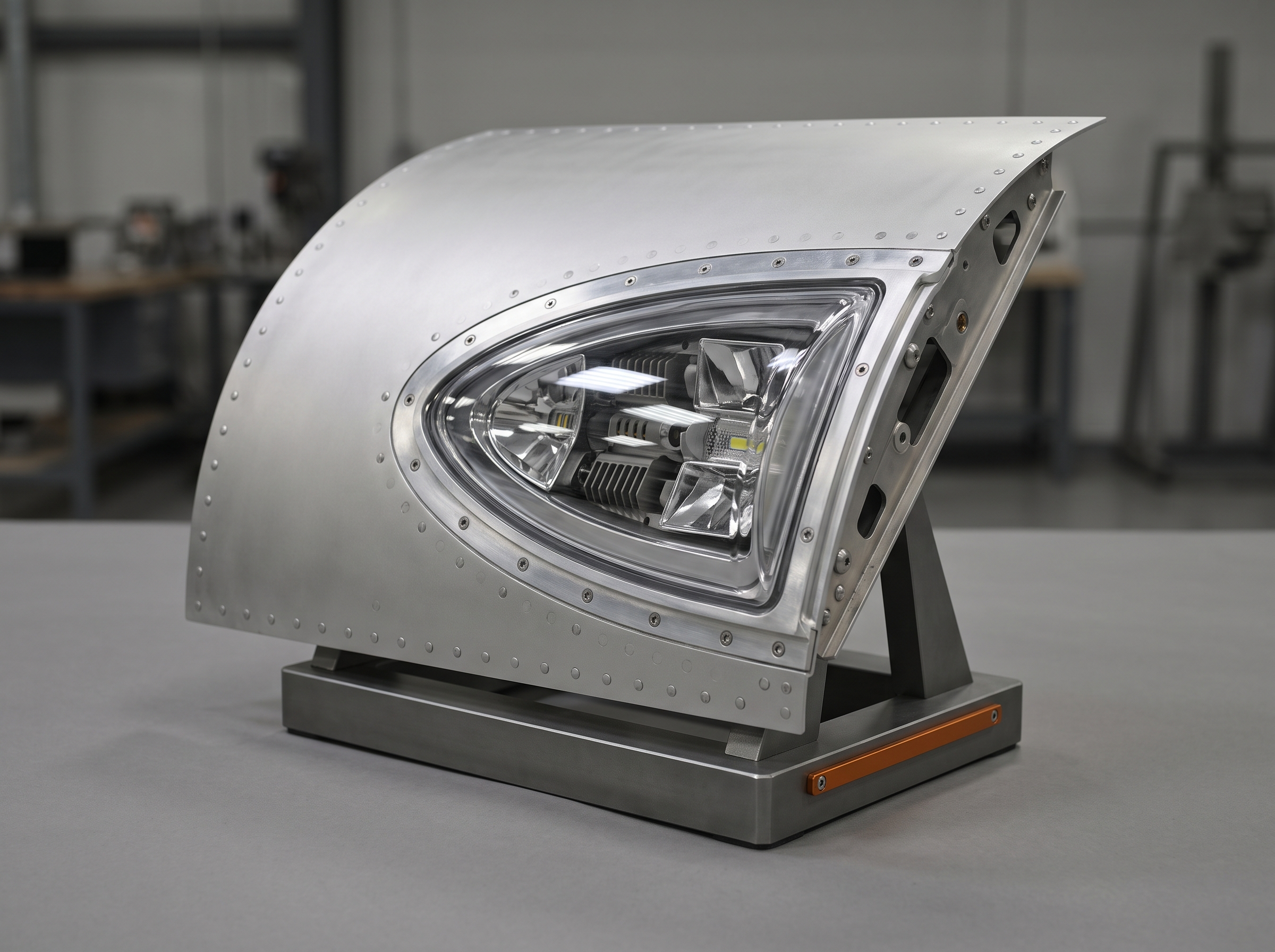
IN Brief:
- QinetiQ will deploy a mobile D-TA Systems emitter across MoD sites operated under the LTPA.
- The system can reproduce high-fidelity radar and electromagnetic signals for several platform types.
- Repeatable threat environments can expose integration faults before expensive aircraft and ships enter live trials.
QinetiQ has acquired a mobile electronic-warfare threat emitter from Canada’s D-TA Systems for deployment across UK Ministry of Defence test and training sites.
Operating within the Long-Term Partnering Agreement estate, the wideband system will reproduce high-fidelity radar and electromagnetic signals for air, maritime, intelligence, surveillance, reconnaissance, and sensor-testing programmes. Its mobility allows scenarios to be created at different ranges, positions, and geometries.
Potential uses include early-warning and tracking trials, F-35 and legacy-aircraft testing, naval electronic-warfare exercises, sensor cueing, detection work, and the replication of representative radio-frequency signatures.
Controlled signal generation allows engineers to repeat, adjust, record, and analyse a threat environment in ways that operational emitters cannot always support. Real systems may be classified, geographically inaccessible, variable, unsafe to reproduce directly, or unavailable when a development programme needs them.
A programmable asset can instead generate representative frequency, power, pulse, timing, and modulation behaviour while operators retain control over scenario progression. Useful fidelity requires considerably more than a strong signal, since modern radars employ frequency agility, complex waveforms, low-probability-of-intercept techniques, and networked operating patterns.
Test infrastructure absorbs integration risk
Electronic-warfare systems combine antennas, radio-frequency front ends, converters, processors, amplifiers, cooling equipment, threat data, and software. Each part can perform correctly in isolation while the integrated system fails to detect, classify, prioritise, or respond within the required time.
Discovering those faults during operational flight or sea trials is expensive. Aircraft hours, ship availability, test ranges, instrumentation, safety teams, specialist crews, and data analysts must be coordinated, while a failed test point may not be repeatable for several weeks.
A controllable emitter reduces that uncertainty. Engineers can recreate the same conditions after a software change, compare alternative antenna positions, measure detection thresholds, and isolate the circumstances under which a system loses track or misclassifies a signal.
Mobility increases the asset’s usefulness because geometry influences electronic-warfare performance. Range, bearing, terrain, platform attitude, manoeuvre, and competing emissions can all alter detection and response. Repositioning the source therefore creates more representative scenarios than a fixed laboratory installation.
The emitter will itself require disciplined calibration and configuration management. Test evidence remains useful only when engineers can establish precisely which signal was generated, using which hardware and software baseline, and with what measurement uncertainty.
Maintenance records, calibration history, secure waveform libraries, and controlled scenario files become part of the manufacturing and acceptance evidence for the system under test. An undocumented change to the emitter could otherwise be mistaken for altered performance within the aircraft or ship equipment.
QinetiQ has applied a similar approach to Type 31 combat-system integration ashore, where representative facilities allow interface problems to be identified before they consume ship access. The mobile emitter extends that principle into the electromagnetic environment.
Such facilities are becoming more valuable as platforms carry increasing numbers of interacting sensors and emitters. A fighter or warship may operate radar, communications, navigation, identification, electronic-support, and defensive systems inside a confined physical and electromagnetic space.
Verification must address both external performance and self-compatibility. One onboard transmitter can desensitise a receiver, introduce harmonics, corrupt timing, or alter the behaviour of another subsystem even when each item has passed individual testing.
Software-driven upgrades further increase demand. Electronic-warfare equipment is no longer qualified once and left unchanged; threat-library revisions, processing updates, new algorithms, and altered mission data require repeated evaluation.
Access to instrumented ranges has not expanded at the same speed as programme demand. A reusable mobile emitter can support several projects, although its value will depend on operator availability, maintenance, transport, security procedures, and scheduling.
A single sophisticated asset can itself become a bottleneck when several programmes require it simultaneously. Spare modules, trained crews, standard test packages, and rapid calibration support will determine how much practical capacity the purchase creates.
High-fidelity threat replication also requires continuing intelligence and engineering input. Waveforms and operating patterns need to evolve with real systems, while security controls must prevent sensitive threat characteristics from spreading beyond authorised teams.
Electronic-warfare advantage rests partly on classified algorithms and intelligence, but it also depends on repeatable industrial assurance. Hardware has to be built consistently, software must be verified, and integrated platforms need to demonstrate credible performance before operational deployment.
QinetiQ’s acquisition strengthens the infrastructure behind that evidence. By carrying representative threats to different sites and platform programmes, the system should expose more faults on the ground and reduce the number discovered after aircraft or ships have entered costly operational trials.