IN Brief:
- The deployments cover military air defence and critical-infrastructure protection outside Singapore.
- ST Engineering combines detection sensors, AI-enabled command and control, soft kill, and hard kill.
- Wider deployment will require continuing software support, local integration, trained operators, and replacement capacity across several component families.
ST Engineering has secured additional counter-drone deployments in Asia outside Singapore, extending its integrated systems into military air-defence and critical-infrastructure protection applications.
The customers and deployment locations have not been disclosed, although the two operating environments impose distinctly different engineering requirements. Military air defence must connect with national command networks and established engagement procedures, while infrastructure protection often requires continuous operation around civilian aircraft, commercial communications, and densely populated areas.
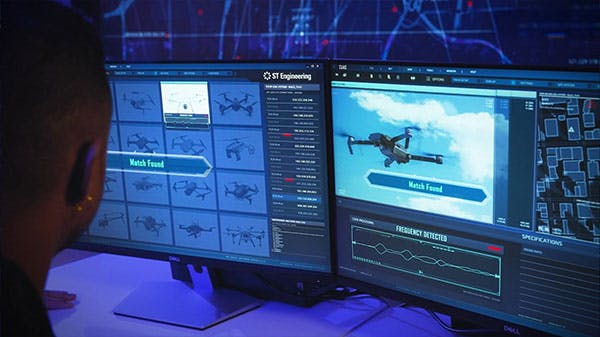
ST Engineering’s architecture combines detection sensors, artificial-intelligence-enabled command and control, soft-kill equipment, and hard-kill effectors. Customers can assemble different configurations around the local threat, terrain, airspace restrictions, collateral-risk limits, and existing security infrastructure.
Radar can provide wide-area detection, radio-frequency equipment can locate control or telemetry transmissions, and electro-optical or infrared sensors can support classification. Each sensor also has limitations: small drones may present weak radar returns, autonomous aircraft may emit little useful radio-frequency energy, and cameras depend heavily on weather, range, lighting, and line of sight.
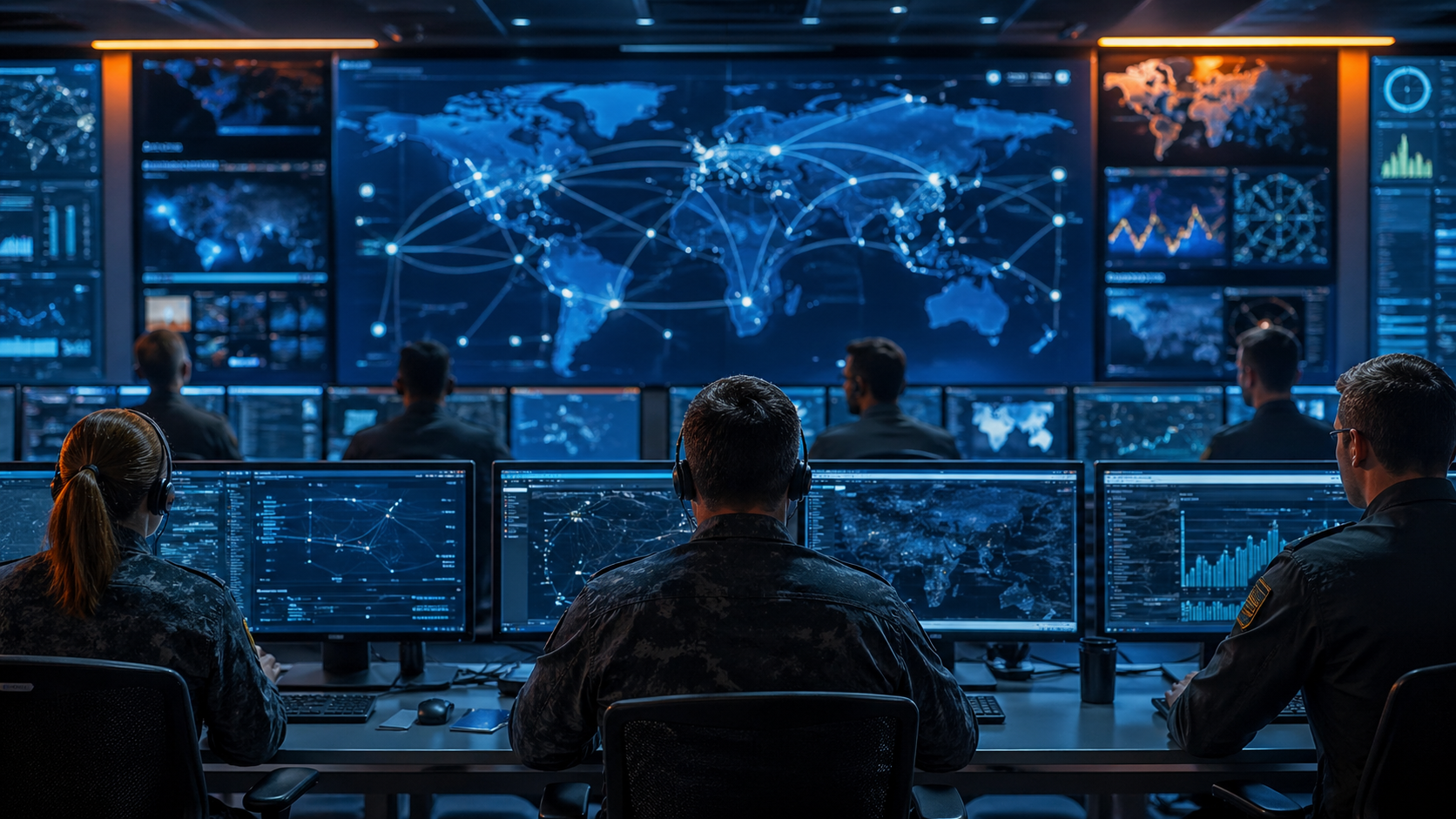
Combining those inputs places considerable pressure on the command system. Tracks generated by separate sensors have to be correlated quickly enough to avoid duplicates, false alarms, or delayed engagements, while authorised aircraft, birds, clutter, and legitimate commercial drones must be separated from potentially hostile targets.
Artificial intelligence can assist classification and prioritisation, but its models depend on representative data and controlled updates. An algorithm trained against one collection of commercial quadcopters may perform poorly when confronted by modified airframes, unusual flight profiles, reduced electronic emissions, or new autonomous behaviours.
Soft-kill equipment can disrupt control links, navigation signals, or communications protocols, whereas hard-kill options may include interceptor drones, kinetic weapons, or directed-energy systems. Engagement selection must account for range, target behaviour, the threat to the defended site, and whatever lies below the interception point.
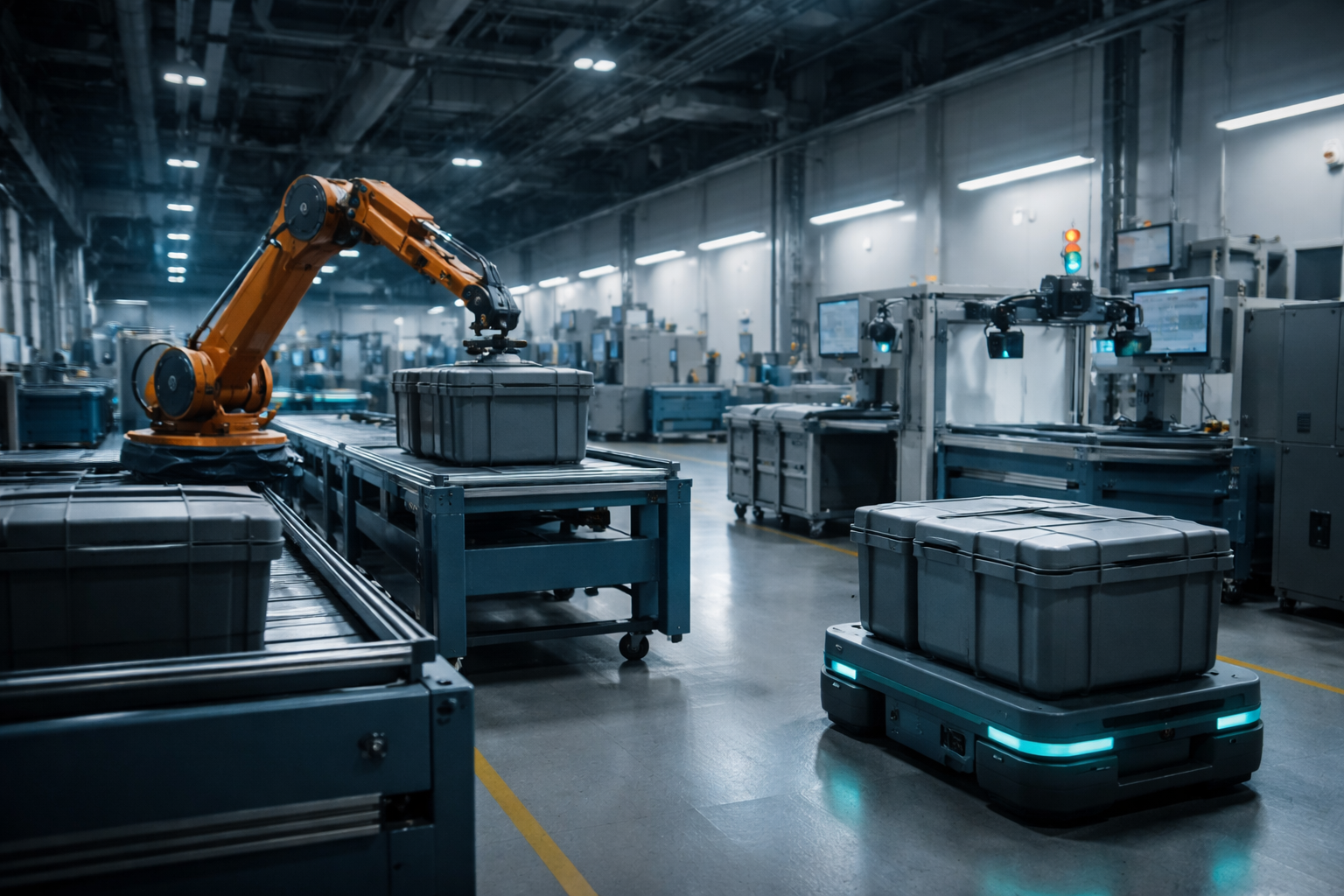
Consequently, the deliverable is not a single weapon produced on one line. Radars, antennas, cameras, electronic-warfare equipment, processors, shelters, vehicles, communications hardware, power systems, and effectors may all come from different factories before being integrated into one operational architecture.
Integration remains the enduring workload
Counter-drone procurement is moving away from stand-alone jammers as unmanned threats diversify. Commercial quadcopters, fixed-wing reconnaissance aircraft, one-way attack drones, autonomous swarms, and faster jet-powered vehicles do not share the same signatures or respond consistently to one countermeasure.
A modular architecture allows new sensors and effectors to be added, although every hardware change affects software interfaces, power demand, network bandwidth, cybersecurity accreditation, test procedures, and operator training. Older fielded systems must remain supportable while later customers receive updated components.
Software development continues long after installation. Threat libraries, classification models, electronic countermeasures, and command interfaces require repeated revision as drone communications and autonomy evolve, making secure update distribution as important as the initial delivery.
Finland’s developing distributed counter-drone network reflects the same shift from individual point-defence systems towards linked national coverage. Asian customers face comparable demands across air bases, ports, energy sites, government facilities, and industrial infrastructure.
Hardware supply adds a different constraint. Radar modules, cooled optical detectors, radio-frequency electronics, specialist processors, and laser components draw on supply chains shared with aerospace, telecommunications, automotive, and other defence programmes. Customers may demand immediate deployment after a new threat appears, although the component base cannot always accelerate at the same rate.
Local industry can support installation, vehicle integration, civil works, maintenance, and training, while sovereign-data requirements may lead to country-specific hosting and restricted network connections. Each national configuration then creates its own software baseline and support burden.
The economics of engagement also shape the architecture. Expensive interceptors cannot be used against every small drone without exhausting magazines and budgets, yet electronic disruption alone leaves gaps against autonomous, hardened, or pre-programmed targets. Command software must help operators reserve scarce effectors for targets that cannot be defeated more cheaply.
Manufacturing plans have to include replacement capacity as well as initial installation. Sensors and electronic-warfare equipment may remain in service for years, while interceptor drones, ammunition, power modules, and exposed components require replenishment at a much faster rate.
Cybersecurity runs through the complete system. A network that controls sensors and effectors around an air base or power facility becomes an attractive target itself, requiring authenticated software, protected communications, controlled maintenance access, and a secure supply chain for replacement electronics.
ST Engineering’s latest deployments place the company in a market where production, systems integration, and continuing support cannot be separated cleanly. Hardware must be delivered at scale, yet the architecture also needs to absorb new threats and components without repeated wholesale redesign.
Counter-UAS is becoming a permanent industrial category rather than an urgent collection of improvised equipment. These Asian deployments extend that transition into operational networks whose effectiveness will depend on software maintenance, interface discipline, and the availability of replacement hardware across their service lives.