IN Brief:
- RfAI-3 is designed to detect radio emissions that are absent from existing drone libraries.
- Unknown signals can be fingerprinted, ranked, and presented alongside classified emitters.
- Initial deployment will begin on DroneShield’s next generation hardware during the second half of 2026.
DroneShield has unveiled RfAI-3, the third generation of its radio frequency intelligence engine, extending detection beyond previously catalogued drone emitters and communications protocols.
Many RF based counter drone systems compare received signals with a library of known aircraft, controllers, and waveforms. Detailed classification is possible when the system finds a match, but unfamiliar commercial products, modified links, and newly developed aircraft can remain difficult to identify.
RfAI-3 begins with the emissions present in the monitored spectrum rather than limiting its analysis to entries already held in the library. Each signal is fingerprinted and compared with previously observed drone signatures, allowing known emitters to be classified while unfamiliar activity is retained for further assessment.
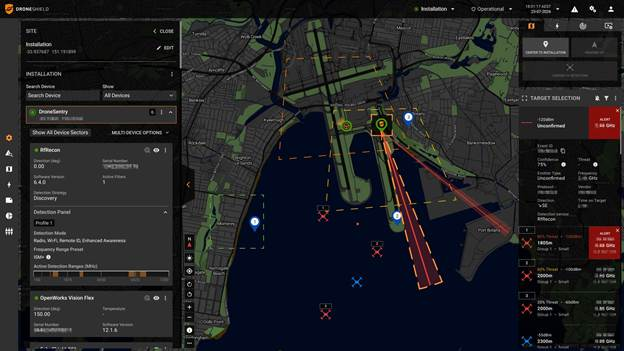
Where no match exists, the engine generates a new signature and presents the emission to the operator with a confidence assessment and ranking against the wider spectrum picture. The signature can then become a reference during later encounters once it has been examined and characterised.
Nothing unfamiliar is discarded solely because it falls outside the existing dataset. That approach is intended to give operators earlier awareness of emerging drones, altered control links, and purpose built systems that have not completed a formal collection and classification cycle.
DroneShield developed its first RfAI architecture in 2018, followed by RfAI-2 in 2023. The second generation placed greater emphasis on a continuously expanding intelligence dataset, with newly identified drone models, protocols, and threat behaviour distributed to deployed systems.
RfAI-3 retains that classified library while adding wideband detection around it. Initial releases are expected on DroneShield’s next generation hardware platforms during the second half of 2026, with further releases continuing through 2027. Existing products will continue receiving expanded emitter coverage through the company’s software subscription model.
“The drone threat doesn’t wait for classification,” said Angus Bean, Chief Executive Officer of DroneShield. “We are no longer limited to seeing only what we already know.”
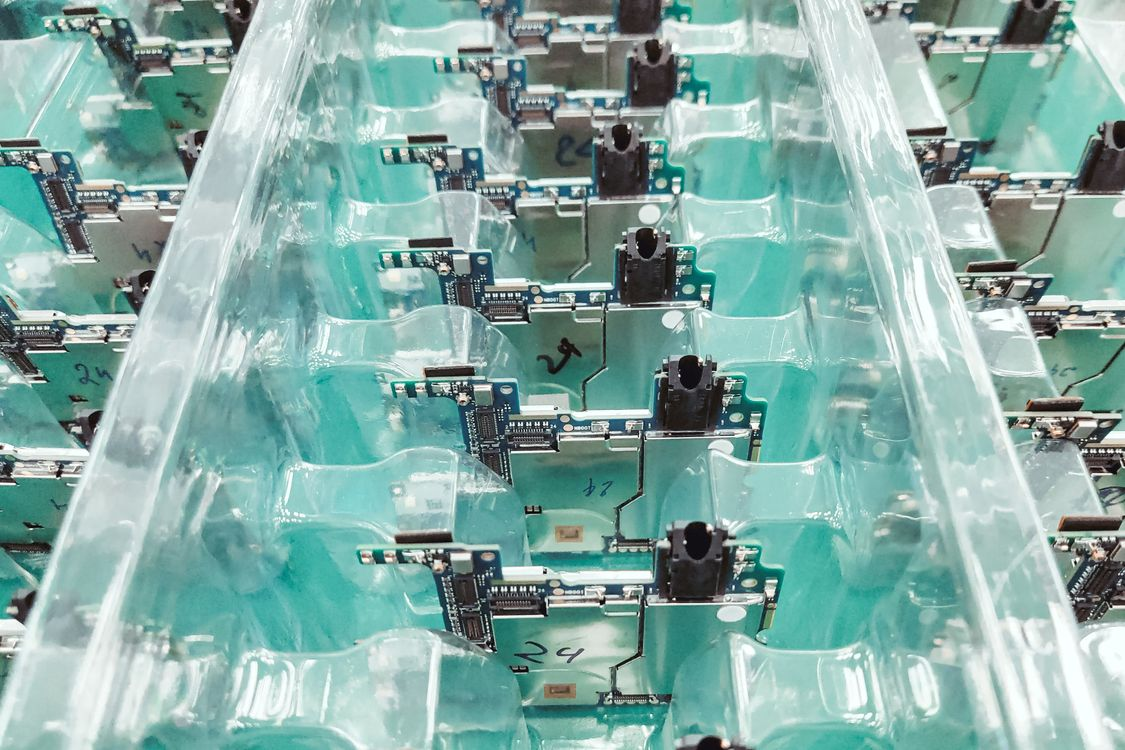
Although the principal development is presented through software, its performance remains tied closely to receiver hardware. Wideband monitoring requires antennas, filters, low noise amplifiers, digitisation, processing, timing, and thermal management capable of capturing enough detail for the engine to separate significant emissions from surrounding activity.
Manufacturing consistency across those receiver chains will influence fleet performance. Variation in antenna response, component noise, calibration, shielding, or electromagnetic behaviour can alter the signal presented to the model, even when every unit is running the same software.
Production testing must consequently verify more than basic operation. Receivers need controlled signal sources, calibrated equipment, repeatable test environments, and acceptance limits that show each manufactured unit will respond consistently across the required frequency range.
The expanding signature library also creates a demanding software release process. New emitter information has to be collected, verified, characterised, tested, packaged, and distributed without introducing false classifications or destabilising equipment already deployed.
Customers may operate different hardware versions and security arrangements, so configuration control becomes central to the service. Updates must preserve compatibility, customer separation, auditability, and the ability to identify precisely which intelligence and software baseline was active during an event.
Unknown emitter detection will not remove the physical limits of RF sensing. A drone flying autonomously without an active control link may emit little useful radio energy, while low power transmissions, directional links, congestion, frequency hopping, and deliberate decoys can complicate interpretation.
Sensor fusion will remain necessary. RF detection can provide passive warning and direction finding, while radar, electro optical cameras, acoustic arrays, and other systems can confirm or refine the track. Command software must then combine those observations without producing duplicate or contradictory alerts.
NATO’s counter drone procurement marketplace reflects a wider demand for systems that can absorb new sensors, effectors, frequencies, and threat behaviour after delivery. RfAI-3 applies that principle to the detection layer by treating the emitter library as a growing operational asset rather than a fixed product specification.
Counter UAS manufacturers are increasingly selling an evolving service alongside the hardware. Subscriptions, signature updates, software releases, fleet support, and threat analysis can determine lifetime performance as strongly as the original receiver.
That model places continuing pressure on engineering teams because every update must improve detection without creating an unmanageable volume of uncertain signals. Operators need unfamiliar emissions surfaced with enough context to support decisions, rather than simply receiving more alerts.
RfAI-3 will now have to demonstrate that its wideband approach can distinguish meaningful unknown activity across crowded and contested spectrum. Its operational value will depend on the quality of that analysis, while its industrial value will depend on whether the receiver hardware can be calibrated, produced, updated, and supported consistently across a growing fleet.