IN Brief:
- The Italian Army is progressing a requirement for 60 wheeled 155 mm artillery systems.
- Ammunition vehicles, logistics support, and domestic industrial participation form part of the programme.
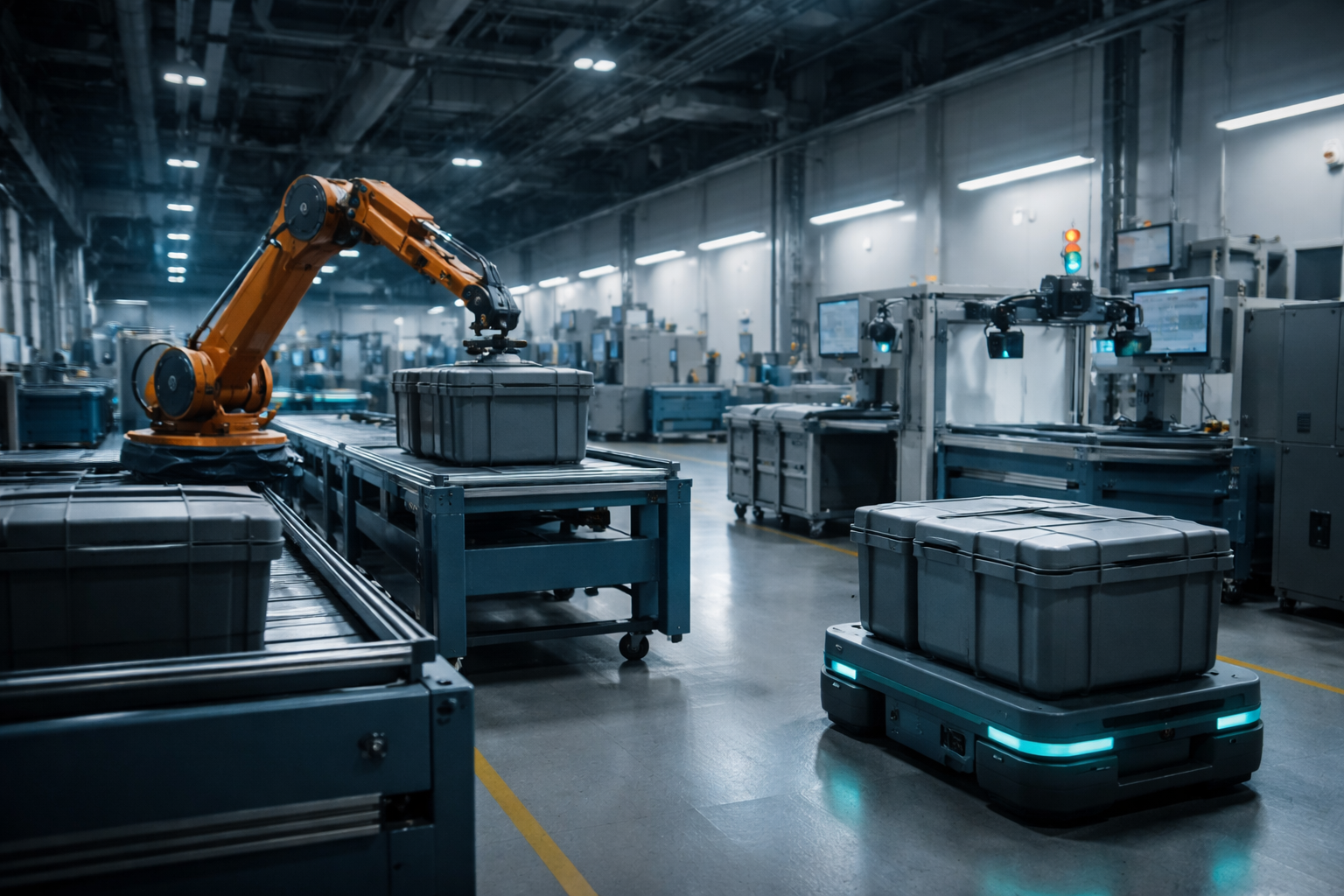
- Automation will increase demands on turret mechanisms, sensors, software, power, cooling, and production testing.
The Italian Army is progressing plans for a fleet of 60 wheeled 155 mm/52 calibre self propelled artillery systems, accompanied by ammunition vehicles and logistics support.
A wheeled fleet would complement Italy’s tracked artillery with greater strategic mobility over established roads, reducing some reliance on heavy equipment transporters while allowing batteries to move rapidly between firing areas.
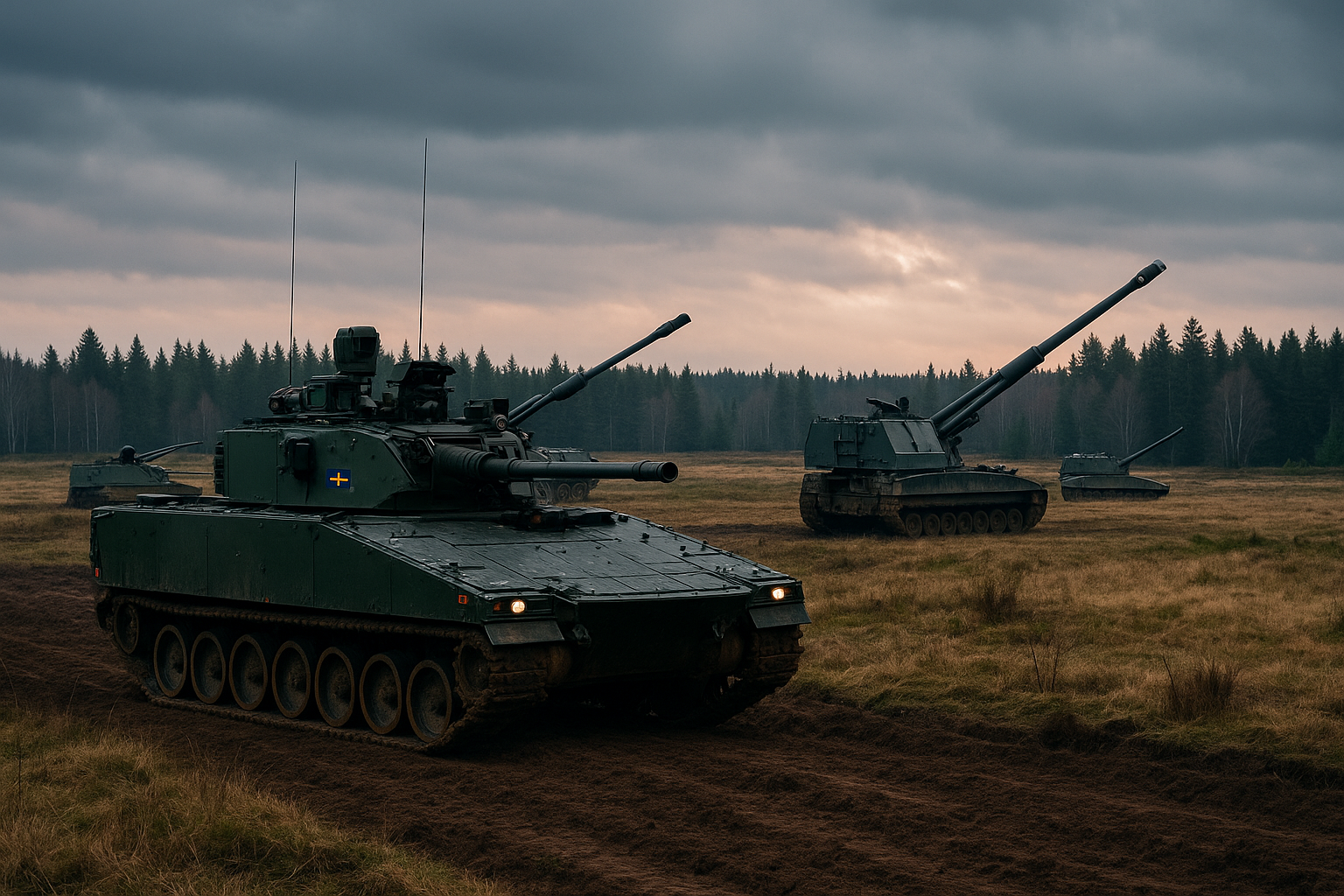
Italian industry has already presented a possible domestic solution through the VBM 155 concept developed by the CIO consortium, combining Leonardo and IDV capabilities. The design mounts an automated HITFIRE 155 turret on a purpose built 10×10 wheeled chassis.
Its 155 mm/52 calibre gun is intended to use modern extended range ammunition, including guided rounds, while automated handling reduces crew workload and shortens the interval between arriving at a firing position, completing a mission, and moving before counter battery fire arrives.
Automation transfers physical work from the crew into machinery and software. The turret must select ammunition, handle projectiles and charges, operate the breech, monitor safety conditions, manage recoil, and report faults across repeated firing cycles.
Sensors and actuators need to function despite shock, vibration, dust, heat, and the contamination produced by propellant gases. Loader mechanisms must also tolerate small dimensional variations across ammunition batches without jamming or damaging rounds.
The chassis has to absorb recoil while carrying armour, ammunition, crew, communications equipment, defensive systems, electrical generation, and the complete turret. Suspension, steering, braking, tyre performance, and structural fatigue must remain acceptable at full combat weight.
A 10×10 configuration provides additional load capacity and distributes mass across more axles, although it introduces its own maintenance demands. Driveline components, steering geometry, tyres, hubs, and suspension units must operate reliably across road movement and difficult terrain.
The programme includes ammunition support because firing rate is inseparable from replenishment. A highly automated gun can empty its magazine quickly, and resupply vehicles must move projectiles and propellant from storage to the battery without exposing crews unnecessarily.
Mechanical interfaces between the resupply vehicle and howitzer will influence the speed and labour required. Automated or assisted transfer may reduce handling, but it adds machinery, control systems, alignment requirements, and another set of equipment that must be produced and maintained.
Barrel manufacture will remain one of the most specialised parts of the programme. Long range firing and intensive use impose heavy thermal and mechanical loads, affecting barrel life, erosion, inspection intervals, and replacement demand.
Production requires suitable steel forgings, deep hole boring, rifling, heat treatment, machining, surface treatment, proof firing, and dimensional inspection. European demand for artillery has increased while governments are replenishing ammunition and expanding other weapons programmes, placing pressure on the same specialist facilities.
A fleet of 60 systems will generate recurring requirements for spare barrels, recoil components, loader parts, engines, transmissions, tyres, electronics, cables, and test equipment. Through life support may therefore spread work more widely across Italian industry than initial assembly.
European artillery modernisation is advancing across Germany, France, Poland, the UK, and several other countries. Programmes compete for experienced engineers, machinists, energetic materials, electronics, forgings, and production machinery that cannot be expanded through procurement announcements alone.
Software has also become central to artillery availability. Fire control, navigation, communications, loader logic, diagnostics, and health monitoring all require controlled baselines. A mechanical fault may be repaired by replacing a component, whereas an integration error can disable the complete system until engineering support becomes available.
Italy possesses established capabilities in wheeled armoured vehicles, turrets, naval and land guns, electronics, and ammunition. A domestic consortium can draw those strands together, although it must still demonstrate that the complete chassis and turret combination performs safely across mobility and firing trials.
Foreign artillery systems offer more mature test evidence and potentially faster delivery, while a domestic route retains greater control over design, production, upgrades, and support. The eventual balance will depend on programme urgency, technical progress, cost, and the amount of Italian work protected by each option.
Ammunition policy will shape the fleet as strongly as the vehicle. Standard high explosive rounds, base bleed projectiles, precision ammunition, smoke, illumination, and future effects each impose different storage, handling, fire control, and cost requirements.
The planned quantity is large enough to justify a dedicated production and support structure, yet small enough for inefficiency to raise unit costs quickly. Common components, stable requirements, and a controlled configuration will be essential if the programme proceeds through a national design.
Prototype trials will establish whether the turret, chassis, ammunition handling, and fire control can function as one system. Serial manufacture will then test whether those results can be repeated across 60 vehicles and maintained through years of intensive training and operational use.