IN Brief:
- HII and HD Hyundai are deploying intelligent mechanised welding systems in predominantly manual fabrication areas.
- The equipment recognises workpieces, adjusts welding position, and records process data for quality and traceability.
- The pilot extends a 2025 US–South Korean shipbuilding agreement into a defined production trial.
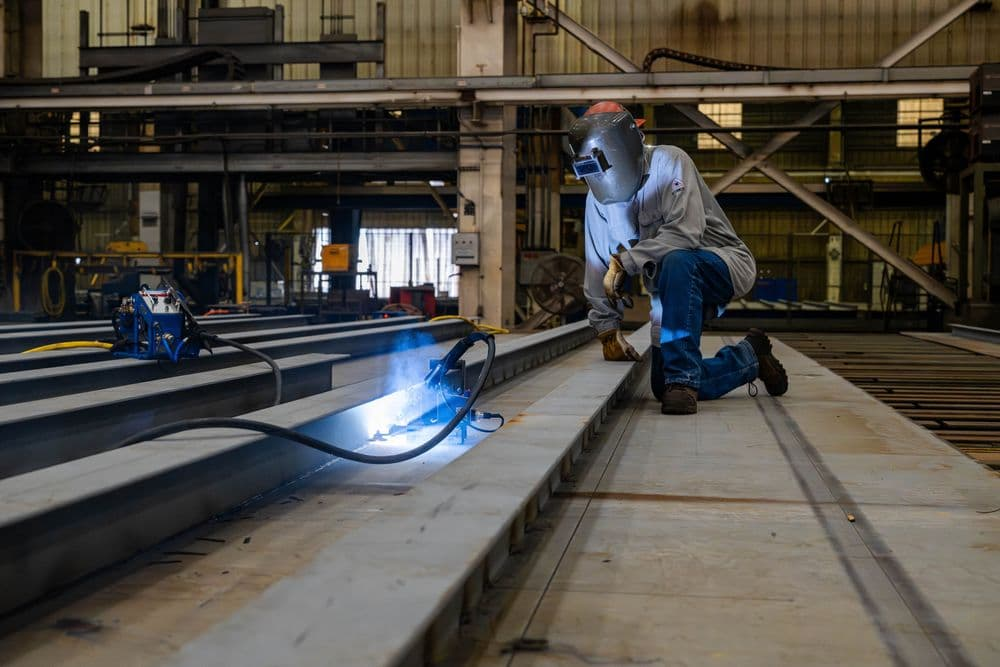
An intelligent mechanised welding pilot from HII and HD Hyundai Heavy Industries will extend automation into unit-fabrication areas at Ingalls Shipbuilding that still depend predominantly on manual welding.
The systems are designed to recognise workpieces and welding conditions, correct their position in real time, and record process data for quality control, traceability, and production improvement. Ingalls has checked that the equipment complies with existing US Navy fabrication standards before beginning the trial.
HII has not disclosed the number of machines, equipment supplier, capital value, pilot duration, selected ship programme, or intended scale of a wider deployment. The work is therefore a controlled production trial rather than a completed shipyard automation programme.
The project follows a 2025 memorandum of understanding between HII and the South Korean shipbuilder. That agreement established a framework for sharing engineering and manufacturing practices intended to increase defence and commercial ship production.
A subsequent three-day technical exchange at Ingalls examined automation opportunities across the companies’ yards. HII demonstrated hybrid laser welding, robotics integration, and aspects of its production layout before the partners selected mechanised welding for the pilot.
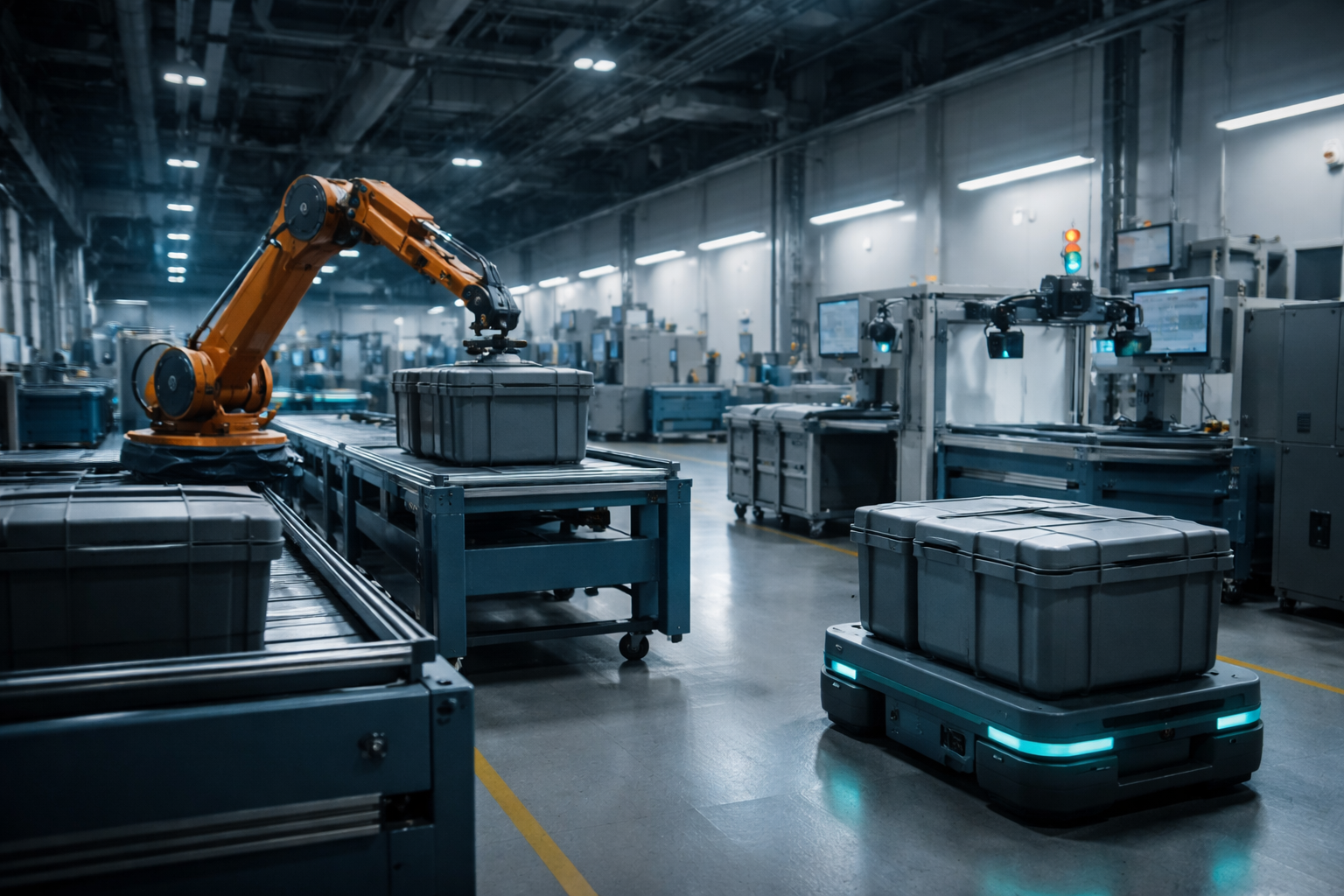
Ingalls already operates automated panel lines, material-handling systems, robotic bulkhead fabrication, digital production-control tools, and other advanced manufacturing equipment. The new systems extend that investment into fabrication stages where welders currently carry out much of the work by hand.
Mechanised welding does not remove the need for qualified personnel. Operators must set up the machine, select approved procedures, confirm fit-up, monitor the weld, manage consumables, respond to faults, and ensure that the recorded data corresponds with the physical joint being produced.
Naval structures make those controls demanding. Large steel components can vary in alignment, access, preparation, temperature, and surface condition. Distortion created during welding may affect later assembly, while defects discovered after blocks have progressed through production are more expensive to reach and repair.
A system capable of recognising the workpiece and correcting its welding position can improve consistency where the process is sufficiently repeatable. The machine must still operate within qualified parameters covering joint design, material, filler metal, heat input, travel speed, shielding, and inspection.
Process data may deliver as much value as the mechanised movement. Recorded parameters can show whether the approved procedure was maintained, identify variation between welds, and support investigation when an inspection finds a defect. Traceability can also reduce dependence on disconnected manual records.
Those benefits require integration with the shipyard’s production and quality systems. Data held only inside an individual machine provides limited support for planning or fleet-wide improvement. HII will need to connect machine records with component identity, drawing revision, operator, inspection result, and the production stage in which the weld was completed.
The trial will also have to establish reliability under shipyard conditions. Welding equipment operates around dust, heat, vibration, heavy material movement, and constrained access. A machine that produces consistent welds in a demonstration area may still create delays if setup, calibration, maintenance, or fault recovery takes too long during routine production.
HD Hyundai brings experience from highly organised commercial and naval construction in South Korea. Ingalls must adapt that technology to US Navy specifications, security controls, programme requirements, and local production methods. Transferring the equipment is straightforward compared with transferring the complete manufacturing system around it.
The collaboration gives the South Korean company a practical role in the US naval industrial base without immediately involving ship design or final assembly. Results from a defined fabrication process can be measured through cycle time, accepted weld length, defect rates, rework, safety performance, and equipment availability.
HII is also examining robotic and collaborative-robot fabrication cells, additive manufacturing, automated steel processing, and integrated production-control software across Ingalls and Newport News Shipbuilding. Its High-Yield Production Robotics initiative is intended to bring further robotics and AI-enabled equipment into the existing workforce.
Automation is being pursued as US shipyards face pressure to improve output while retaining scarce skilled labour. Machines can take on repetitive or physically difficult work, but they require programmers, technicians, welding engineers, inspectors, maintainers, and trained operators. Labour demand changes rather than disappearing.
Production gains will depend on how the pilot affects downstream work. A faster weld that creates additional inspection queues or dimensional rework offers little benefit. Consistent joints delivered at the required pace, with fewer defects and usable process records, can improve flow through block assembly and final integration.
Ingalls Shipbuilding president Brian Blanchette said the trial will extend automation across more of the production process and workforce. Dr Won-ho Joo, chief executive of HD Hyundai Heavy Industries’ Naval and Special Ship Business Unit, linked it to the companies’ technical cooperation.
The trial converts a broad international agreement into a manufacturing exercise with results that can be counted. Shipbuilding partnerships are regularly announced through memoranda and official visits; accepted welds, reduced rework, and productive machine hours will provide the more useful evidence.