IN Brief:
- Redwire is adding 164,000 sq ft of manufacturing and engineering capacity at Huntsville.
- The expansion is expected to create approximately 150 skilled jobs and receives about $8.5 million in eligible incentives.
- Conflicting company and groundbreaking timetables place completion between late 2026 and the fourth quarter of 2027.
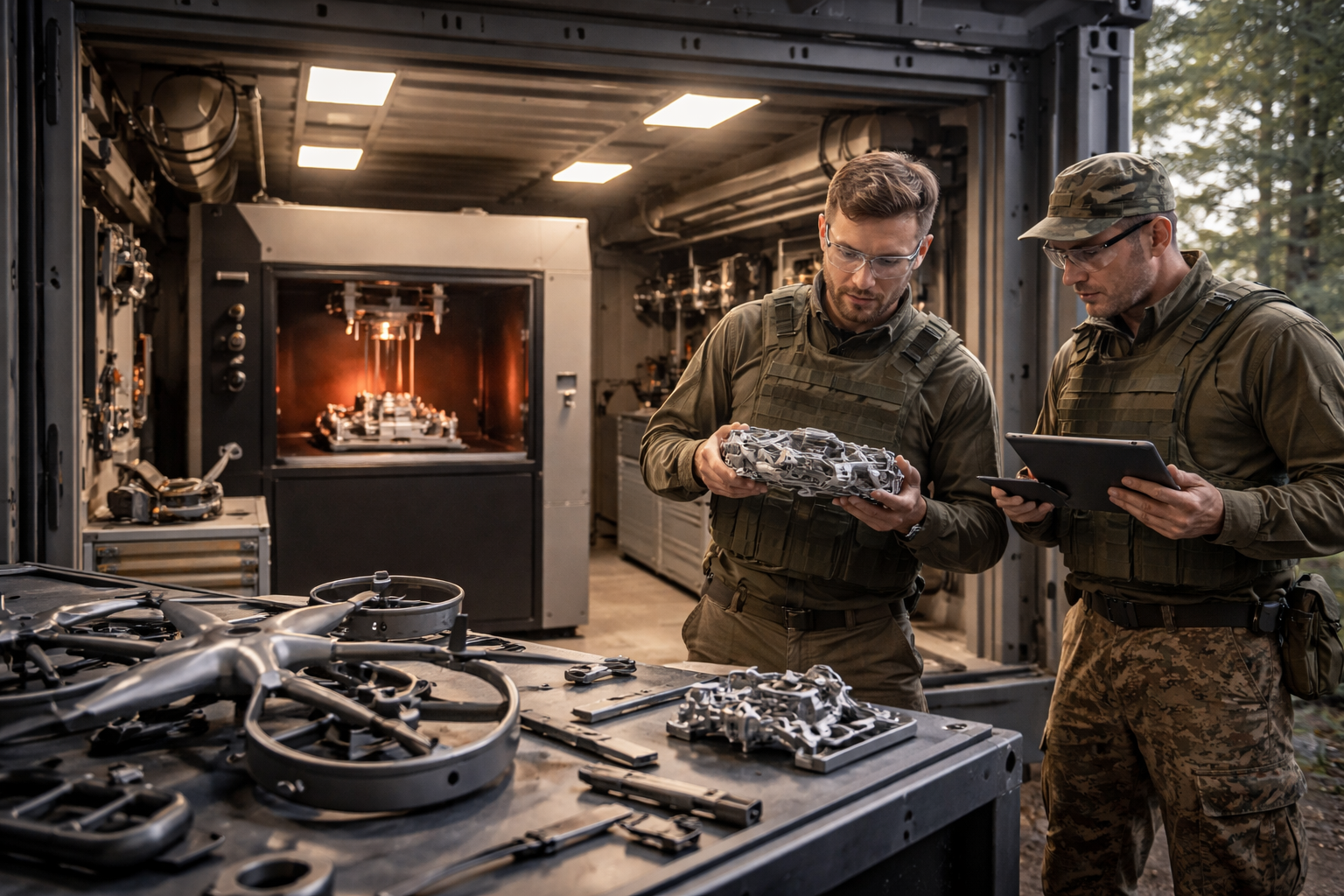
Redwire has marked the formal construction milestone for a 164,000 sq ft expansion of its Huntsville campus, adding manufacturing and engineering capacity for uncrewed aircraft, sensor payloads, energy products, and space hardware.
The project is expected to create approximately 150 skilled positions across engineering, manufacturing, integration, and technical operations. Around $8.5 million in eligible state and local economic-development incentives supports the expansion.
Additional capacity will be used for Stalker uncrewed aircraft systems, Octopus electro-optical payloads, advanced energy products, and space capabilities serving civil, commercial, and national-security customers.
Redwire’s original July announcement said construction had begun and placed building completion in the fourth quarter of 2027. Reporting from the August groundbreaking quoted Redwire Defense co-president Josh Brungardt as expecting construction around the end of 2026, followed by initial production during the first quarter of 2027.
The company has not issued a formal correction reconciling those dates. Until it does, the fourth-quarter 2027 target remains the published corporate baseline, while the faster timetable represents a subsequent executive estimate provided at the construction event.
The difference is too large to dismiss as routine scheduling language. It may reflect separate phases, partial occupancy, accelerated construction, or a change made after the first announcement, but none of those explanations has been confirmed.
Huntsville places Redwire near Redstone Arsenal, US Army aviation and missile organisations, NASA’s Marshall Space Flight Center, and a dense network of aerospace suppliers and engineering companies. The Jetplex Industrial Park location also provides access to the wider airport and logistics infrastructure.
Geography alone does not create production capacity. The new building must be equipped with tooling, secure networks, material-handling systems, calibrated test equipment, quality controls, utilities, and customer-acceptance arrangements before output can begin.
Stalker is one of the principal defence products identified for the site. Redwire received $21.5 million in follow-on orders during July for Advanced Navigation and standard Stalker systems, following more than $20 million in earlier 2026 awards.
That demand provides a clearer industrial justification for the expansion than general market projections. Production growth will still depend on whether airframe, propulsion, avionics, communications, battery, and sensor suppliers can increase deliveries at the same rate as final assembly.
The Octopus payload range provides stabilised electro-optical and infrared sensing for airborne platforms. Producing payloads alongside uncrewed aircraft can shorten some integration and testing loops because the vehicle, sensor, software, and communications interfaces can be managed within a connected manufacturing organisation.
It can also concentrate risk. A delayed optical component, specialist electronic assembly, calibration station, or software release may constrain both payload deliveries and completed aircraft if several product lines rely on the same process.
The mixed defence-and-space role of the site introduces separate assurance requirements. Uncrewed aircraft production involves composite structures, wiring, propulsion, communications, software loading, flight controls, payload alignment, and acceptance testing.
Space hardware may demand additional cleanliness, materials control, traceability, environmental testing, and customer documentation. Flexible floor space must therefore be accompanied by disciplined separation of processes rather than treating every product as interchangeable factory output.
Redwire became a broader aerospace and defence group through its acquisition of Edge Autonomy. Huntsville is one of the locations where the combined company is turning that portfolio strategy into a shared physical manufacturing footprint.
Potential common areas include sensors, autonomy, power systems, digital engineering, and mission software. Common ownership does not automatically make production methods or quality requirements compatible, particularly where military aircraft and spacecraft are delivered under different customer standards.
The planned workforce increase will test Huntsville’s already competitive labour market. Redwire will need engineers, technicians, inspectors, software specialists, manufacturing personnel, and programme staff while competing with major defence primes, government organisations, and other expanding technology businesses.
Recruiting 150 people will not produce an immediate 150-person increase in productive capacity. New staff require training, supervision, approved processes, and sufficient experienced personnel to maintain configuration control while output rises.
Supplier readiness may prove equally important. Higher production requires predictable supplies of electronics, optical components, machined parts, composites, propulsion units, batteries, and specialist test equipment. Increasing final-assembly space without addressing sub-tier constraints merely moves the queue elsewhere.
The formal groundbreaking confirms visible progress, but the useful milestones remain equipment installation, workforce recruitment, qualified production areas, and accepted deliveries. Redwire is building the space in which capacity can grow; the unresolved completion dates show that the production timetable still needs firmer definition.