IN Brief:
- RfRecon combines ultra-wideband spectrum awareness, precision direction finding, RfAI-3 signal processing, and local computing in a portable unit.
- DroneShield claims roughly six times greater RF spectrum coverage, four times more processing and AI compute, 31 times more storage, and eight times more memory than previous industry-adopted solutions.
- Open interfaces support use with ATAK, third-party command systems, other sensors, and layered counter-UAS architectures.
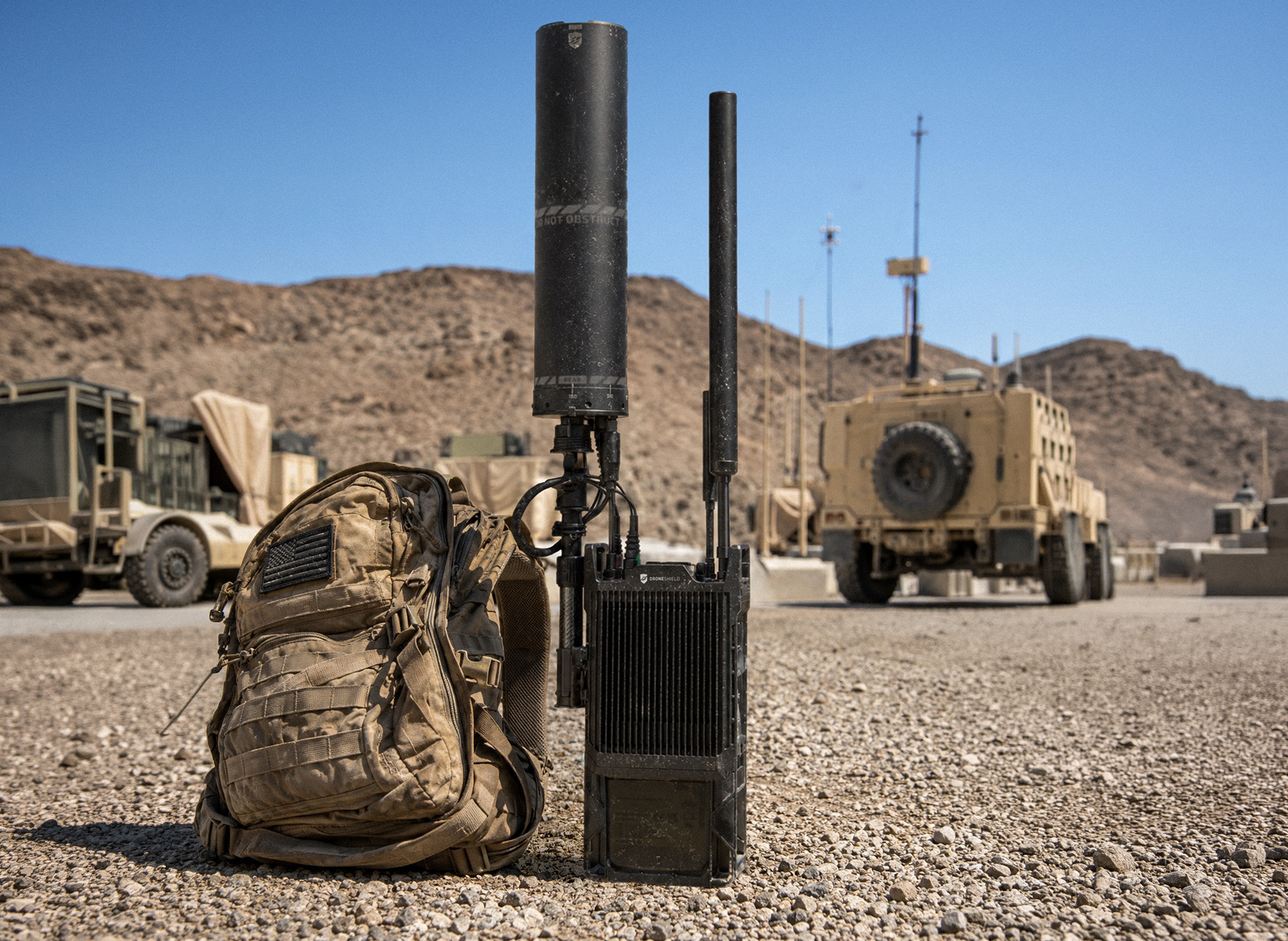
Portable spectrum sensing is moving deeper into tactical intelligence with DroneShield launching RfRecon, a radio-frequency system designed to detect, identify, locate, and assess activity across the electromagnetic environment from a single field unit.
The product was unveiled on 10 August and is built around the company’s recently introduced RfAI-3 architecture. DroneShield is positioning the system for dismounted, vehicle-mounted, expeditionary, and fixed-site use, with immediate availability to qualified defence, government, and security customers.
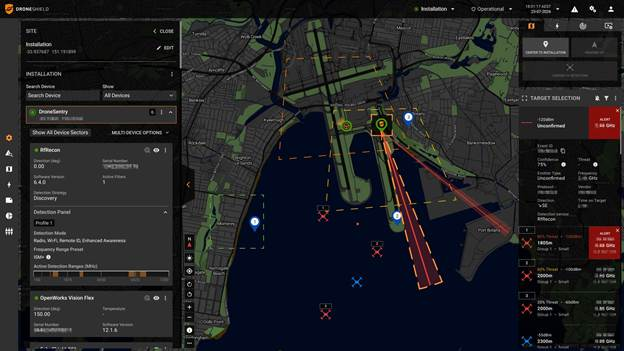
RfRecon combines ultra-wideband spectrum awareness, precision direction finding, local processing, and signal intelligence rather than operating purely as a catalogue-driven drone detector. The aim is to give operators enough information to examine unfamiliar RF activity as well as known emissions associated with uncrewed systems.
DroneShield claims the platform provides approximately six times greater radio-frequency spectrum coverage than previous industry-adopted solutions, together with four times more processing and AI compute, 31 times more storage, and eight times more memory. Those figures are company comparisons rather than independently published benchmark results, but they illustrate the additional computing and receiver capacity built into the new hardware.
The specification also includes Bluetooth and Wi-Fi Remote ID support, AIS and ADS-B detection, integrated GNSS, direction finding, and hardware-based security. That combination gives operators several sources of electromagnetic context rather than limiting the device to a single counter-drone detection function.
RfAI-3 was introduced in July as a wideband intelligence architecture intended to detect emissions that do not already match a known drone signature. RfRecon gives that software approach a dedicated portable hardware platform, joining the receiver, computing, storage, and direction-finding functions needed to operate at the tactical edge.
The hardware is important because RF intelligence remains constrained by the quality of the signal presented to the software. Antennas, filters, amplification, digitisation, timing, shielding, receiver dynamic range, processing throughput, and calibration all affect what the system can observe before an algorithm attempts to classify or interpret it.
A more capable intelligence engine cannot recover information that the RF front end failed to capture. Likewise, wide spectrum coverage is useful only if the system can process sufficient bandwidth, distinguish signals in crowded conditions, and retain enough data for operators or automated tools to investigate emissions that have not been encountered previously.
Direction finding adds another requirement. Detecting an emission establishes that activity exists; estimating where it originates gives an operator information that can be fused with other sensors or passed to command systems. Accuracy will depend on antenna geometry, signal conditions, reflections, terrain, calibration, and the way individual RfRecon units are deployed.
DroneShield has designed the product to operate inside wider architectures rather than as an isolated warning receiver. The company says RfRecon supports ATAK, third-party command-and-control platforms, complementary sensors, and industry-standard data transfer, allowing RF observations to be moved into systems carrying other tactical information.
That creates a substantial interface requirement. Data formats, timestamps, confidence values, location information, cyber controls, software versions, network latency, and identity management all affect whether a detection can be fused meaningfully with radar, optical, acoustic, or other sources.
The device can also form part of layered counter-UAS architectures incorporating cyber takeover and kinetic defeat systems. In that environment, RfRecon’s role is primarily sensing and intelligence: finding and characterising RF activity so that the wider architecture can decide whether a track represents a threat and what effect, if any, should be applied.
AIS and ADS-B reception broaden the contextual picture further by exposing cooperative maritime and aviation broadcasts. Those signals do not turn the unit into a complete air or maritime surveillance system, but they can provide useful reference information alongside other emissions being detected in the local spectrum.
Software support will remain central after delivery. DroneShield says RfRecon will receive continuing enhancements through its software roadmap, meaning deployed capability can change as algorithms, signal libraries, interfaces, and processing methods evolve.
That creates a configuration-management problem familiar across software-defined defence equipment. Customers need to know which software baseline is installed, what has changed, whether new versions alter detection behaviour, and whether updates remain interoperable with the command systems and sensors surrounding the device.
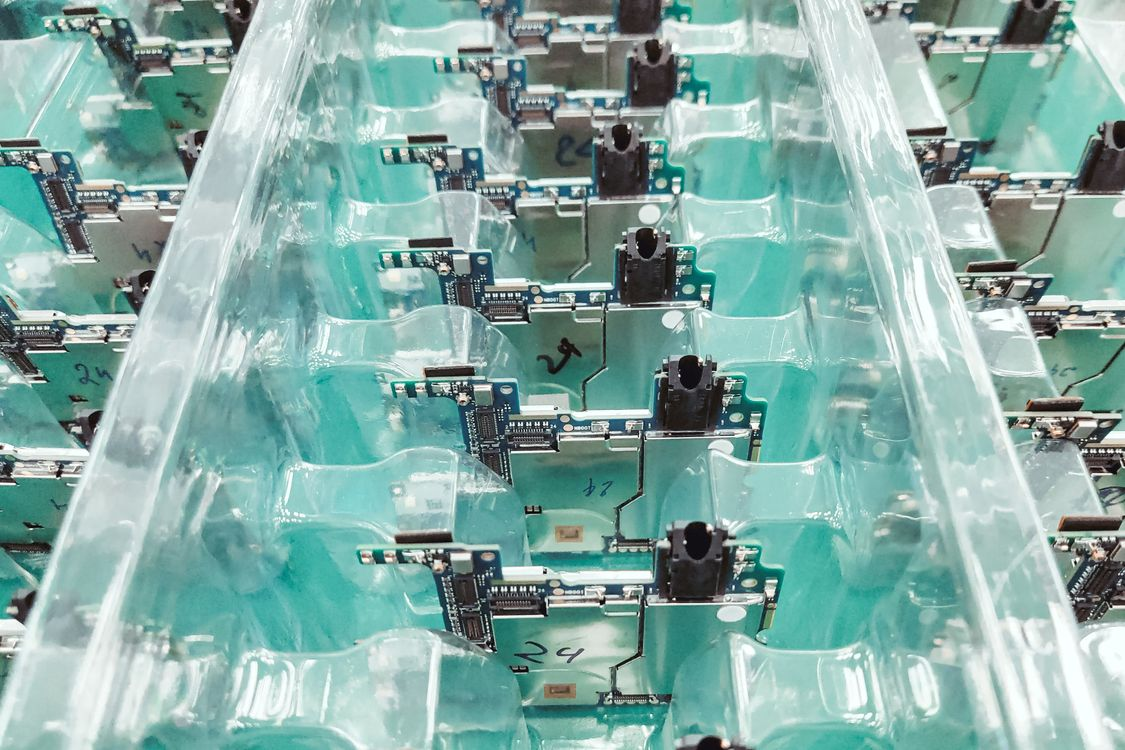
Production consistency matters for the hardware as well. Portable RF systems require controlled calibration and repeatable receiver performance if units produced at different times are expected to produce comparable results. Scaling output therefore places pressure on test equipment, signal-generation facilities, acceptance procedures, and component control as much as on final assembly.
RfRecon takes DroneShield beyond July’s RfAI-3 software announcement into a fieldable intelligence device with defined interfaces and hardware. Its more revealing tests will come in dense and contested spectrum, where overlapping emitters, interference, mobility, terrain, and deliberate deception make locating and classifying signals considerably harder than a controlled demonstration.