IN Brief:
- The US Army has awarded Raytheon a $536 million modification for continued full-rate TOW production and engineering services.
- The action increases the underlying contract value to about $750.8 million, with work scheduled in Tucson through August 2027.
- Maintaining TOW into the 2050s places continuing pressure on component availability, obsolescence management, production test, and compatibility with an extensive installed launcher base.
Raytheon has received a $536 million US Army contract modification covering continued full-rate production and engineering services for the TOW weapon system, extending work at the company’s Tucson operation through August 2027.
The award raises the cumulative value of the underlying contract to about $750.8 million. Rather than introducing a new missile family, the funding sustains production and engineering around an anti-armour system that has remained in service through successive upgrades and is still integrated across a large number of US and allied platforms.
Current TOW configurations include the TOW 2A, TOW 2B, and Bunker Buster variants. Raytheon lists the system as deployed with more than 40 international armed forces and integrated across more than 15,000 ground, vehicle, and helicopter platforms, giving continued production a substantial installed base to support.
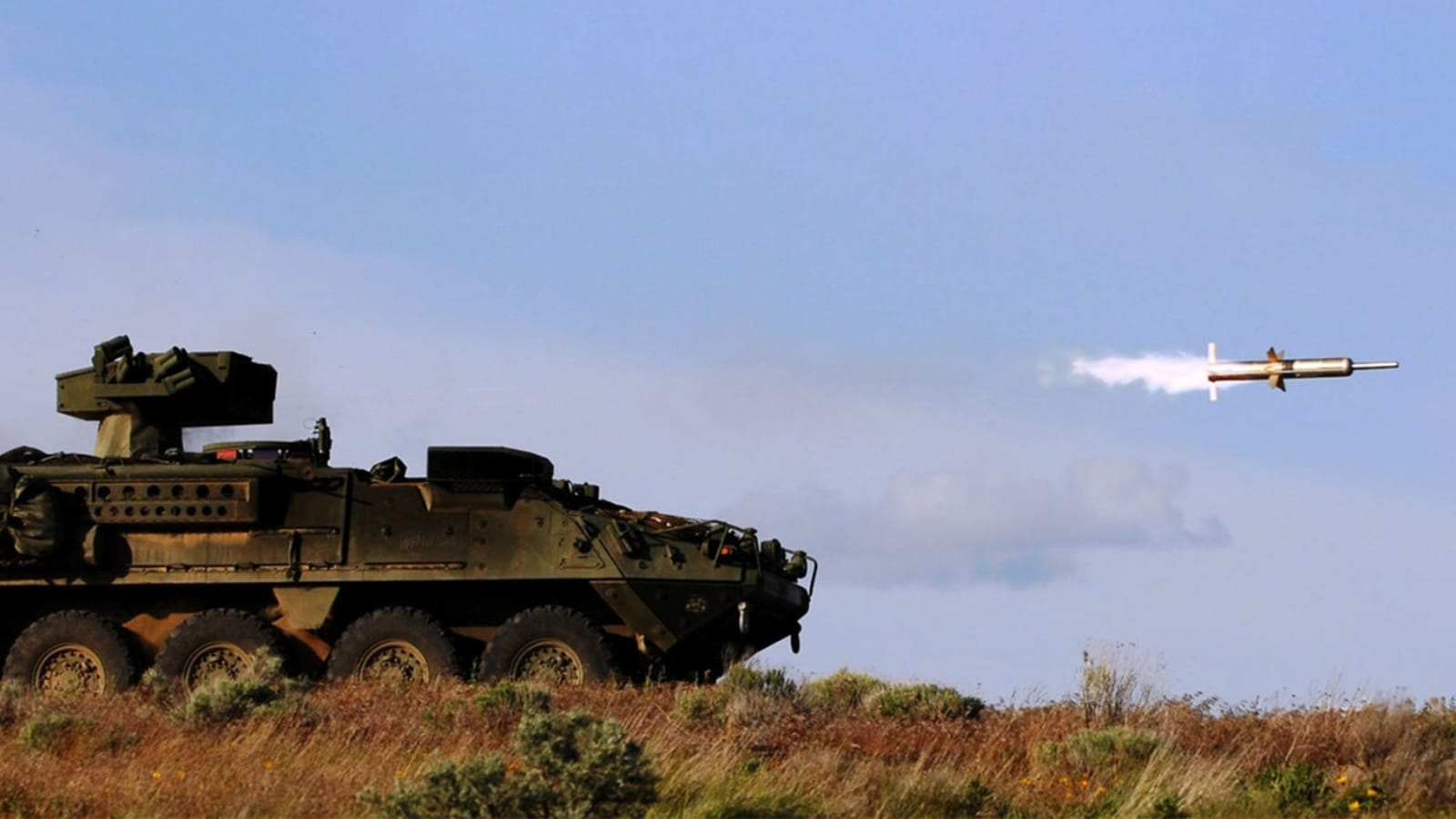
US launch platforms include Bradley Fighting Vehicles, Stryker anti-tank vehicles, and systems using the Improved Target Acquisition System. That existing infrastructure changes the economics of replacement because customers already hold launchers, training systems, support equipment, spares, and operating knowledge built around TOW.
The missile itself has continued to evolve. Raytheon is developing propulsion improvements intended to increase speed and range while retaining compatibility with established launch equipment, and recent US Army qualification work has addressed improvements to top-attack capability.
Keeping a mature weapon in production creates an engineering problem that differs from starting with a clean design. Components specified decades earlier disappear from the commercial market, suppliers leave the sector, manufacturing processes change, and test equipment becomes obsolete even when the external configuration of the missile remains recognisable.
Obsolescence management therefore becomes part of routine production. Replacement electronics, materials, processes, or suppliers have to be introduced without changing interfaces or performance in ways that make new missiles incompatible with launchers already fielded around the world.
That work can be more difficult than it appears. A component substitution may affect electrical characteristics, thermal behaviour, software, electromagnetic compatibility, vibration tolerance, storage life, or production test. What looks like a straightforward replacement on a bill of materials can consequently trigger qualification activity across several parts of the weapon.
Production tooling presents the same problem. Fixtures, test sets, assembly equipment, and software used to manufacture a long-lived missile cannot be assumed to remain supportable indefinitely. Continuing output requires investment in replacement equipment and controlled changes to factory processes without losing the repeatability established on previous production lots.
The latest award also lands during a wider US push to increase munitions output. Full-rate production contracts provide prime contractors and suppliers with demand visibility, but output still depends on propulsion, guidance electronics, warheads, structures, energetic materials, packaging, and acceptance facilities reaching compatible rates.
A shortage in a relatively inexpensive specialist component can constrain complete missile deliveries just as effectively as a lack of final-assembly capacity. That makes supplier depth and production yield increasingly important as procurement authorities seek to replenish inventories while maintaining deliveries to international customers.
Engineering services within the modification are significant for the same reason. A mature missile cannot simply remain frozen while the industrial base around it changes. Drawings, components, software, manufacturing processes, and test methods all require continuing technical authority if substitutions and upgrades are to remain inside an approved configuration.
Raytheon says more than 700,000 TOW weapon systems have been delivered to the US and allied forces during the programme’s life. The company also expects the system to remain in service beyond 2050, extending the requirement for production and support far beyond the normal commercial lifetime of many electronic and manufacturing technologies used inside it.
That longevity also gives customers flexibility while newer anti-armour systems enter service. Modern missiles can offer longer ranges, different seekers, fire-and-forget operation, or tighter integration with networked sensors, but replacing every launcher, vehicle interface, training system, and stockpile simultaneously would carry a considerable cost.
The Army is instead continuing to fund an established weapon while newer capabilities develop around it. That places a premium on compatibility: improvements have to deliver useful additional performance without undermining the infrastructure that makes the existing system economical to retain.
For the Tucson line, the immediate requirement is measurable rather than conceptual. Raytheon has to keep the supply chain viable, manage engineering changes, maintain acceptance quality, and deliver against a contract running into August 2027.
TOW’s longevity is consequently as much an industrial story as a weapons one. Keeping a missile family relevant for several more decades depends on the ability to replace ageing components and manufacturing methods while leaving the interfaces, performance, and support system stable enough for thousands of existing launch platforms to continue using it.