IN Brief:
- SubSea Craft has acquired a 40% equity interest in British battery specialist LORILLION.
- Funding will expand engineering, battery-management development, and a planned Midlands manufacturing facility.
- The arrangement brings VICTA’s mission-critical battery system into a more closely controlled UK engineering and production chain.
SubSea Craft has completed a multi-million-pound investment for a 40% equity interest in British battery engineering company LORILLION, drawing a critical part of the VICTA maritime platform’s power system deeper into a domestic engineering and manufacturing relationship.
The investment is intended to expand UK capability in the design, industrialisation, and production of specialist battery systems for defence, marine, aerospace, automotive, and other demanding applications. LORILLION plans to increase its engineering workforce to more than 70 people, accelerate proprietary battery-management development, and establish a new production facility in the Midlands.
SubSea Craft already works with LORILLION on VICTA, its dual-domain maritime platform designed to conduct high-speed surface transit before entering a wet subsurface mode for covert delivery of personnel or equipment. Taking an equity position gives the platform developer greater influence over a subsystem that directly affects range, power availability, thermal management, packaging, and reliability.
The battery is particularly demanding in a craft such as VICTA because the operating profile spans two very different regimes. High-speed surface running imposes substantial power and environmental loads, while subsurface operation places greater emphasis on energy density, sealing, thermal control, endurance, and predictable behaviour inside a confined platform.
Battery engineering therefore extends well beyond selecting suitable cells. Pack structures, cooling, power electronics, battery-management software, shock protection, electrical isolation, connectors, and certification all influence whether the finished system can operate repeatedly in a maritime environment. Changes to one component can alter thermal performance or safety characteristics sufficiently to require further testing.
LORILLION provides development work across battery systems, control systems, power electronics, and electric propulsion, with services running from concept development through product design, validation, certification, and production. That breadth gives the partnership scope to keep battery engineering aligned with VICTA as the platform moves through development rather than treating the pack as a fixed bought-in item.
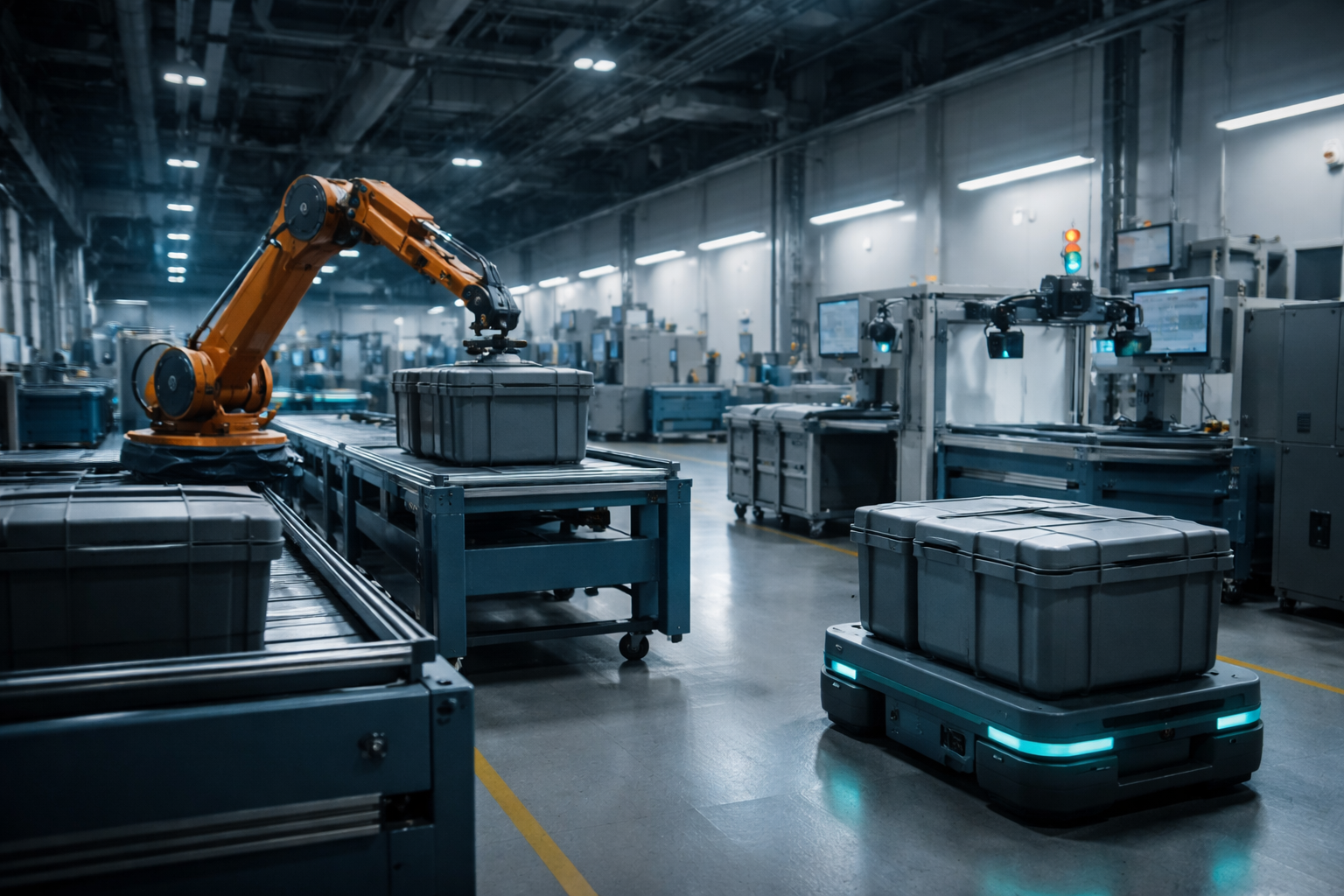
The planned Midlands production facility extends the relationship into manufacturing. Domestic design capability has limited sovereign value if production engineering, test equipment, repair procedures, or configuration knowledge remain controlled elsewhere. Bringing those processes into a British industrial chain can shorten engineering changes and support, although the battery sector will continue to depend on international sources for cells, materials, and other upstream components.
SubSea Craft has already been expanding production activity around its maritime systems. In May, the company moved its upgraded MARS unmanned surface vessel into production, retaining a digital control system also used on VICTA. The LORILLION investment brings a similarly critical technology — energy storage — closer to the company’s own engineering programme.
Specialist batteries are becoming a larger defence supply-chain issue as uncrewed vehicles, underwater systems, portable sensors, and electrically powered auxiliaries proliferate. These are often relatively low-volume applications with operating conditions that do not match mass-market automotive or consumer products, leaving manufacturers to balance bespoke engineering against the economics of limited production runs.
Qualification adds another constraint. Battery cells and control electronics develop quickly, but military platforms need stable configurations with documented safety and performance. Substituting a newer cell may promise additional energy or power density, yet the change can affect cooling, software settings, structural loads, charging behaviour, and certification. A closely integrated engineering partner can evaluate those changes against the platform’s actual operating profile before a new configuration is adopted.
Equity ownership also gives SubSea Craft greater visibility over LORILLION’s manufacturing roadmap than a conventional supplier relationship would provide. For LORILLION, the arrangement supplies capital and a demanding defence application around which to expand battery-pack manufacturing capability while retaining customers across other transport and industrial sectors.
The economics will depend on how widely that capability can be used. Defence battery programmes can move slowly and in modest volumes, making it difficult to support dedicated tooling and specialist staff from a single platform. A production base that can serve marine, aerospace, automotive, and defence customers offers a broader route to maintaining engineering skills between military orders.
For VICTA, the near-term measure will be less abstract: whether the partnership can deliver qualified battery systems on the platform’s development schedule while maintaining control of design changes and support. Beyond that, the new Midlands capacity will show whether a strategic investment can turn specialist UK battery engineering into repeatable manufacturing rather than another sovereign-capability claim resting on imported hardware.